



Ultimate Guide to Visual Marketing Strategy for E-Commerce Business
Brands that build lasting recognition do not treat photography as a production task. They treat it as a system where content types, visual language, and distribution channels are planned together rather than separately.
The brand whose product page looks different from its Instagram, which looks different from its email campaigns, reads as fragmented to customers even when individual images are technically strong. The brand whose visual content is consistent across channels builds recognition that compounds quietly over time.
This guide covers how that system gets built.
Part of our complete guide: The Ultimate Guide to eCommerce Product Photography

High-quality visuals allow consumers to scrutinize product details before committing to a purchase. When shoppers can see products from multiple angles or in lifestyle contexts, they are more likely to feel confident about their choices.
Beyond product pages, visual content shapes brand perception at every touchpoint: social media, email, advertising, and retail listings. The most effective strategies do not treat each channel separately. They start with a defined visual identity and apply it consistently across every format and platform.
Building a Strong Visual Brand Identity
Defining Your Brand's DNA
Brand DNA encapsulates the unique characteristics that differentiate a brand in the marketplace. Understanding it is essential before commissioning any photography or video — because every production decision either reinforces it or contradicts it.
Defining brand DNA means answering four foundational questions:
Why does this brand exist beyond profit-making? What values drive it, and what impact does it want to create?
Who is the target audience, and what do they actually want? Not what the brand assumes they want — what the research and customer behavior actually shows.
What sets this brand apart in its category? The answer shapes every visual decision from lighting approach to casting choices.
What story does the brand tell, and does it resonate emotionally? A brand built around heritage needs lighting that communicates craft and permanence. A brand built around minimalism needs compositions with negative space that signals confidence. A brand built around sustainability needs photography that makes recycled materials look intentional rather than cheap.
These questions sound strategic but they have direct production implications. The visual brief follows from the answers, not the other way around.
For how brand DNA translates into photography decisions at the luxury level: Photography That Appeals to Luxury Jewelry Buyers
Creating a Cohesive Look Across All Platforms
Brand consistency means the same visual logic applies everywhere the brand appears — website, social media, email campaigns, paid advertising, and marketplace listings. Not making everything look identical. Making everything feel like it came from the same place.
The practical tool is a set of brand guidelines that specify:
- Background standards and approved lighting approaches
- Angle conventions by product category
- Retouching parameters and color standards
- Visual references that define the approved aesthetic register
Once these guidelines exist, every production team works from the same framework regardless of who they are.
For a practical guide to building a photography brief and visual style guide: Art Direction Guidelines for Jewelry and Fashion Brand Photoshoots
3 Brands 3 Visual Systems
What the following brands share is not a similar aesthetic — they look nothing alike. What they share is internal consistency. Every image exists within the same defined visual logic, which means customers learn to recognize the brand before they see a logo.
Loulou Studio Founded by Chloé Harrouche in Paris, Loulou Studio focuses on chic sophistication with a minimalist aesthetic. The brand's visual identity is characterized by relaxed yet stylish essentials that reflect city life. Loulou Studio maintains a consistent look across its website and social media, showcasing its collection of elevated basics through clean, elegant photography that emphasizes simplicity and wearability. | 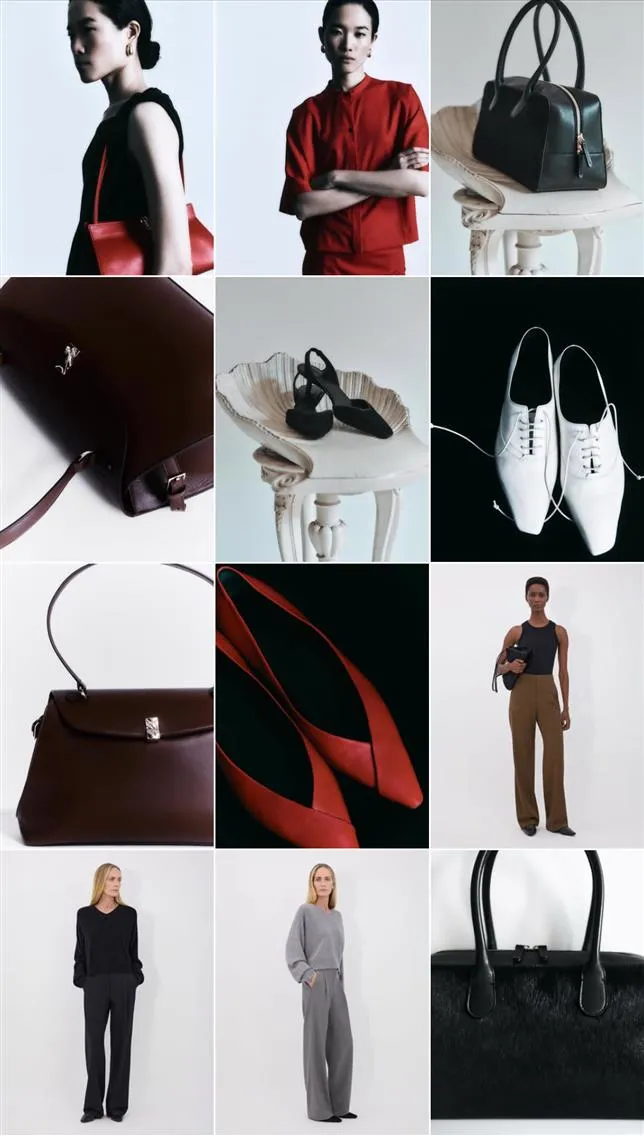 |
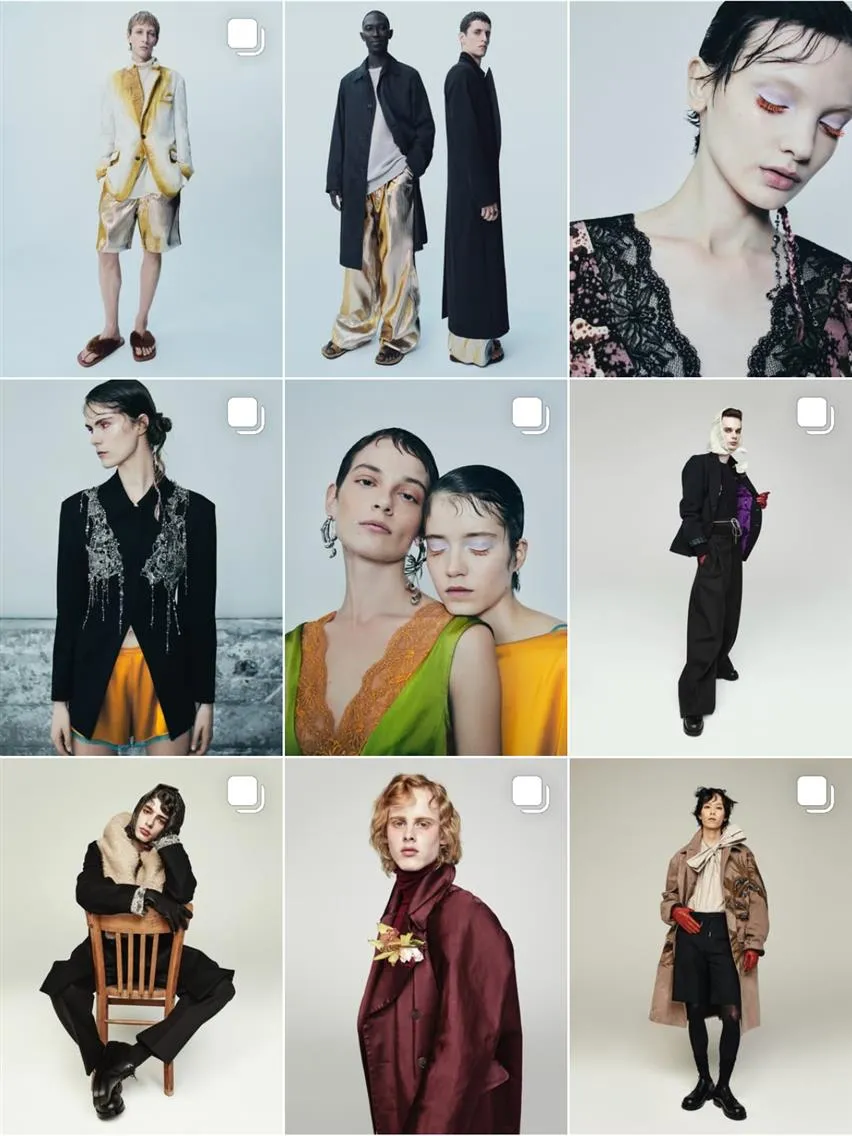 | Dries Van Noten Dries Van Noten is celebrated for its artistic prints and eclectic designs, merging traditional craftsmanship with modern aesthetics. The brand’s visual identity is vibrant and expressive, appealing to those who appreciate unique fashion statements. Van Noten’s collections are showcased through visually stunning campaigns that highlight the intricate details of each piece, creating a strong narrative around the brand’s identity across various platforms |
Maison Margiela Maison Margiela is renowned for its avant-garde designs and deconstructed aesthetics. The brand challenges conventional fashion norms while maintaining a distinct visual identity that speaks to creativity and innovation. Margiela's campaigns often feature conceptual art direction that aligns with the brand's ethos, creating a cohesive experience that captivates audiences both online and offline. | 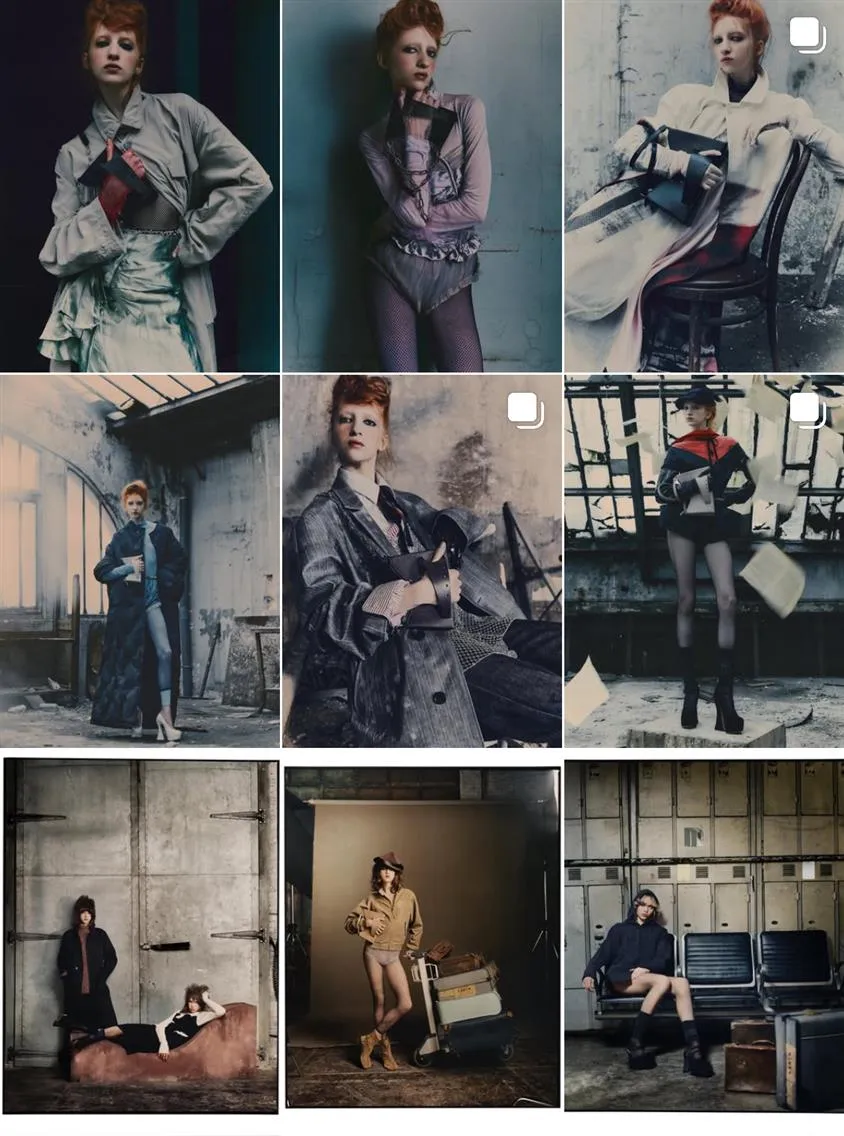 |
For how visual identity works specifically in fashion and jewelry: Visual Branding for Jewelry Companies
For how luxury and mass market brands approach visual identity differently, with brand examples from Loewe, Gap, COS, and Zara: Luxury Brand Strategies vs. Mass Market Visual Marketing Strategies
Types of Visual Content for eCommerce Marketing
eCommerce Photography
Each photography type serves a different function in the customer journey. Understanding which type belongs where prevents both wasted production spend and gaps in the visual content system.
| Type | Function | Funnel stage |
|---|---|---|
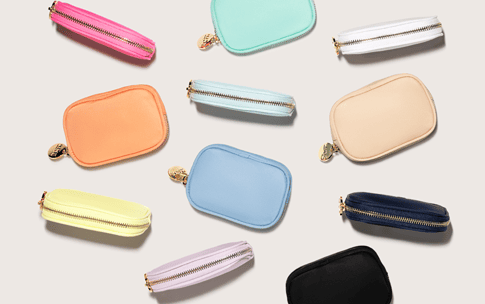
| Product photography | Accuracy and consistency. Builds trust, satisfies platform requirements. | Bottom — purchase decision |
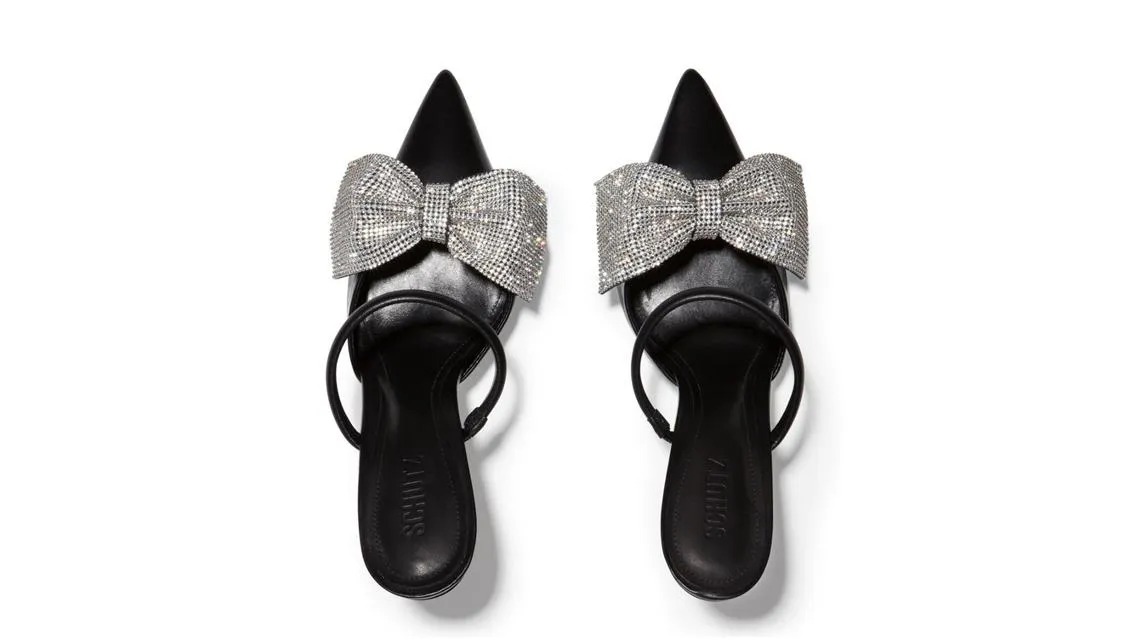
| Still life photography | Brand world and material quality. Builds desire. | Middle — consideration |
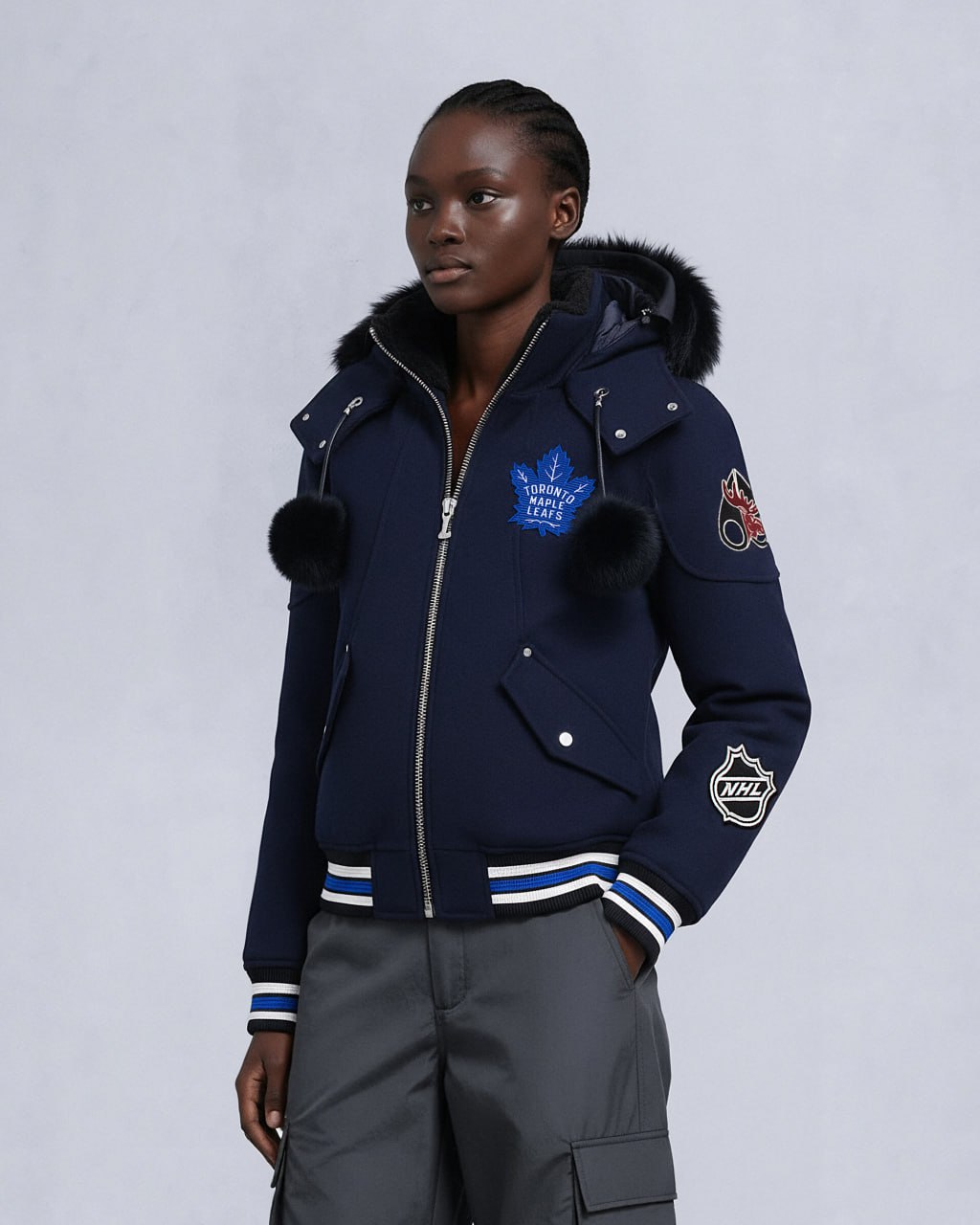
| On-model photography | Scale, proportion, wearability. Reduces returns. | Bottom — purchase decision |
| Lifestyle photography | Contextualizes products in the brand's world. Builds aspiration. | Top — awareness |

For a complete guide covering all photography types, platform requirements, and production standards: The Ultimate Guide to eCommerce Product Photography

For jewelry-specific photography across catalog, open light, still life, lifestyle, and editorial: eCommerce Brand's Guide to Jewelry Photography

For lifestyle photography strategy specifically: Strategic Impact of Lifestyle Photography on eCommerce Business
Video Content
Video extends what photography communicates by showing movement, function, and process.
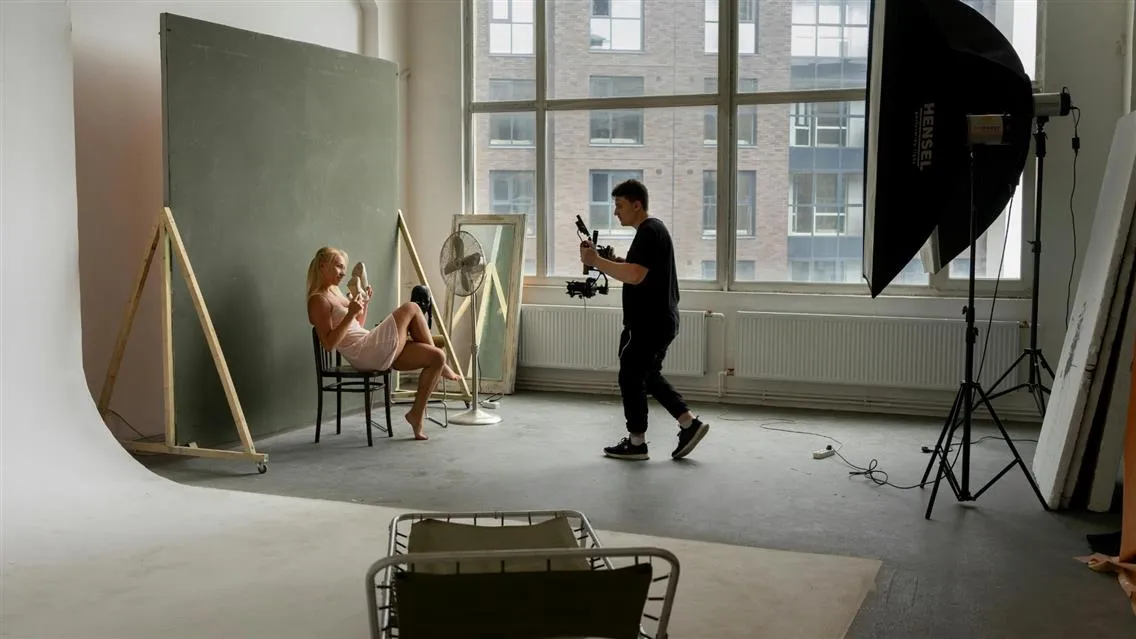
Product demos address usability questions that static images cannot resolve. Tutorial content shows customers how to use or style products, which builds satisfaction and reduces returns. Behind-the-scenes content builds brand transparency. Short-form video for Instagram Reels and TikTok prioritizes speed and relatability over production polish.
For a complete guide to product video for eCommerce: The Power of Product Videos for eCommerce Explained
User-Generated Content
UGC carries a different trust signal from brand-produced photography because it comes from real customers. Brands like Rhode, Gymshark, and Patagonia use it as a core part of their social strategy precisely because audiences recognize it as unfiltered.
UGC supplements professional photography — it does not replace it. Its role is to provide evidence that the brand's products work in the real world alongside the professional photography that builds the brand's visual standard.
Visual Marketing Distribution Channels
Different channels reward different content types. Planning production around channel requirements prevents wasted spend and content gaps.
Website and product pages Where purchase decisions are made. Product photography is the primary content type: accurate, consistent, multi-angle. Lifestyle imagery supports brand positioning on collection and homepage pages.
Social media Instagram rewards editorial-quality photography and short-form video. Pinterest works well with styled vertical product imagery and lookbook content. TikTok prioritizes authentic short-form video where format and pacing matter more than production polish.
For social media photography strategy specifically: Social Media Photography for Fashion Brands
Email marketing The visual register of email campaigns should match the website and social feeds. Inconsistency between channels is immediately visible to subscribers who follow the brand across platforms.
Paid advertising Professionally produced creative consistently outperforms smartphone photography on Meta, Google Shopping, and Amazon Sponsored Products. At thumbnail scale, image quality is a direct factor in click-through rate.
Marketplaces Amazon, Etsy, Nordstrom, and major retail partners publish technical image specifications that must be met before listings are approved. For platform-specific requirements and retail submission preparation: 5 Reasons Your Amazon Sales Have Slowed Down
For a comprehensive guide to multichannel visual content distribution: Multichannel Visual Content Strategies for eCommerce
Optimizing Visual Content for Conversions
Visuals do not just attract attention — they resolve the specific anxieties that prevent purchase.
Zoomable product shots allow customers to inspect details they would examine in a physical store. For high-ticket items like jewelry, watches, or luxury accessories, deep zoom functionality is not a technical extra — it is a direct sales tool. A buyer who cannot examine a prong setting or a fabric weave at close range carries more uncertainty into the purchase decision.
Lifestyle photography triggers the mental simulation of ownership. When a customer can picture themselves wearing a piece or using a product in a context they recognize, the psychological distance between browsing and buying shrinks. This is why lifestyle imagery on product pages consistently outperforms catalog-only presentations for categories where aspiration drives purchase.
Video on product detail pages addresses the questions that still images cannot answer: how does the fabric move, how large is the product in real life, how does the mechanism work. For beauty and skincare products specifically, application videos dramatically reduce the uncertainty that leads to returns.
Color, tone, and perceived value
The color temperature and palette choices in photography directly affect how customers categorize a brand before they consciously process anything else. Cool, restrained palettes signal precision and sophistication. Warm, natural tones signal approachability and craft. Saturated, vibrant palettes signal energy and modernity.
These are not aesthetic preferences — they are positioning decisions made in post-production that affect pricing power. A product photographed in the wrong color register for its market segment will underperform against competitors whose photography correctly signals their tier.
Mobile performance
Over 60 percent of eCommerce traffic comes from mobile devices, which means every visual asset needs to perform at mobile dimensions and loading speeds. Images should be delivered in modern formats like WebP that are significantly smaller than JPEGs without visible quality loss. Lazy loading prioritizes above-the-fold content so the most important images appear instantly.
The content that performs on desktop and the content that performs on mobile are often different formats even when they communicate the same brand message. Vertical compositions, tight crops, and bold visual hierarchy work better on mobile than wide horizontal images built for large screens.
Measuring what works
The metrics that matter for visual content are not likes or impressions. Click-through rate shows which hero images or thumbnails drive clicks. Scroll depth reveals whether customers engage with visual content below the fold. Conversion rate by asset type tracks whether product videos on product detail pages outperform static images for specific categories.
A/B testing visual content produces the clearest data. Testing image versus video on the same product page, or two different hero images in the same ad, removes guesswork from decisions that have direct revenue implications. Most ad platforms provide this data at the creative level — the brands that use it systematically make faster and more accurate decisions about where to invest in photography and video production.
For understanding how photography affects purchasing decisions across different product categories: The Psychology of Visuals in Marketing and Ads