


Top Trends in Product Photography That Make a Difference
When people think of product photography, they often imagine something simple: an object on a seamless white background. But simplicity, as every experienced photographer knows, is deceptive.
Today's eCommerce demands more than technically correct shots. Brands expect precision and personality, even in the most minimal setups. From advanced lighting techniques to post-production consistency across massive SKU lists, product photography is becoming more sophisticated and more strategic.
This article covers the top trends shaping the genre and how commercial photographers can evolve their work to meet higher creative, technical, and client expectations.
Part of our complete guide: The Ultimate Guide to eCommerce Product Photography
1. Off-White Backgrounds for Product Photography Focus
White is still the industry standard for marketplaces like Amazon and Walmart. But on DTC websites and brand-owned channels, plain white is losing ground to something more deliberate: custom-colored neutral backgrounds.
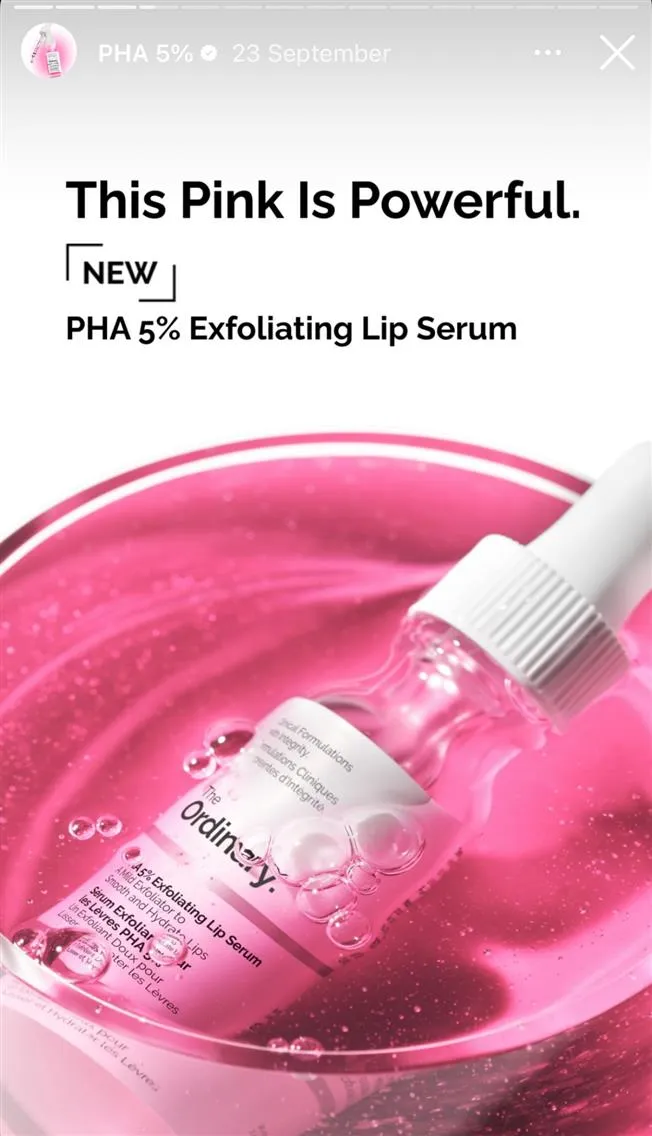
These are not bold colors or gradients — subtle, calculated tones aligned with a brand's identity without competing with the product. Skincare brand The Ordinary shifted from pure white to pale neutrals to soften their minimalist aesthetic. Glossier uses signature blush backgrounds to extend brand DNA into every product image.

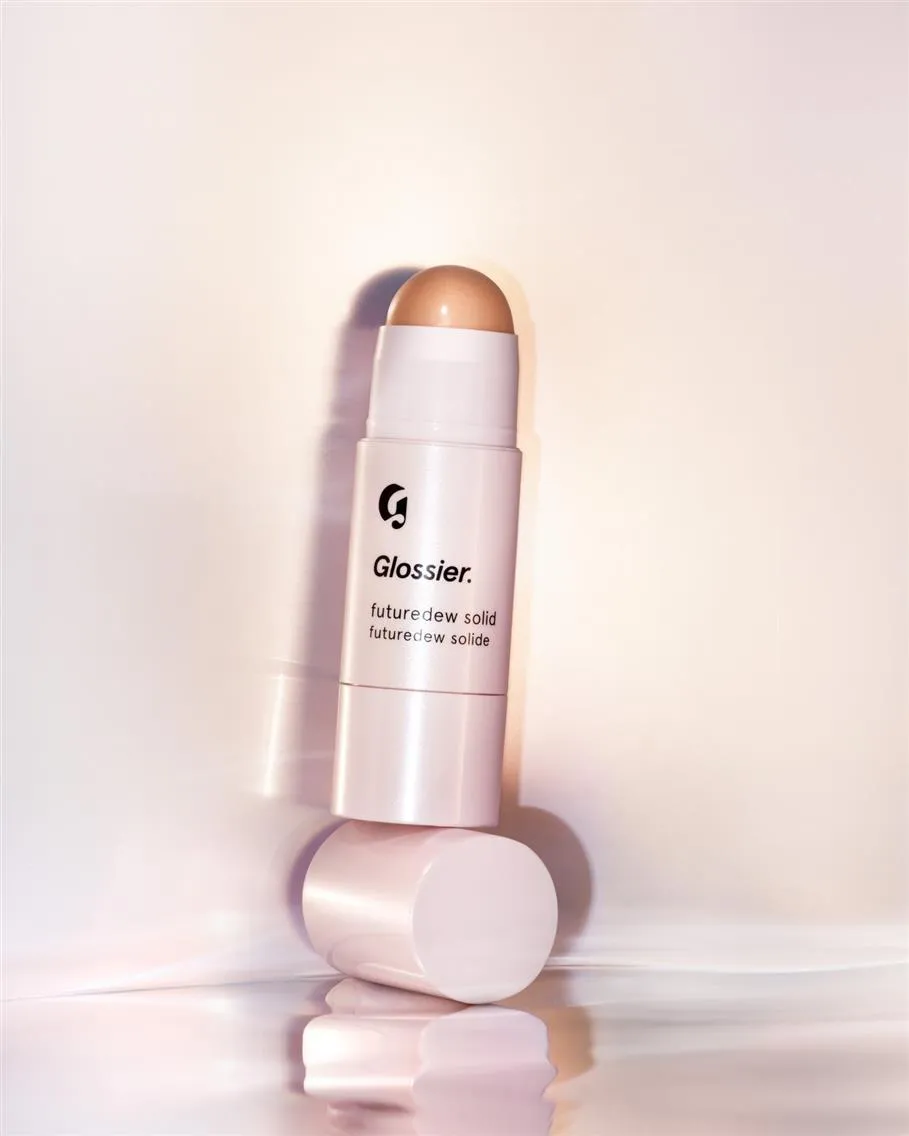
For photographers, shooting against colored backdrops introduces a new technical variable: color calibration. It is not enough to nail exposure — the hue behind the product must be consistent across dozens or hundreds of SKUs. Color drift between batches is immediately visible on a product grid and requires either reshoots or significant color grading work in post-production.
For a complete guide to background types, platform requirements, and how to build a tiered background system: Do You Need White Background Photos for an eCommerce Website?
2. Open Light Photography with Natural Ambience
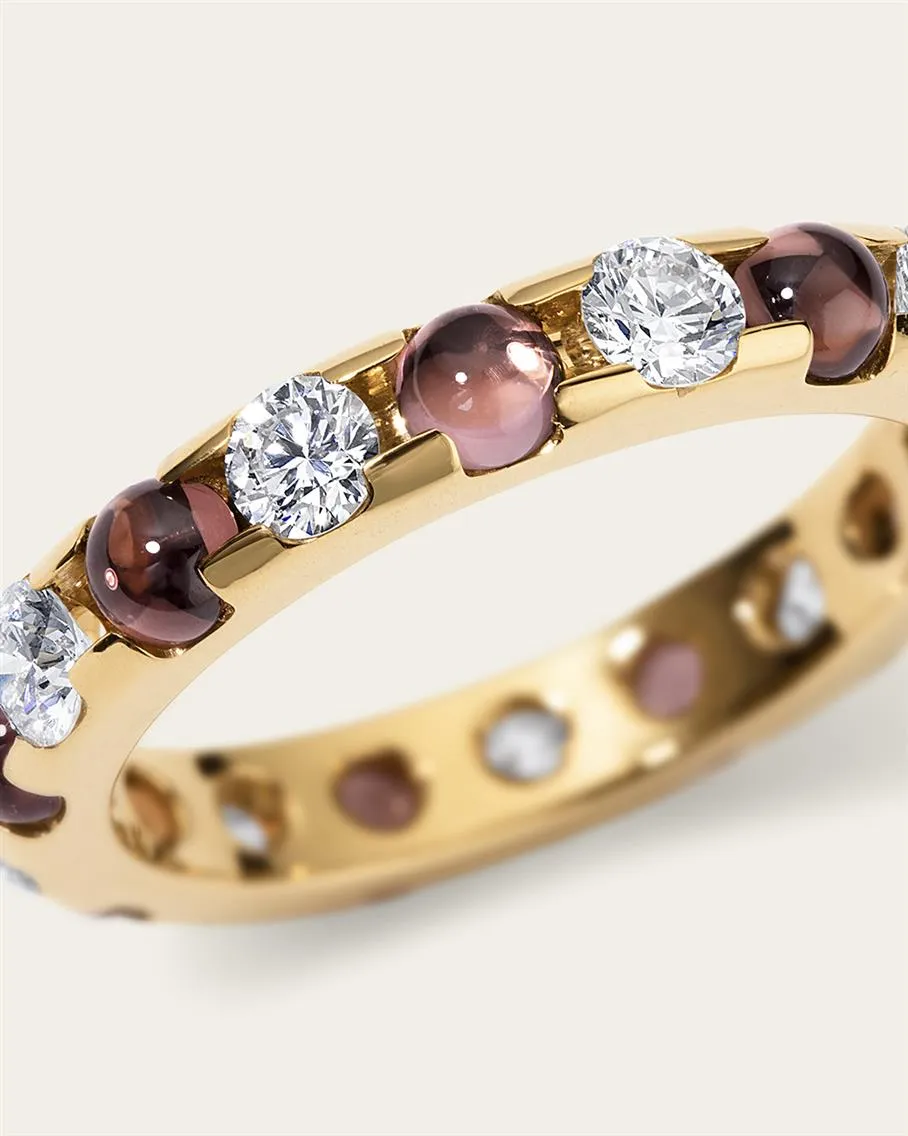
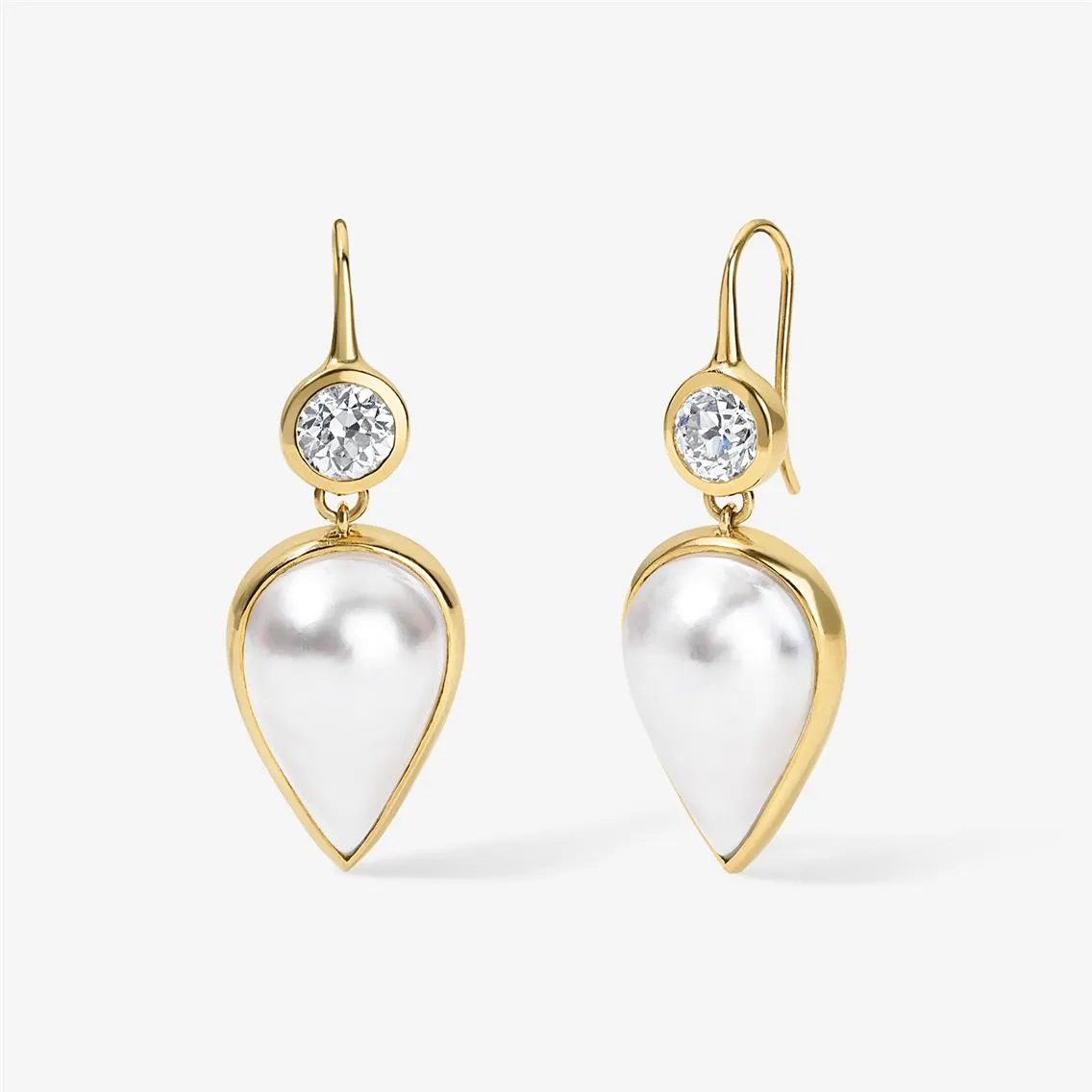
There is a growing movement toward open light photography — a style that uses directional, natural-feeling light to create a more authentic and inviting product presentation. Unlike soft studio setups or pure white backdrops, open light uses defined shadows and vivid tones to add depth and dimension without overwhelming the product.
Open light backgrounds feature light, airy environments with soft gradients or very light textures that feel organic rather than clinical. Products feel tangible and relatable rather than isolated on a laboratory surface. The approach enhances true colors and textures through subtle, flattering shadows, creates a warm and approachable mood that suits lifestyle and premium brand contexts, and offers visual differentiation from the sea of identical stark-white marketplace images.
LenFlash specialises in open light photography for eCommerce brands. Portfolio examples:


For a complete guide to open light technique and how it fits into a background system: Open Light Product Photography
3. Invisible Props & Floating Products Photography
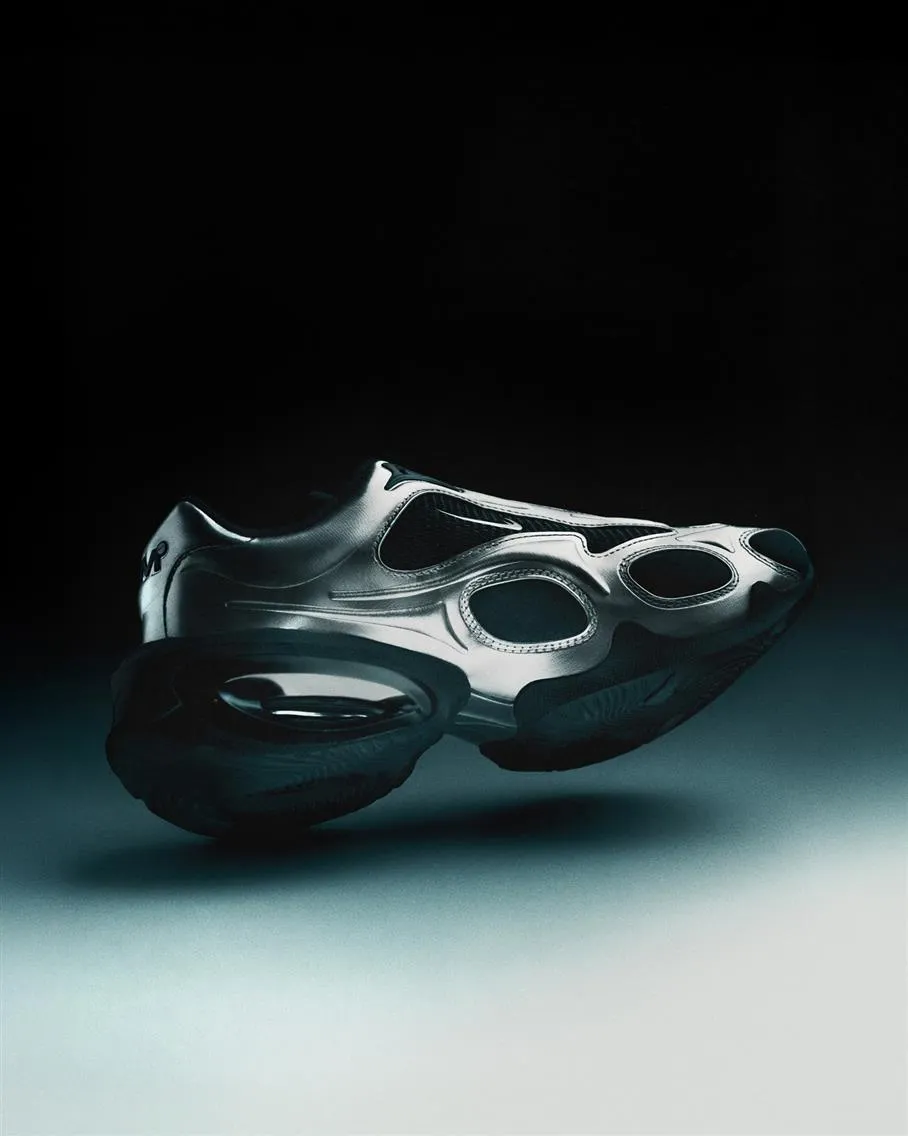
A serum bottle standing perfectly upright with no visible support, or a sneaker levitating mid-air on a seamless background, these illusions are crafted with invisible props: monofilament lines, acrylic risers, wire supports, and clamps masked out in post-production. The result is clean, eye-catching geometry that still feels grounded in the product's real-world use.
Floating or elevated positioning adds visual hierarchy and drama without cluttering the frame. It communicates that the product stands on its own.
The technical challenge is nailing angles and alignment in-camera rather than attempting corrections in post. No matter how carefully the props are hidden, clean-up work is always required, particularly when batch-producing assets across dozens of items where any inconsistency in the prop position becomes visible across the set.
4. Product Stacking, Layering, and Group Product Photo
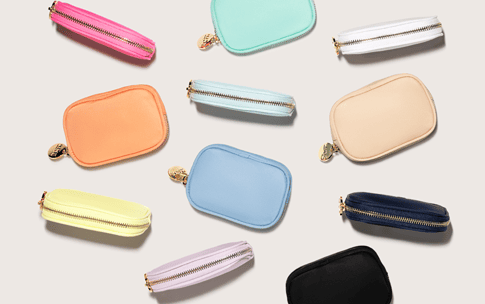
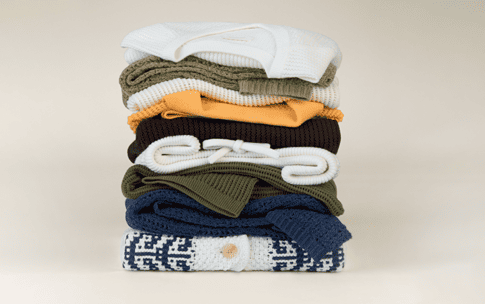
Even within the minimalist boundaries of product photography, brands are leaning into stacking, layering, and precisely aligned groupings. These shots remain clean and seamless but play with balance and repetition to create visual impact.
Symmetry, negative space, and rhythm guide the viewer's eye. A row of identical tubes, a pyramid of boxes, or a mirrored set of bottles tells a story of consistency, scale, and intention.
Popular executions:
- Stacked skincare jars to highlight size variation across a product line
- Diagonal arrangements of pens or pencils for visual movement
- Grid layouts of tech accessories for a modular, systematic feel
What group shots require from photographers
Perfect alignment, identical lighting across every item, and a strong sense of spatial awareness. Group shots consistently reveal issues that are invisible in single-SKU photography — inconsistent labeling angles, subtle color mismatches, or uneven shadows across the set. These problems are compounded at scale: what looks minor in a single frame becomes immediately visible when the same error appears across a grid of twenty products.
5. AI Tools, Batch Workflows & the Human Eye in Product Photo
Automation helps, but judgment still wins. Background removal, batch cropping, and masking tools powered by machine learning are faster and more accessible than ever. Many studios are adopting these to streamline bulk shoots, particularly for high-volume catalog work.
But automation is discernible now. Photographers who thrive are those who know when to trust the algorithm and when to step in. Automated clipping saves time on plain bottles but ruins the complex shape of a luxury watch. Auto-alignment speeds up flat lays but can throw off visual rhythm in grouped shots.
Effective workflows combine AI-assisted selection tools for speed, custom batch actions for consistency, and human-led decisions for quality control and visual nuance. As pressure to deliver fast grows with large SKU counts or frequent product drops, efficient workflows are essential. But what clients remember is polish, and that still comes from trained visual judgment.
For how AI tools are specifically changing retouching workflows: New Trends in Retouching for eCommerce Product Photography
For how AI is changing broader visual production for eCommerce brands: AI is Reshaping Fashion Photography
6.Vertical Formats and Multi-Platform Photography Crops
Product photography used to be optimised for desktop storefronts and catalog grids. In today's multi-platform environment, where mobile-first design dominates and social commerce is growing rapidly, vertical formats are becoming the default for most brands.
Clients now request deliverables in multiple aspect ratios (1:1, 4:5, 9:16) even for standard product shots. They are building shopping experiences across websites, Instagram Shops, TikTok Shop, and Pinterest, and expect visuals to adapt across all channels without reshooting.
What this means for shoot planning
Compose wider than feels natural to allow vertical-safe zones. Modern brands need intentional negative space for text overlays, cropped thumbnails, and platform-specific UI, not just the product centered in frame.
Best practices include framing loosely for crop flexibility, maintaining even lighting edge-to-edge for cleaner vertical crops, and building export templates for multi-format delivery to maintain consistency across every channel.
Product Photography Is Evolving, Are You Keeping Up?
Even in its most minimal form, product photography is getting sharper, smarter, and more demanding. Brands want lighting that respects their materials, crops that fit every platform, color consistency across entire collections, and compositions that feel simple but convert.
Photographers who meet these expectations at scale are increasingly those who combine technical precision with efficient production systems, and who know which parts of the workflow benefit from automation and which parts still require human judgment.