




What Should a Fine Jewelry Product Video Be Like? A Commercial Perspective for Brands
A fine jewelry product video has one job: eliminate doubt. Jewelry is not watched the way any other product is watched. It is inspected. Slowly. Skeptically. With intent. Every second a customer spends on a product page, they are trying to answer a single question: Can I trust what I am about to buy without touching it?
This is where most jewelry brand videos fail. They confuse visibility with value. Movement with meaning. Aesthetic mood with commercial clarity. In fine jewelry, mistakes are unforgiving: a reflection in the wrong place makes metal look thin, a slightly off-angle distorts proportions, and a fast camera move hides details that customers are actively searching for. These are not creative issues. They are trust issues.
A good jewelry product video confirms scale, finish, construction, and material behavior in real conditions. It quietly replaces the in-hand moment that online shopping removed.
From working with fine jewelry brands on commercial photography, video, and retouching, this pattern is consistent: the brands that convert are the ones whose videos remove friction from the decision.
Part of our complete guides: Essential Video Content Types for Your eCommerce Business and eCommerce Brand's Guide to Jewelry Photography
How Jewelry Product Video Works
A fine jewelry product video operates at a very specific moment in the buying process. It appears after interest has already formed and just before a decision is made. At this stage, the customer is no longer looking to be impressed. They are looking to be sure.
This is why jewelry video marketing cannot follow the logic of fashion or lifestyle content. Its purpose is not expression. It is confirmation. Every second of footage is scanned for answers. How substantial does this piece look? Do the proportions feel right? Does anything appear inconsistent or unclear? If the video does not address these questions, it does not add value, no matter how polished it looks.
For how video marketing fits into a broader eCommerce visual strategy: The Rise of Video Marketing for eCommerce Brands
Jewelry Is Bought Emotionally but Evaluated Rationally
Emotion triggers attention. Rational evaluation determines whether money changes hands. Once a customer reaches a product page, behavior slows. The video is replayed. Certain frames are watched longer than others. This is where jewelry product perception is formed.
A well-made video supports inspection without interrupting it. Movement is controlled to reveal structure and balance. Angles are chosen to show how the piece behaves in space, not to create drama. Lighting remains stable so material properties are readable rather than stylized.
The Cost of Visual Uncertainty in Jewelry
Uncertainty is one of the main drivers of friction in jewelry eCommerce. Small visual gaps quickly turn into large mental doubts. If scale is unclear, customers assume risk. If clasps and closures are not shown, they question usability. If surface finish is obscured, they doubt durability. If stone settings are not visible, they worry about fragility.
These concerns rarely surface as explicit objections. They simply delay or stop the purchase. A strong jewelry product video strategy is built around removing these gaps. It does not attempt to show everything, it focuses on what reduces doubt most effectively.
What a Jewelry Product Video Is Actually Supposed to Show
Confirm Material Quality
Material quality is rarely communicated through words. Customers do not trust descriptions. They trust what they can visually verify.
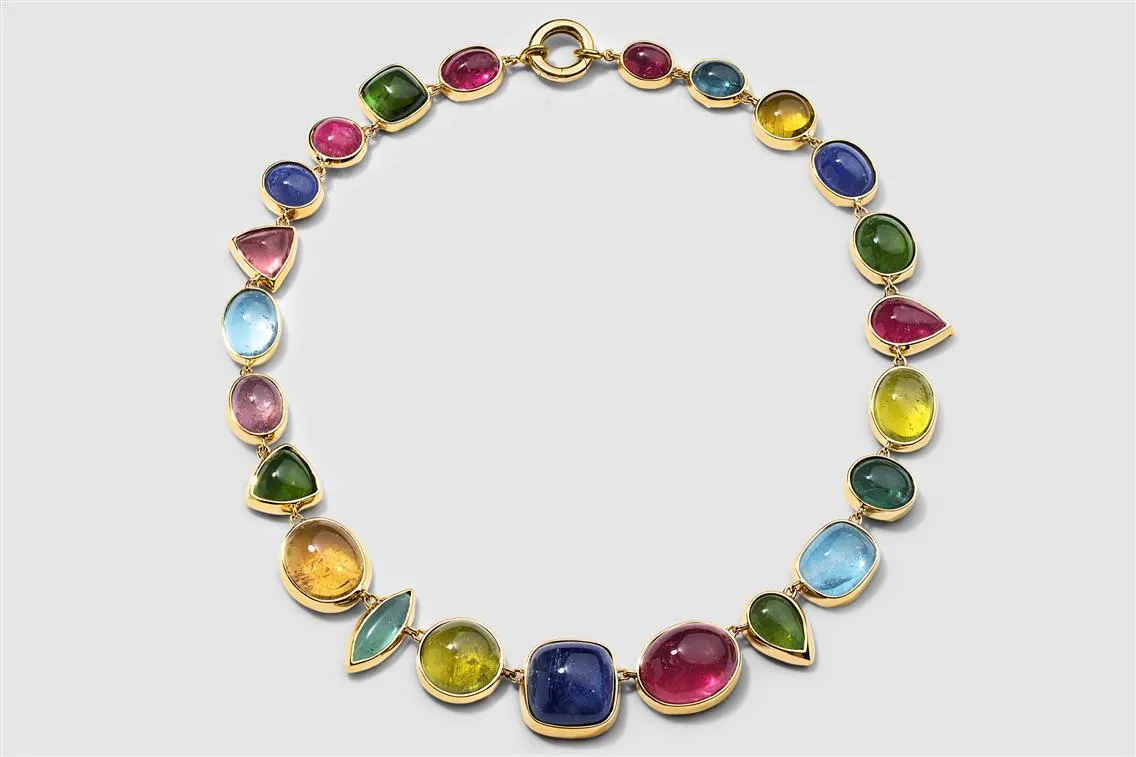
With stones, the goal is not a sparkle for its own sake. It is credibility. Diamonds and gemstones should react to light in a way that feels true, consistent and restrained. Over-lit scintillation looks artificial. Under-lit stones look dull. Both raise questions.
Replace the “In-Hand” Experience as Much as Possible
Online jewelry shopping fails when customers cannot imagine how a piece behaves in reality. Video exists to bridge that gap. The video should feel predictable in the best sense. Stable lighting, repeatable motion, and clear framing allow the viewer to focus on the product, not the production.
Lighting That Makes Materials Legible
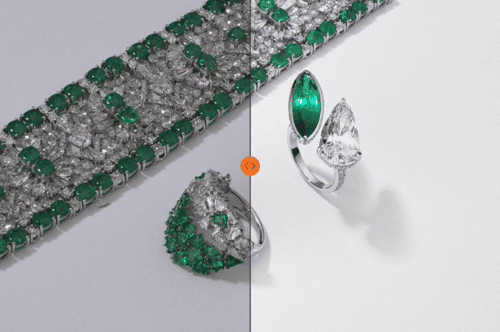
Good lighting separates materials without exaggerating them. Gold should look dense, not reflective. Stones should react to light without dominating it. Edges should exist clearly without being outlined. Color fidelity should be preserved. The fastest way to cheapen fine jewelry on video is to make everything compete at once.
Background Choices for Jewelry Product Videos
White, off-white, black, matte, gloss. These are tools to control contrast, edge visibility, and perceived thickness. The wrong background makes metal disappear. The right one gives it weight. Anything that introduces narrative, texture, or atmosphere shifts the viewer’s focus away from evaluation. That may work for advertising. It works against product understanding.
For a complete guide to background choices and their effect on product perception: Do You Need White Background Photos for an eCommerce Website?
Different Types of Jewelry Product Videos
Jewelry product videos serve different functions depending on where they appear and what the customer needs to understand at that point in the buying process. The four formats below address different aspects of the doubt-removal problem.
360° Spin Rotational Jewelry Product Videos
Smooth, continuous spins reveal every angle of the piece — from prongs and clasps to gem facets and engravings. Ideal for product pages, they give customers the ability to inspect the piece from every direction, mimicking the in-store rotation that online shopping removes. The loop should be seamless so the customer can watch repeatedly without interruption.
For a complete guide to 360-degree spin video production: Breaking Down 360-Degree Spin Videos for eCommerce
Model Wears Jewelry Videos
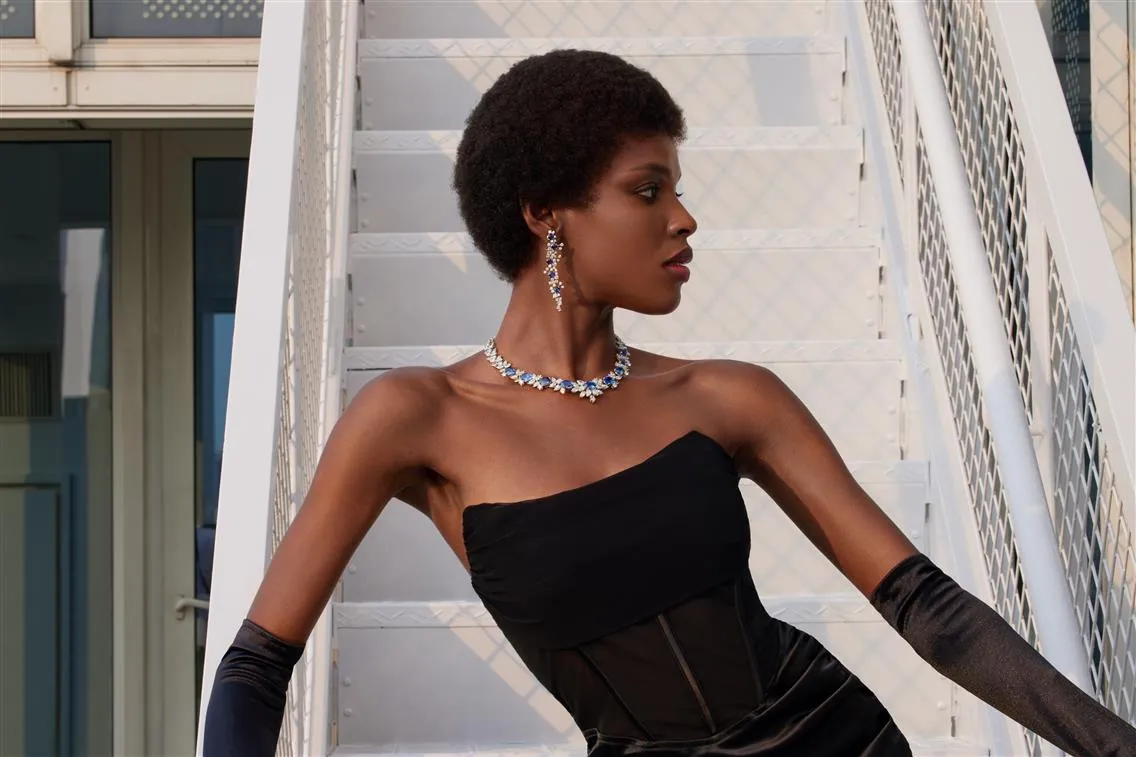
Clips show the jewelry on diverse models, demonstrating fit across skin tones, body types, and outfits with gentle movements. They illustrate shape, scale, layering, and real-world wear, helping buyers visualize personal styling. Subtle actions like hair flips or wrist turns add realism without distracting from the product.
Spec Jewelry Videos
Animated overlays display key specs: dimensions, materials, carat weights, and care tips, synced to rotating product shots. This educates while entertaining, ideal for info-heavy listings on marketplaces. Clean graphics ensure readability on small screens, improving trust and sales.
Stop-Motion Jewelry Product Videos
Stop-motion makes jewelry come alive — earrings swinging, rings rotating, necklaces assembling themselves frame by frame. The format creates content that holds attention and performs well on social platforms and product thumbnails. It works particularly well for pieces where movement reveals a quality that static photography cannot communicate.
For a complete guide to stop-motion animation for eCommerce: What Is Stop Motion Animation and How It Works in eCommerce
What Most Jewelry Brand Videos Get Wrong
Fashion video language relies on gesture, rhythm, and attitude. Jewelry does not. When that language is applied directly, the product becomes secondary to the performance around it.
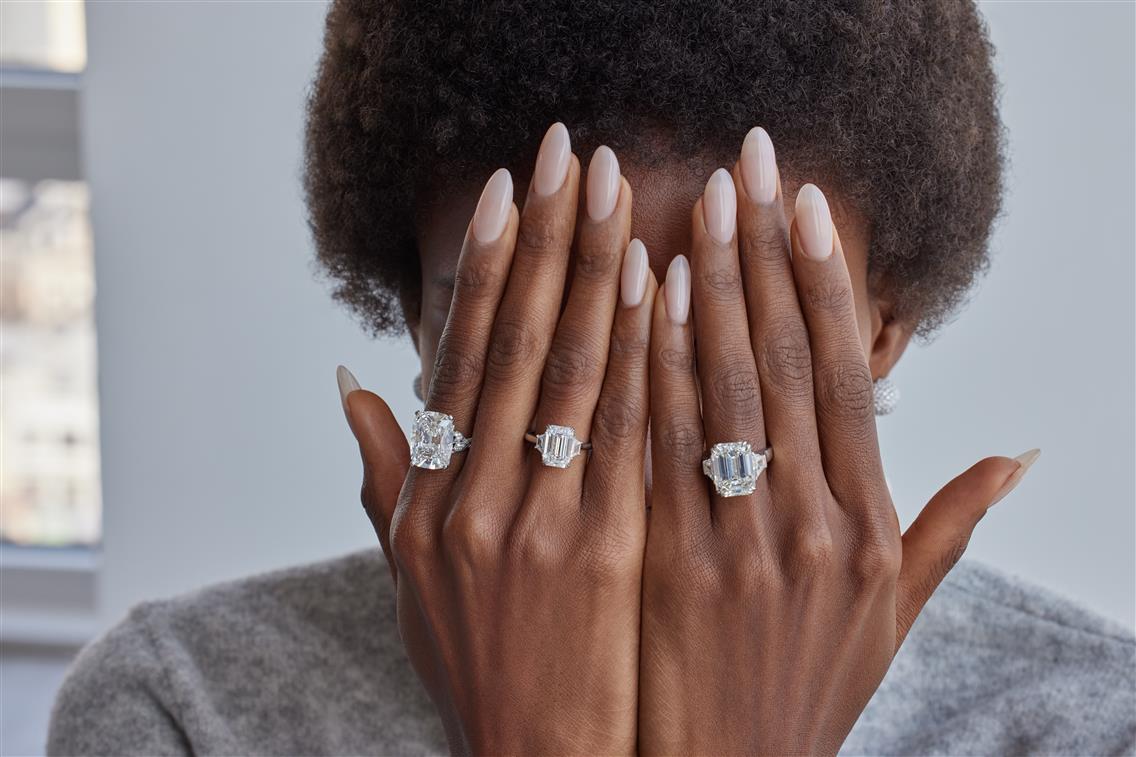
Over-styled hands introduce scale confusion. Long nails, exaggerated posing, or expressive movement change the visual reference point from the jewelry to the model. The viewer loses a reliable sense of proportion.
Color handling is another frequent failure. Fashion lighting often prioritizes mood over accuracy. In jewelry video, this leads to warm gold drifting toward orange, white gold reading grey, or gemstones shifting hue between frames. Even subtle color inconsistency raises suspicion, especially for fine jewelry buyers who already understand material differences. When color is unstable, trust breaks instantly.
Lens choice and camera distance also introduce distortion. Wide lenses, close framing, or aggressive perspective exaggerate curvature, stretch proportions, or alter stone size relative to metal. Rings look thinner than they are. Pendants feel lighter. Earrings appear larger or flatter depending on the angle. These distortions are rarely intentional, but their effect is commercial: the product received does not match the product perceived.
Narrative overlays create another layer of noise. When a product video tries to “tell a story” inside a product page, it competes with the buying process itself. The viewer is not looking for context at that moment. They are looking for confirmation.
Cropping decisions amplify the problem. Vertical-first framing, aggressive zooms, or social-media-style cuts remove spatial context. Edges are cut off. Thickness is lost. The piece feels abstract rather than physical.
How to Evaluate If a Jewelry Product Video Is “Good Enough”
Evaluating jewelry product videos for e-commerce doesn't require expertise in directing or production, focus on practical impact instead. A good video prioritizes removing buyer hesitation over visual flair, ensuring shoppers can confidently purchase without second-guessing details like fit, sparkle, or quality.
Core Product Video Evaluation Principle
Judge success by whether the video answers key buyer doubts: Does it show scale, movement, lighting effects, and wear clearly enough to mimic an in-person inspection?
Test this by pausing at random frames: if details like prongs, facets, or clasp functionality remain crisp across devices, it's effective. Short length (15-30 seconds) and loopability matter more than cinematic polish for product pages and marketplaces.
Questions a Brand Owner Should Ask
- Visibility: Are gems' scintillation, metal texture, and engravings sharp in all angles, even on mobile screens?
- Scale and Fit: Does it demonstrate size relative to hands, necks, or wrists via models or props, reducing "too big/small" returns?
- Realism: Does lighting reveal true color and shine without glare, while showing drape or layering in motion?
- Engagement: Does it hold attention (e.g., via rotation, zoom, or stop-motion) without distracting effects, boosting dwell time?
- Performance: Does it load fast (<3 seconds), loop seamlessly, and drive clicks/add-to-cart in A/B tests?
Quick Checklist
Clarity — details like prongs, facets, and surface finish should remain readable at any point in the video. If the customer cannot inspect the piece at a paused frame, the video is not doing its job.
Completeness — the video should show enough angles and detail that a customer who has watched it feels they have inspected the piece rather than merely seen it.
Context — on-model footage should show the piece on real skin across different tones and against real body proportions, so customers can make a scale and fit judgment with confidence.
Conversion focus — short enough to watch more than once, loopable without visible seams, and matched to the thumbnail so the product page feels cohesive rather than assembled from separate assets.
The standard for a jewelry product video is not cinematic quality. It is functional clarity — does this video remove enough doubt that a customer who was hesitating is now confident enough to buy?
That standard is measurable. Track add-to-cart rate and return rate for products with video against those without. Track time on page and replay rate. The numbers tell you whether the video is earning its place on the product page or simply occupying it.
For how video fits into a complete jewelry visual content strategy alongside photography and retouching: eCommerce Brand's Guide to Jewelry Photography
For the full range of video formats available for eCommerce brands: Essential Video Content Types for Your eCommerce Business
LenFlash produces jewelry product video for fine jewelry brands from our studio in New York. Online ordering with real-time quotes.