




Product Photography Lenses Overview: How to Choose the Right Lens for Commercial Shoots
Product photography is one of the most unforgiving genres in photography. Geometry, sharpness, distortion, color rendering, and perspective are not abstract concepts here. They are immediately visible, measurable, and judged.
In commercial product photography for real clients, brands, and marketplaces, lens choice has direct consequences for image accuracy, retouching workload, and workflow consistency. A lens that looks fine for portraits or street photography can quietly introduce distortion, uneven sharpness, or perspective issues that only reveal themselves later in post-production, or worse, after client feedback and revision rounds.
This overview is designed to help you choose lenses intentionally. Not based on brand, hype, specs alone, or what works in other genres. But based on how lenses behave in real commercial product photography scenarios.
Part of our complete equipment guide: Product Photography Equipment: The Complete Gear Guide
This guide is written for photographers working in commercial product photography. For brand owners looking for guidance on commissioning product photography: The Ultimate Guide to eCommerce Product Photography
What Defines a “Good” Product Photography Lens
A good product photography lens is not defined by how impressive it looks on a spec sheet, but by how predictably and cleanly it renders objects that are meant to be sold, scrutinized, and reproduced consistently across platforms.
Optical Characteristics That Actually Matter for Product Photography Work
In product photography, flat field sharpness matters more than center sharpness. Many lenses are extremely sharp in the center but gradually soften toward the edges. In portraits, this can be flattering. In product photography, it becomes a problem. Packaging edges, labels, corners, and surface details often sit away from the center of the frame, and uneven sharpness immediately complicates retouching and compositing.
Distortion control is another critical factor. Even mild barrel or pincushion distortion can subtly bend straight lines, warp cylindrical products, or distort packaging proportions. This is especially noticeable in bottles, boxes, jewelry, and tech products, where symmetry and precision are expected. While distortion can be corrected in post, every correction adds time and increases the risk of artifacts or inconsistencies across a series.
Micro-contrast and texture rendering are often overlooked, but they define how “real” a surface feels. A lens with good micro-contrast separates fine tonal differences in materials like metal, leather, paper, glass, or skin-like packaging finishes. This makes textures readable without over-sharpening and reduces the need for aggressive clarity adjustments later.
Color consistency is equally important in commercial pipelines. Some lenses introduce subtle color shifts or contrast biases that become problematic when you shoot multiple products, campaigns, or reshoots over time. Lenses with stable coatings and predictable color rendering reduce the need for heavy color correction and help maintain consistency across catalogs.
Working Distance, Compression, and Perspective Control
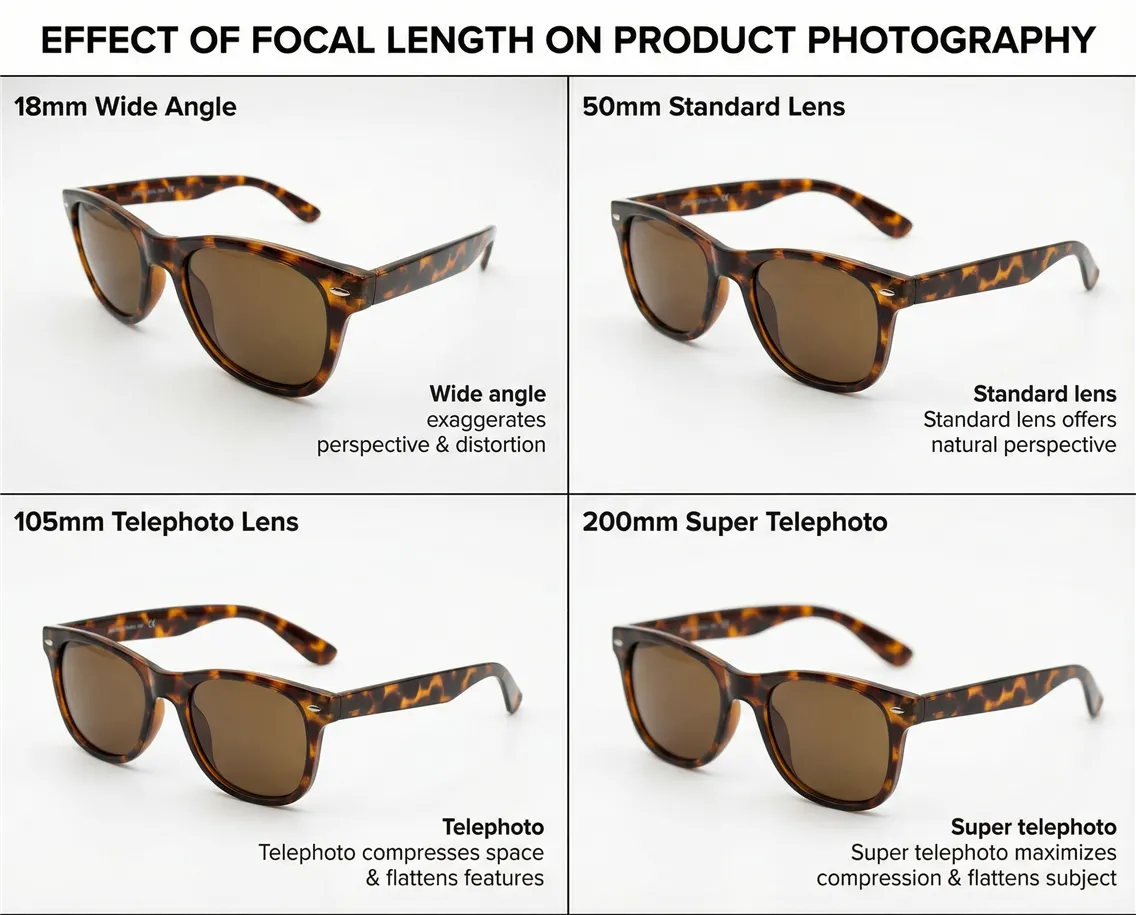
Focal length is not just about how close you can stand to the product. It directly affects proportions. Shorter focal lengths exaggerate depth and make foreground elements appear larger relative to the rest of the object. Longer focal lengths compress space and render proportions more naturally.
A common misconception is that “compression” is a magical optical property of telephoto lenses. In reality, compression comes from shooting distance. Longer focal lengths force you to step back, which changes perspective. In product photography, this often results in more accurate shapes, especially for cylindrical, rectangular, or layered objects.
Perspective has a direct psychological impact on perceived product quality. Distorted shapes, stretched edges, or exaggerated angles can make products feel cheaper or poorly manufactured, even if the object itself is premium. Choosing a focal length that respects the product’s geometry builds visual trust without the viewer consciously realizing why the image feels “right.”
Aperture Behavior in Real Product Scenarios
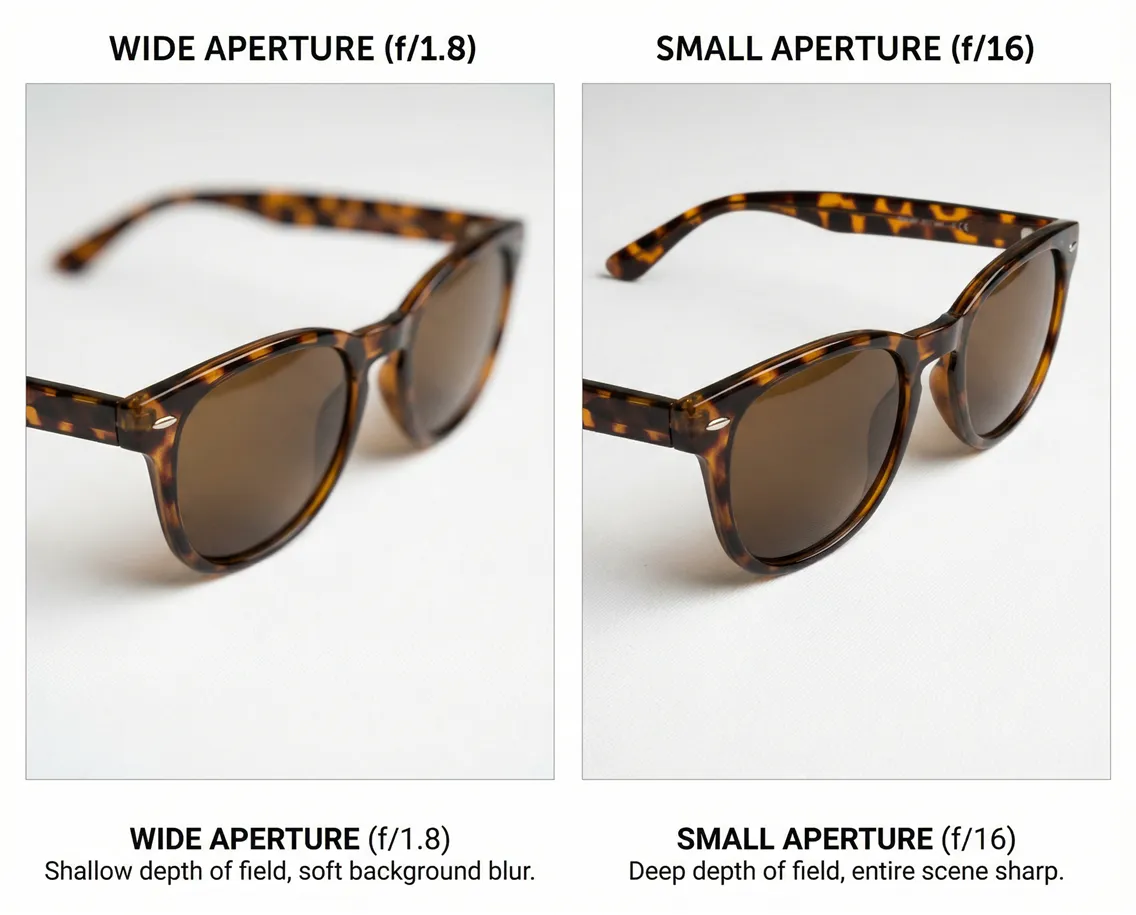
Most professional product photography happens between f/8 and f/16. This range balances depth of field, sharpness, and optical performance. Wide-open apertures are rarely useful unless you are intentionally isolating a detail or creating a very specific creative effect.
Diffraction becomes a real consideration at smaller apertures. While stopping down increases depth of field, it can also reduce overall sharpness. Understanding where your lens starts to lose micro-detail helps you choose the optimal aperture rather than blindly stopping down “just to be safe.”
Wide apertures do make sense in specific cases. Detail shots, lifestyle scenes, or creative product imagery may benefit from selective focus. But for core commercial images, wide apertures often create more problems than benefits, including focus falloff, inconsistent sharpness, and increased retouching complexity.
For how aperture decisions interact with lighting setup choices: Essential Lighting Setups for Product Photography
Macro Lenses in Product Photography And When You Need One
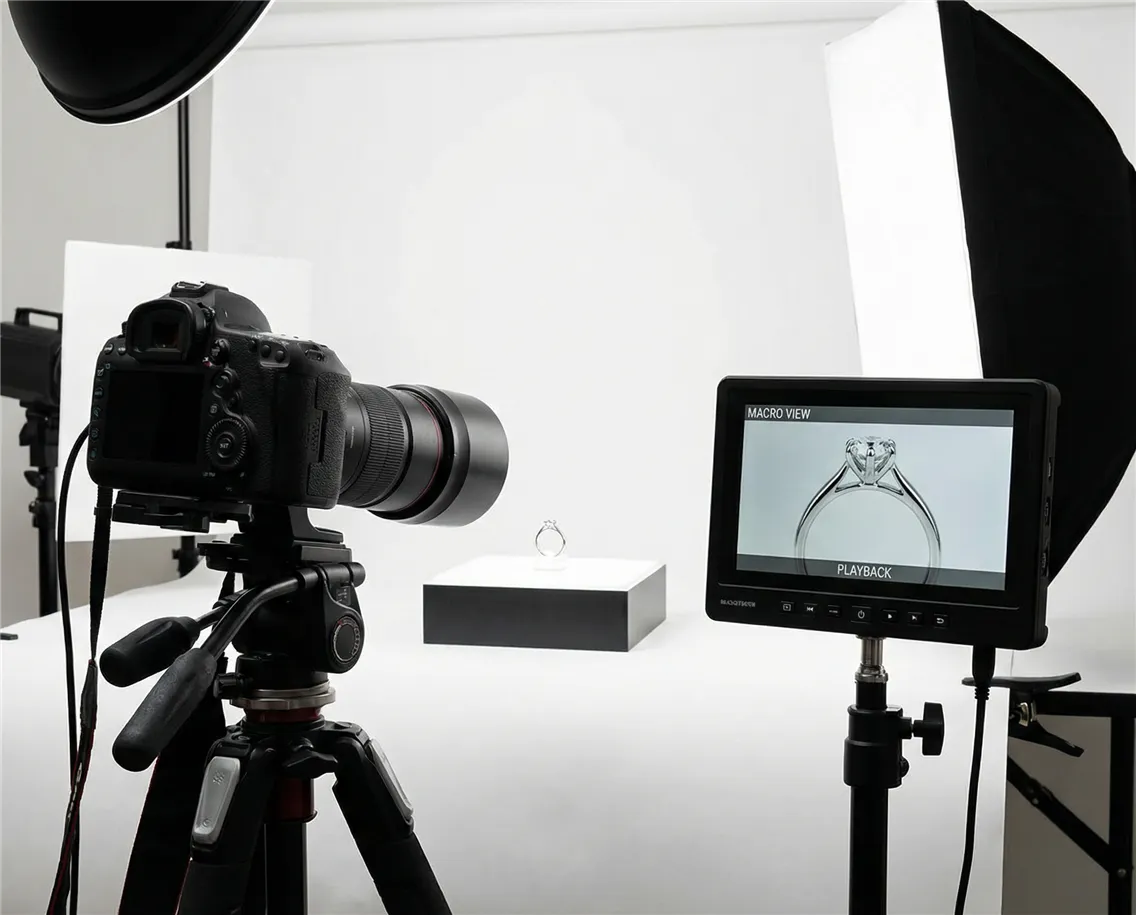
Macro lenses are often presented as essential for anyone shooting small objects, but they are highly specialized instruments. In the right scenario they are irreplaceable. Used outside that scenario, they quietly complicate both shooting and post-production.
True Macro vs “Macro-Labeled” Lenses
A true macro lens offers 1:1 magnification. This means the subject is projected onto the camera sensor at life size. In practical terms, a 10 mm detail on a ring, watch, or cosmetic applicator can occupy 10 mm on the sensor itself. This level of magnification reveals details that are invisible to the naked eye.
Close-focusing lenses, on the other hand, can focus relatively near but do not reach true 1:1 reproduction. For many product scenarios, this is more than enough. They allow you to fill the frame with small objects while maintaining better handling, faster autofocus, and more forgiving depth of field.
Beyond magnification, flat-field performance is critical. A lens that is sharp in the center but soft toward the edges creates uneven results, especially in symmetrical compositions. This softness may not be obvious during capture, yet it becomes a problem during retouching when uniform sharpness is expected across the piece.
Edge consistency also affects focus stacking. Lenses with field curvature introduce alignment issues between frames, increasing stacking errors and making the process slower and less reliable. A true macro lens designed for flat subjects reduces these problems before they start.
Standard and Short Telephoto Lenses for Product Photography
For most commercial product photographers, standard and short telephoto lenses are the real workhorses. They offer the best balance between perspective accuracy, working distance, handling, and post-production efficiency. If you had to build a product photography kit around one focal length range, this would be it.
50mm, 85mm, 90mm, 100mm Lenses and How They Actually Differ in Product Work
50mm
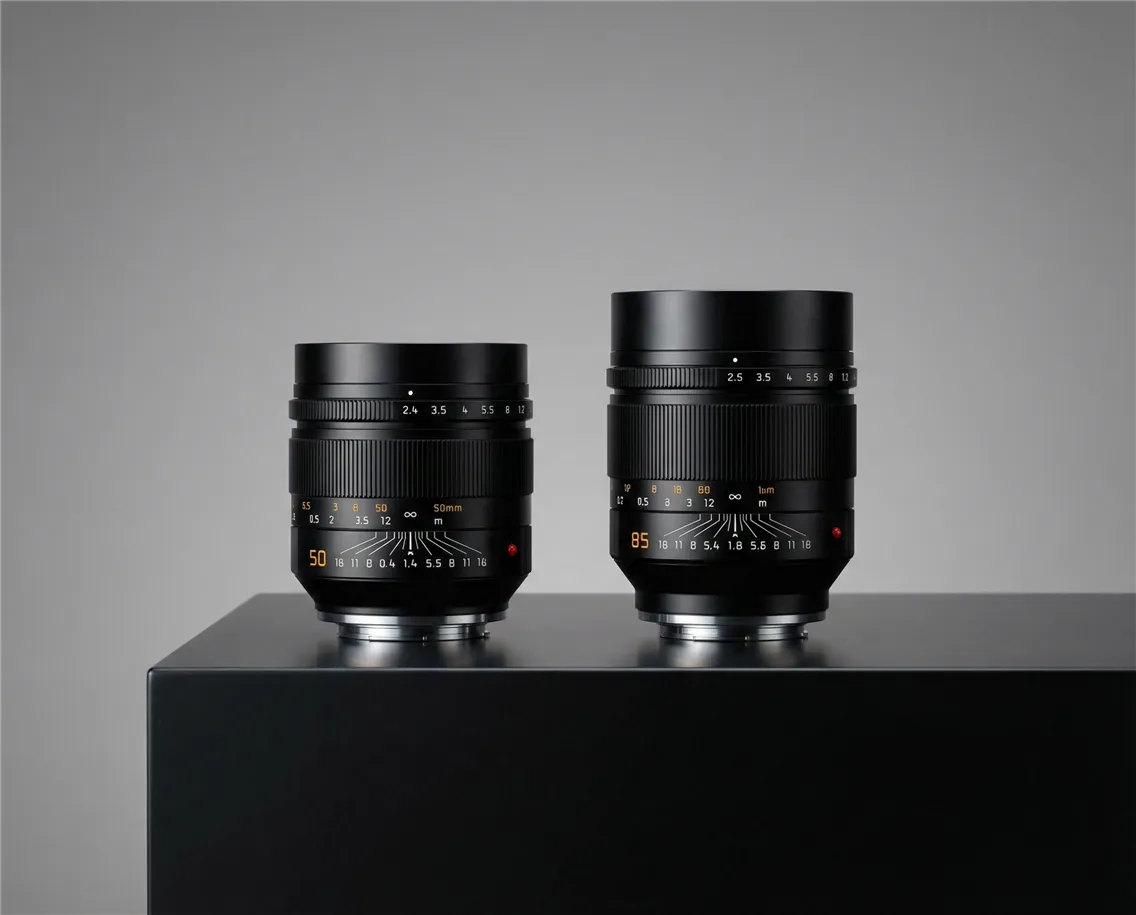
A 50mm lens is often described as natural, but in product photography it can be borderline wide, especially at close distances. It works well for larger products, lifestyle scenes, or when space is limited, but it can introduce subtle perspective exaggeration on smaller objects. Edges may feel slightly stretched, and proportions can drift if the camera position is not carefully controlled.
85mm to 105mm
This range is where many professionals settle for core product work. These focal lengths provide enough working distance to control lighting and reflections while rendering proportions in a way that feels neutral and trustworthy. Cylindrical objects stay cylindrical. Boxes stay square. Jewelry and accessories retain realistic scale without feeling compressed or flattened.
90mm and 100mm
These focal lengths often sit in a sweet spot. They offer many of the perspective benefits of longer lenses without requiring excessive studio space. This makes them especially practical for tabletop setups and catalog production, where consistency matters more than dramatic perspective.
The key difference is not just how close you stand, but how the lens encourages you to position the camera. That positioning is what ultimately defines proportions and visual credibility.
Zoom Lenses vs Prime Lenses for Product Shoots
Zoom lenses can be practical in certain scenarios. They are useful for scouting compositions, working in tight spaces, or shooting lifestyle content where flexibility matters more than absolute consistency. In fast-paced environments, a good zoom can save time and reduce lens changes.
However, zoom lenses introduce variability. Distortion, sharpness, and color rendering often change across the focal range. This may be invisible in a single image, but it becomes noticeable across a product series. Small inconsistencies accumulate, and retouching becomes more complex as each image requires slightly different corrections.
Prime lenses, by contrast, are predictable. They tend to have more stable optical characteristics, simpler distortion profiles, and more consistent sharpness across the frame. This predictability is a quiet but powerful advantage in commercial workflows. When every image behaves the same way, post-production becomes faster, cleaner, and easier to standardize.
Choosing Lens by Product Category: Jewelry, Fashion, Skincare and Tech
Lens choice becomes much clearer when you stop thinking in focal lengths and start thinking in product behavior. Different products demand different priorities, and a lens that works perfectly in one category can quietly sabotage another.
Jewelry and Small Luxury Objects
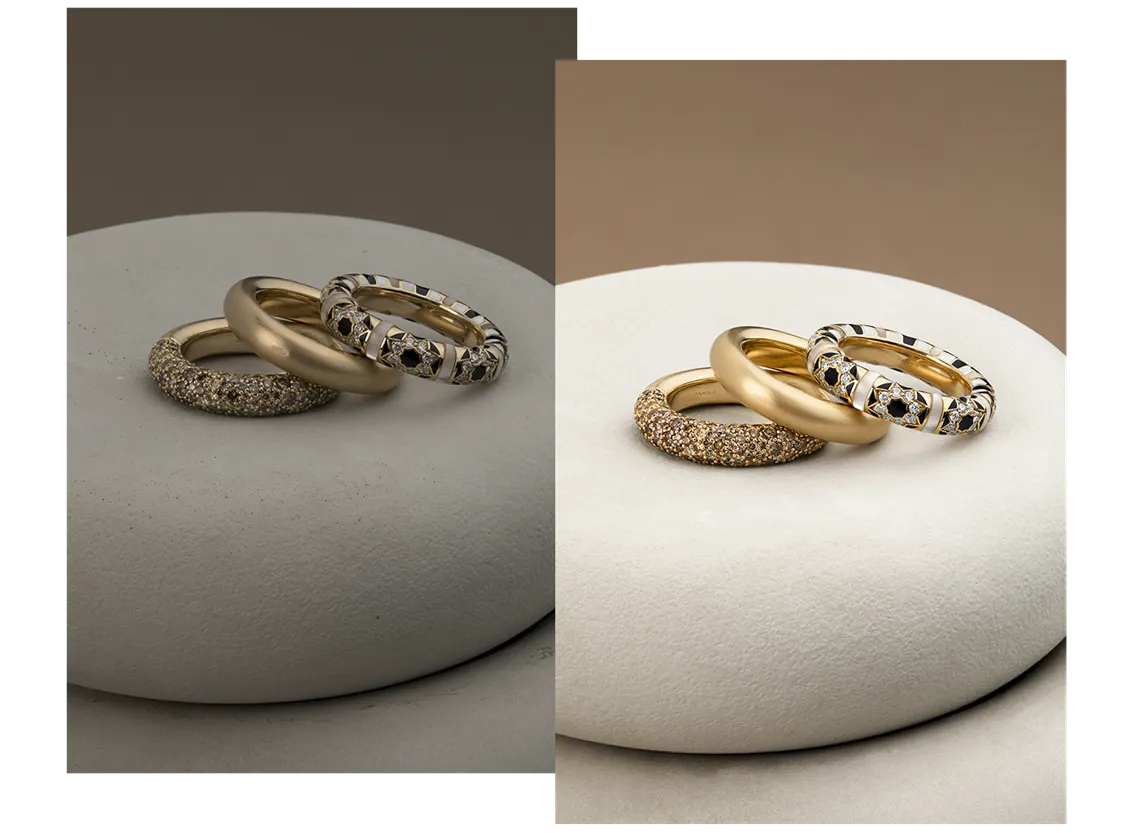
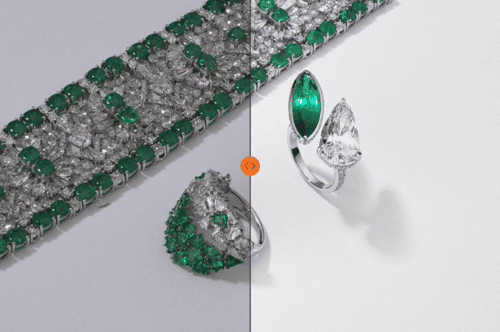
Jewelry and small luxury objects demand precision above all else. The decision here is usually between a true macro lens and a short telephoto lens with close-focusing capability.
Macro lenses are ideal when the detail is the product. Gemstones, engravings, prongs, clasps, and surface finishes benefit from true 1:1 reproduction. The key is restraint. Not every frame needs extreme magnification. Many commercial jewelry images work best when the product is shown clearly, not microscopically.
Short telephoto lenses in the 85–105mm range are often better for hero shots and catalog images. They preserve proportions, control reflections more easily, and reduce the need for aggressive retouching. Extreme detail can then be reserved for specific supporting images where it adds value rather than noise. Jewelry is highly sensitive to retouching decisions. Every lens choice directly affects how much surface cleanup, reflection control, and texture balancing will be required later.
Focal Length Choices for Rings, Earrings, and Necklaces
Focal length shapes perspective, compression, and how reflections behave across metal surfaces. Shorter macro focal lengths tend to exaggerate perspective and increase the risk of distortion, especially noticeable in round forms like rings. Longer focal lengths compress perspective more gently and provide greater working distance, which can simplify lighting and reflection control.
For rings and small items, longer macro lenses often offer better control and cleaner geometry. Earrings and necklaces introduce different challenges, particularly when depth and layering come into play. The ability to maintain consistent proportions without stretching or compressing elements unevenly saves significant time later.
Choosing focal lengths strategically reduces the need for corrective editing. Perspective issues are among the hardest problems to fix convincingly in post-production, and they are best avoided at the capture stage.
For most studio jewelry work, a 100 mm macro lens is a reliable sweet spot: it gives a comfortable working distance, clean geometry, and enough magnification for small pieces. A 100 mm lens also makes it easier to manage reflections and flags around the setup, which becomes increasingly important with polished metals.
For a complete guide to shooting jewelry in a commercial studio context: Professional Jewelry Photography: A Practitioner's Guide
Fashion Accessories and Apparel
Fashion accessories and apparel sit across two very different shooting scenarios: product-only and on-model. Treating them as the same leads to bad lens choices and unnecessary post-production work.
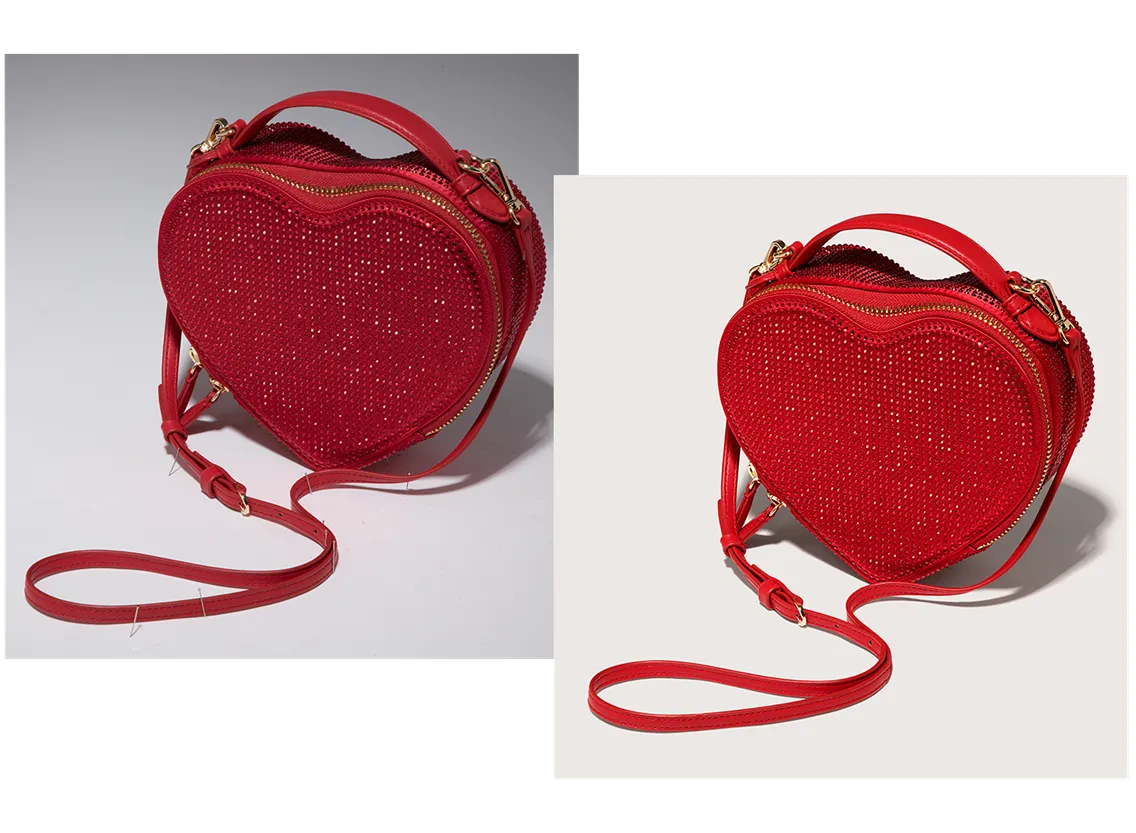
For product-only shots, shape accuracy is the priority. Belts, bags, shoes, hats, straps, fabrics, and hardware need to look proportional and structurally correct. Even slight perspective distortion can stretch straps, bend seams, or subtly alter silhouettes. These issues are rarely obvious during shooting but become painful during retouching.
Short telephoto lenses, typically in the 85–105mm range, work best here. They allow enough distance to minimize perspective exaggeration while keeping the product large and readable in the frame. Edges stay cleaner, textures render more naturally, and symmetry is easier to maintain. This reduces the need for geometric corrections later and keeps series images consistent.
For on-model shots, the logic changes. The product is no longer isolated. It exists in relation to the human body, posture, and movement. Here, the lens must balance two things at once: realistic product proportions and natural-looking human anatomy.
Longer focal lengths are still safer, but flexibility increases. A moderate telephoto can preserve product shape while avoiding awkward body distortion. Too wide, and hands grow unnaturally large, limbs stretch, and accessories warp. Too long, and the image can feel flat or disconnected from the model’s presence.
Choosing a focal length that behaves predictably across poses reduces retouching time and avoids mismatched proportions between frames. In both cases, avoiding distortion is not just about aesthetics. It is about workflow control. Clean geometry at capture means faster retouching, fewer revisions, and more reliable results across an entire collection.
For a complete guide to photographing handbags and structured accessories: How to Photograph Handbags: From Setup to Creative Ideas
Beauty, Skincare, and Cosmetics
Beauty and skincare products live at the intersection of precision and perception. Labels must be readable. Colors must be accurate. Glossy surfaces must look intentional, not chaotic. Longer focal lengths make it easier to control specular highlights and gradients on curved packaging. They also help maintain consistent color rendering across different products and shades.
Macro lenses are useful for texture shots, applicators, and product details, but they should be used selectively. Overusing macro in beauty photography often leads to excessive retouching, especially when dealing with dust, micro-bubbles, or surface inconsistencies that are invisible at normal viewing distances.
Tech, Tools, and Consumer Goods
Tech products and tools demand geometric honesty. Straight lines need to stay straight. Edges need to be crisp. Functional details must be clear without distortion.
Short telephoto lenses with low distortion profiles are ideal here. They reduce the need for perspective correction and preserve the integrity of the product’s design. This is especially important for products with sharp edges, grids, screens, or repeating patterns.
Lenses that minimize correction work downstream are always the better choice in this category. Time saved in post-production scales quickly when shooting large product lines or frequent updates.
Choosing Lenses Like a Professional Means Thinking Beyond the Camera
Professional lens choice is not about chasing the sharpest glass or the most expensive optics, but about understanding how lenses behave inside a larger production system.
Smart lens selection reduces retouching time, lowers post-production costs, and makes scaling easier as volume grows. The right lens creates a cleaner, more predictable workflow, not just a better individual image. Gear, shooting technique, and post-production are interconnected parts of one process. Planning for what happens after the shutter clicks is part of choosing lenses professionally.
When production volume grows beyond what one photographer can realistically retouch in-house, a clear handoff between shooting and post-production becomes critical. For how to evaluate that decision: Product Retouching: Mastering or Delegating?
For retouching workflow and standards across product categories: Best Practices for Retouching eCommerce Product Photos