





Outsourcing Photo Editing vs Hiring In-House: Which Saves More for eCommerce Brands?
As brands grow, photo editing stops being an occasional task and becomes part of daily operations. New product drops, marketplace updates, paid ads, seasonal campaigns.
At some point, the question becomes unavoidable: outsourcing photo editing vs hiring in-house, which actually saves more?

What Hiring an In-House Photo Editor Really Costs
Hiring internally sounds straightforward. You post a job listing, interview candidates, agree on a salary, and bring someone into the team. From that moment, photo editing becomes an internal capability rather than an external service. But the financial and operational implications go further than most brands initially calculate.
In-House Retouching Expenses
The obvious number is the monthly salary. That’s what most brands compare against outsourcing quotes. But the full in-house photo editor cost includes office space, payroll taxes, software subscriptions, calibrated equipment, potential hardware upgrades, and the time invested in recruitment and onboarding.
More importantly, it introduces a fixed monthly expense into your structure. Whether you process 50 images or 500, that salary remains constant. During slower months, when production volume drops, the cost per image effectively increases because the expense does not shrink with demand. This is not necessarily bad. It just describes the nature of your cost model as fixed.
The Project Management and Quality Control Factor
An in-house editor does not operate in isolation. Someone has to define standards, brief tasks, review outputs, and make final approvals. In many growing eCommerce brands, this role falls on the creative director or marketing manager.
That time has value. If there is no clear visual guideline, every batch turns into a discussion. If there is no structured approval process, files move back and forth. If no one is formally responsible for quality control, mistakes slip into product pages, and corrections happen after publishing.
Internal editing only works smoothly when there is clarity around:
• Who sets visual standards
• Who reviews and signs off on final files
• How revisions are tracked
• How priorities are assigned during busy periods
Without that structure, proximity does not automatically mean efficiency. It can actually create more informal back-and-forth that slows production.
There is also the question of quality checks. In a one-person setup, quality control and execution are the same person. The editor reviews their own work. That works when the person is experienced and disciplined, but it removes the second layer of review that often catches small but important inconsistencies.
In larger operations, you may need a separate reviewer or art director to protect consistency across campaigns and collections. That is another hidden cost, either in time or salary.
Capacity and Concentration Risk
Internal capacity is finite. One person can process only a certain volume per day without compromising quality. When production spikes before a product launch or during peak season, output cannot instantly scale. The only options are overtime, deadline shifts, or hiring additional staff, which further increases fixed costs.
There is also a concentration risk. If your editing pipeline depends on one non-interchangeable individual, any absence slows the entire system. Illness, resignation, or even creative fatigue affects delivery timelines.
In growing eCommerce operations, especially those expanding SKU counts or marketplaces, this dependency can quietly become a bottleneck.
In-house editing can be stable and comfortable, as it ensures consistency and full operational control. But it requires management discipline, quality control structure, and acceptance of fixed costs.
How to Evaluate a Retoucher’s or Editing Studio’s Portfolio Work Before Hiring
Most portfolio reviews are too superficial. A few impressive before-and-after slides do not tell you how someone performs under real commercial pressure.
Look for Consistency Across Multiple Images
What matters in eCommerce is batch consistency. Ask to see full sets, for example, 10 images from the same product line or a complete collection prepared for marketplace upload. That is where you see real competence.
Check whether shadows behave consistently across angles, look at color accuracy across an order, also, pay attention to cropping, proportions, and background consistency. In commercial production, inconsistency creates friction in customer perception. Visual coherence builds trust.
Check if the Product Still Looks Real
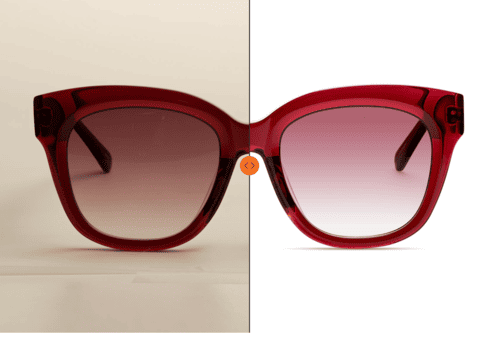
Strong retouching should improve clarity without distorting reality: jewelry reflections must feel natural, models’ skin should retain texture, the fabric structure should remain believable. Over-smoothing, artificial shine, or exaggerated color grading might create customer dissatisfaction in real-world sales.
Skill Depth: Studio vs Freelancer Background
In established retouching studios, the most skilled retouchers often go through internal training programs before working independently. In LenFlash, our retouchers do not immediately start working on client files. Besides they have a fine photography background, they go through months of supervised training, quality control testing, and style adaptation. Only after meeting internal standards do they begin handling commercial projects. This creates two important advantages.
First, quality is standardized. Retouchers work within documented guidelines and visual systems. Second, they are generalists in the best sense. They are trained to adapt to different brand styles rather than applying one personal aesthetic to every project.
With freelance retouchers or independent editors, the background can vary widely. Some are highly experienced professionals with strong discipline and commercial awareness. Others may have learned on their own, worked within a single brand environment, or developed expertise in one specific editing style.
If someone previously worked only in one workflow, adapting to your brand standards may take time. If they operate independently without a structured quality check above them, the entire responsibility for consistency rests on your team.
That does not make freelancers inherently unreliable. It simply means you must evaluate their background more carefully. Ask about previous brand environments, volume handled per month, and how they adapt to different visual guidelines.
Ask These Before You Commit
Before hiring a retoucher or choosing a studio, clarify operational details, not just creative ones.
What do they expect from quality control?
Is there a second layer of review before files are delivered? Are they open to revisions without extra costs?
What is the revision process?
How many rounds are included? How is feedback structured? What are the means of communication? In LenFlash, for example, all file management, project management, storage, and communication is in one place - in our LenFlash Cloud system.
How do they handle peak volume?
If you choose a freelancer, you are relying on individual discipline and availability. If you choose a studio, you are evaluating the strength of its internal structure. Because in commercial production, reliability is not just about talent. It is about the systems behind that talent.
Working With a Remote Retouching Professionals: What to Expect
Reasons to Outsource Photo Retouching
Brands typically move toward professional photo retouching services for one core reason: flexibility.
For many growing brands, the shift toward a remote retouching studio happens when internal capacity starts to feel tight, SKU counts increase, product drops become more frequent, marketplaces introduce new image requirements. In this moment, editing stops being a creative task and becomes production infrastructure.
When volume increases, a structured studio can scale output by allocating additional retouchers. When volume slows, you are not carrying fixed payroll. The cost adjusts to demand.
You also reduce dependency on a single individual. In a studio environment, quality standards are documented and shared. Retouchers are trained to adapt to different brand styles, not apply one personal aesthetic to every project. This matters when you are managing multiple collections, seasonal campaigns, or different marketplace guidelines.
How the Workflow Usually Works
- Files are uploaded into a centralized system
- Briefs are attached with visual references and technical notes
- Turnaround times are defined before production starts
- Revisions follow a clear protocol instead of endless email threads
At LenFlash, this structure is built into LenFlash Cloud. It is not just a file-sharing folder. It is a centralized production environment where brands can upload assets, track project status, review edits, leave structured feedback, and access approved files in one place.
Every project moves through documented stages, quality control is layered, and visual standards are applied consistently across batches. This reduces miscommunication and protects brand consistency over time.
Because we combine product photography and professional photo retouching inside the same ecosystem, production and post-production stay aligned. That alignment shortens revision cycles and increases visual consistency across collections. For decision-makers, this means fewer unpredictable delays and clearer visibility into where every project stands.
When Outsourcing Saves More
Outsourcing becomes financially smarter when your production volume fluctuates or scales quickly. If your SKU count is expanding, if seasonal spikes are intense, or if you are entering new marketplaces with additional technical requirements, fixed internal capacity often becomes either overloaded or underutilized.
The real savings do not always appear in a simple per-image comparison. They appear in avoided hiring cycles, reduced dependency risk, and smoother scaling during launches.
If you are looking for a reliable, scalable retouching system rather than just an editor, LenFlash retouching is designed exactly for that purpose. You can upload your next batch through LenFlash Cloud and see how structured, studio-level post-production feels in practice.
How Long Does Professional Retouching Take?
When brands ask how long professional retouching takes, they usually expect a simple answer. One number. One timeframe. In reality, turnaround depends on three variables: image complexity, batch size, and workflow structure.
Basic eCommerce Editing
If the raw photography is technically clean, a structured team can process large batches efficiently because:
• Editing logic is repeatable
• Visual standards are predefined
• Quality control follows fixed checkpoints
For these types of projects, turnaround is predictable and scalable.


Jewelry Retouching
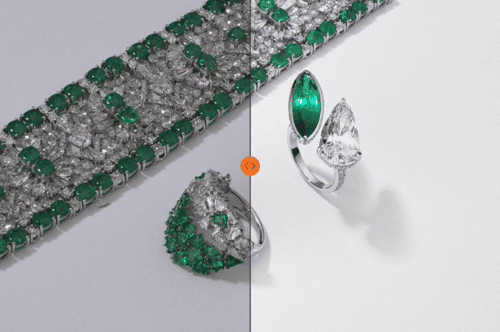
Jewelry is different. Metal surfaces amplify every lighting inconsistency. Gemstones reflect color shifts. Micro-scratches become visible at high resolution. If reflections are mishandled, the piece looks artificial or plastic. Professional jewelry retouching requires reflection control without flattening the metal, precision color correction for gemstones, micro-detail enhancement without over-sharpening, and consistency across an entire collection.
In structured studios like LenFlash, jewelry is typically assigned to retouchers trained specifically for high-detail product work. Internal training programs ensure that retouchers understand material behavior, not just Photoshop tools.



Complex Apparel and On-Model Editing
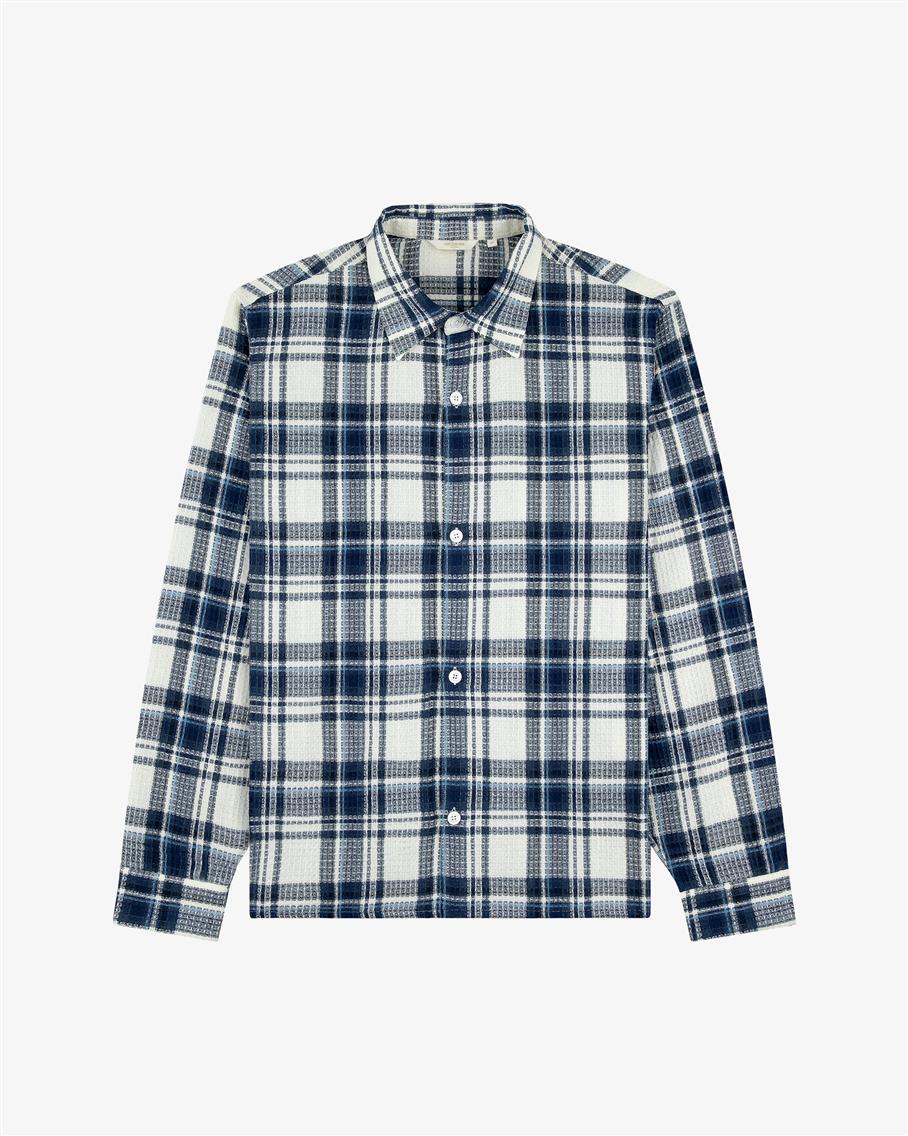
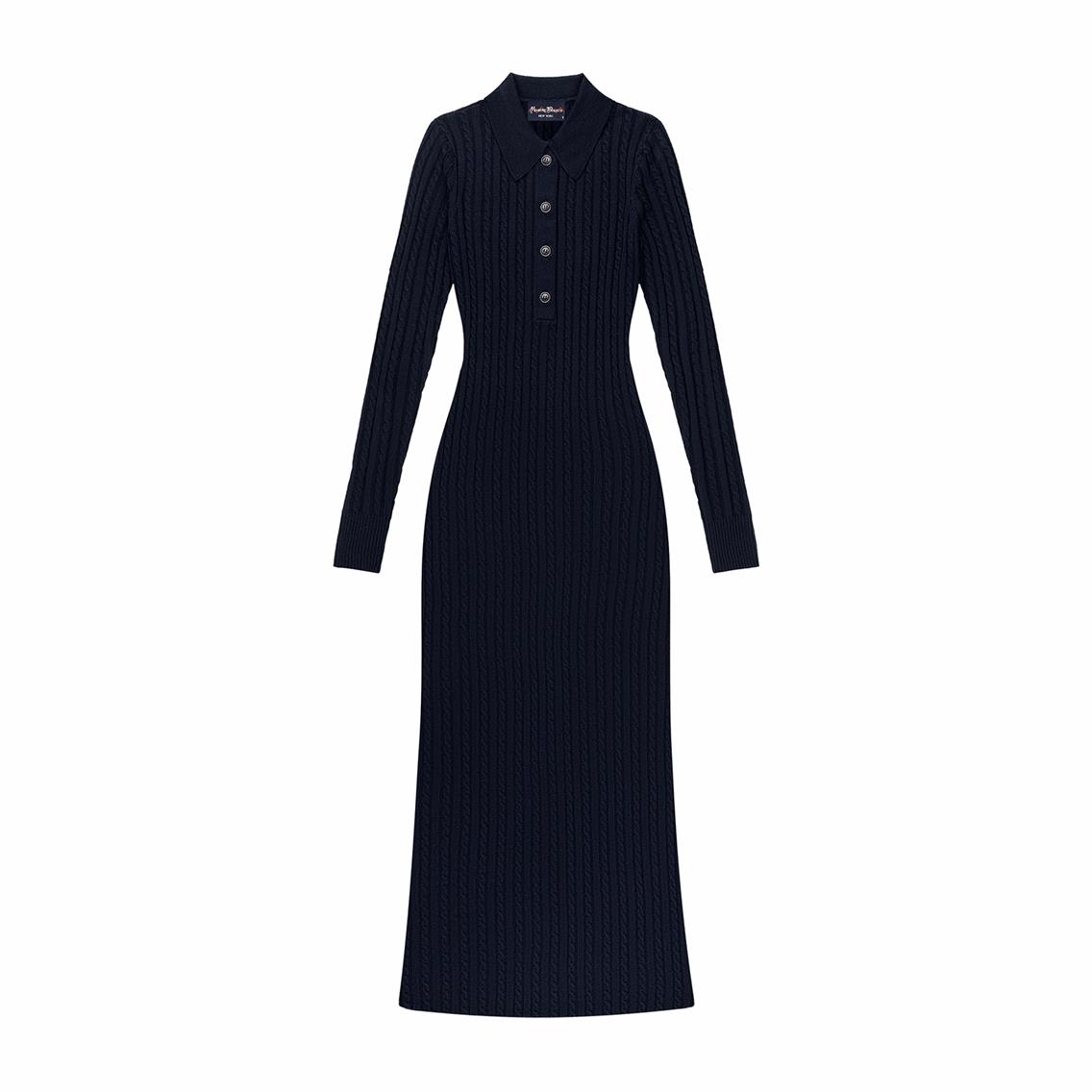
Fabric distortions, garment symmetry, wrinkle control, color accuracy under studio lighting, skin refinement for on-model shots, and maintaining natural proportions all require controlled decision-making.
Over-editing apparel can distort fit perception. Under-editing can reduce perceived quality. In LenFlash, complex apparel projects are reviewed through layered quality control. Final files pass through a secondary review before delivery to ensure consistency and accuracy across a lookbook or product range.

What Actually Affects Turnaround
In a professional studio environment, delays usually do not come from editing itself. They come from process gaps. If raw files are inconsistent, retouching time increases. If briefs are unclear, revision rounds multiply. If visual standards change mid-batch, rework becomes unavoidable.
With LenFlash Cloud, these risks are reduced because briefs, references, and feedback are centralized. Projects move through defined stages. Quality control is embedded in the workflow, not added informally at the end.
So when people ask how long professional retouching takes, the real answer is this: turnaround depends on complexity, but reliability depends on structure. At LenFlash, we offer a rush option and can complete your retouching order in even as little as 1 business day.
So, Which Approach Saves More?
In-house editing is expensive. Not just because the salary is high, but because it is fixed. You are locking yourself into a monthly cost regardless of volume. You are also concentrating responsibility in one or two individuals. Quality control, workload balance, peak season pressure, all of it sits on a small internal unit.
If your SKU count is stable, that may be acceptable. You trade flexibility for proximity. Fine.
But once you cross a certain threshold, high SKU count, frequent launches, multi-platform selling, and new product categories, internal capacity becomes fragile.
One product drop can overload the system. One absence can delay the pipeline. One inconsistent batch can affect hundreds of listings.
Freelancers are cheaper, but operationally, they are risky. If they are overloaded, you wait. If they move on to another client, you wait.
A structured studio, like LenFlash, is built differently. It is not one editor, it is a trained team. Retouchers go through internal programs before working independently. Jewelry specialists understand reflection logic. Apparel retouchers understand garment geometry and proportion control. Every project passes quality checks. Capacity expands without rebuilding the system from scratch. That is the difference.
Does outsourcing always mean a lower price per image? No.
Does it mean lower risk, better scalability, and more predictable production under pressure? Yes.
And in commercial operations, reduced risk and stable launches save more money than shaving a few dollars off editing fees.
So here is the real conclusion: If you are scaling and serious about growth, build your visual production around structure.
Because in eCommerce, what costs you the most is not editing itself. It is inconsistency, delays, and operational fragility. Choose the model that protects you from that.