





The Real Cost of Product Photography: Financial Planning for your Brand
Photography budgets in eCommerce are consistently either over-allocated to production and under-allocated to post-production, or built reactively around individual shoots rather than annual content requirements. Both patterns produce the same outcome: higher cost per asset, lower visual consistency, and a production process that requires constant management rather than running predictably.
Planning a photography budget correctly means understanding what drives costs at each production stage, how to allocate spend across pre-production, production, and post-production, and how to build a visual content plan that maps to the marketing calendar rather than reacting to it.
Part of our complete guide: The Ultimate Guide to eCommerce Product Photography

What You Are Actually Paying For
Every professional photography production has three stages. Each has a cost. Treating any of them as unimportant consistently produces higher total cost, not lower.
Pre-Production
Pre-production covers creative direction, moodboard development, shot list creation, studio or location planning, model casting, stylist coordination, and product preparation. The better this stage is executed, the more efficiently everything that follows runs.
Brands that cut pre-production to save money almost always spend more in total. Unclear direction leads to reshoots. Poor casting produces images that do not perform. Missing shot list items mean additional sessions. The cost of adequate pre-production is almost always less than the cost of fixing problems that pre-production would have prevented.
The most expensive photography mistake is skipping pre-production to save money. Reshoots cost more than the pre-production that would have prevented them.
For how to build a brief that captures all pre-production requirements: How to Work With a Photography Studio Effectively
Production
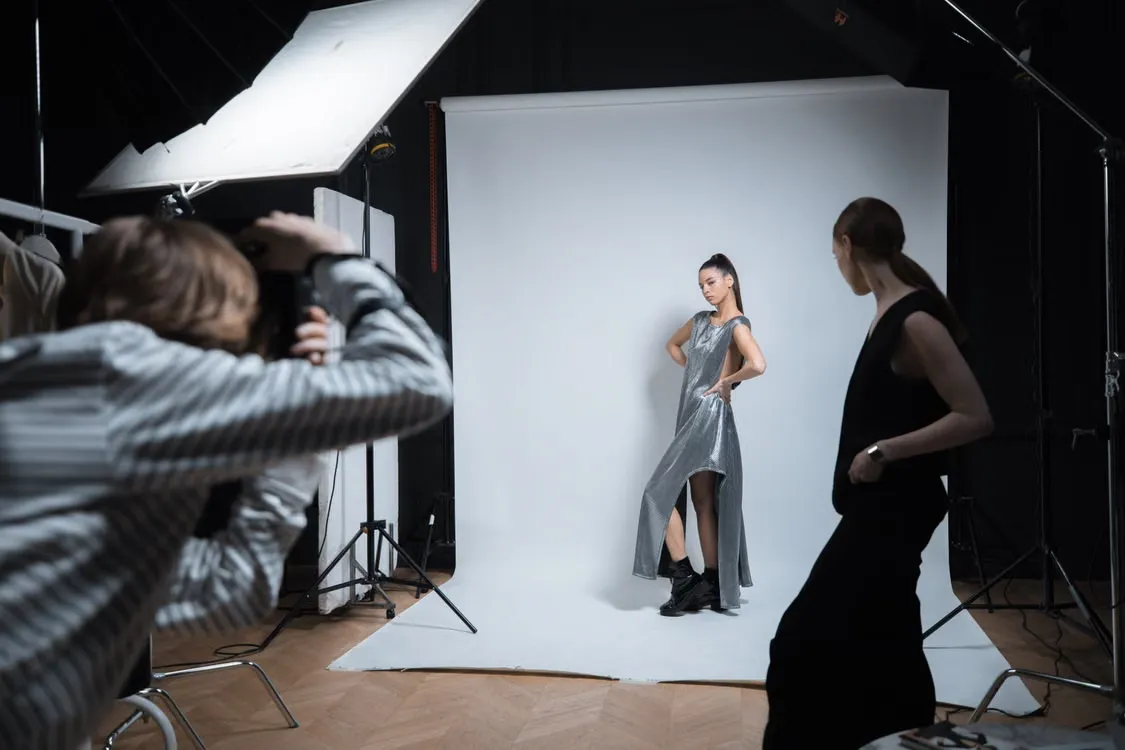
Production covers the photographer, lighting equipment, studio or location rental, models, stylists, hair and makeup, producer or coordinator, and any specialist equipment the production requires.
Production costs vary significantly depending on what is being produced. A catalog shoot for eCommerce product pages has different crew and time requirements from a lifestyle campaign with models and location sets, which differs again from a 360-degree spin video or stop-motion animation session. The variables that drive production cost are the same regardless of type: crew size, shoot days, talent requirements, location versus studio, and the number of setups within a session.
Post-Production
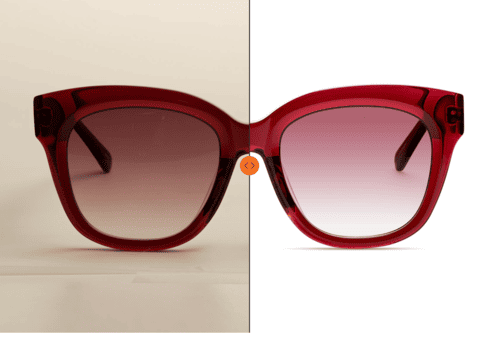
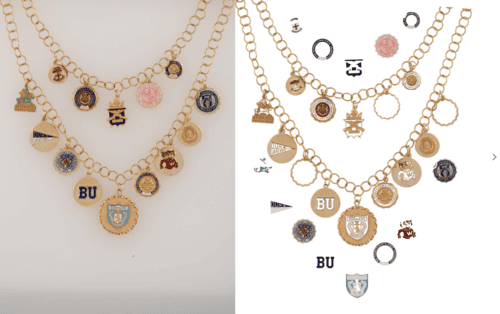
Post-production covers culling, color correction, retouching, background removal, format resizing, file naming, quality assurance, and delivery. It is the stage that determines the final quality and commercial usability of the images.
Post-production is consistently underestimated in photography budgets. For a catalog covering hundreds of SKUs, post-production time can equal or exceed shoot time in cost. It is also what determines visual consistency across the full catalog. Images from multiple sessions produced across weeks or months need to match in color temperature, retouching standard, and background tone for the catalog to feel coherent. This requires a documented retouching workflow applied systematically, not just competent individual retouching.
Allocating most of the budget to the shoot day and treating post-production as a minor line item is the second most common photography budget mistake.
For retouching standards and quality benchmarks: Best Practices for Retouching eCommerce Product Photos
What Drives Photography Cost
Photography costs are determined by a specific set of variables that apply consistently across production types. Understanding these allows informed decisions about where to invest and where to economize.
Production type is the primary driver. Clean catalog photography on white backgrounds requires controlled studio conditions and precise retouching but does not need large crews or location logistics. Lifestyle photography with models and styled environments requires casting, styling, location or set design, and more crew. Campaign photography with multiple scenarios and editorial production quality requires the highest investment across all variables simultaneously.
Volume affects per-asset cost significantly. A production covering fifty SKUs in a single session amortizes setup, crew, and equipment costs across more output than a session covering five. Brands that plan in advance and batch similar products into single sessions consistently achieve lower per-asset costs than those commissioning reactive small-batch shoots.
Crew size is determined by the production type. A product photographer and producer cover straightforward catalog work. A lifestyle campaign with models requires a photographer, director, stylist, makeup artist, model, and producer at minimum. Each additional specialist adds to the production day cost.
Location versus studio has predictable cost implications. Studio productions are more cost-predictable. Location productions add scouting costs, rental or permit fees, transportation, and the logistical complexity of working outside a controlled environment.
Post-production complexity scales with the work required, not just the number of images. A straightforward white background catalog image requires less retouching time than fine jewelry with reflective surfaces and gemstone enhancement. Beauty images with skin retouching requirements take longer than packaged goods. Campaign images with compositing take longer than simple color correction.
LenFlash pricing is fully transparent across every production type. Every service, angle, format, and additional option is calculated in real time before any commitment is made.
See product photography pricing and build your order · See retouching pricing
The Budget Allocation Framework
Once the total photography budget is defined, how it is allocated across the three stages determines whether the production delivers its objectives. Most brands allocate intuitively and get the proportions wrong. A practical framework:
| Stage | Allocation | What It Covers |
|---|---|---|
| Pre-production | 20% | Creative direction, moodboards, casting, shot list, styling planning, product prep |
| Production | 50% | Photographer, equipment, studio or location, crew, talent, coordination |
| Post-production | 30% | Retouching, color grading, resizing, file delivery, asset organization |
Leave a 10 to 15 percent flexibility buffer outside this allocation for unplanned needs: a reshoot, an additional product, or a fast-turnaround seasonal update. This prevents financial friction without stretching the main budget.
The most important thing to notice in this framework is that post-production receives 30 percent. Most brands budget far less than this. The consequence is either rushed post-production that produces inconsistent output, or a backlog that delays product launches.


Budget Planning by Brand Stage
The right photography budget looks completely different at ten SKUs per month versus two hundred. The strategic priorities, the production model, and the cost structure all change as the brand scales. Here is how to think about budget planning at three distinct stages.
Early Stage: Under 50 SKUs Per Month
At this stage, the primary objective is producing commercially adequate product images cost-efficiently. The brand does not yet have the volume to justify extensive campaign production or high-complexity lifestyle photography. The focus is on clean, consistent catalog images that meet marketplace requirements and communicate product quality accurately.
The biggest mistake at this stage is spending heavily on campaign photography before the catalog foundation is in place. Product pages convert customers. Campaigns bring them there. Both need to exist but the order matters.
The production model that works at this stage is a professional studio session covering the full catalog in one or two shoot days, with a defined retouching standard applied consistently across all output. The brief should specify angles, formats, and delivery specifications clearly so the session can be repeated with the same results as the catalog grows.
See catalog photography options at LenFlash
Growth Stage: 50 to 200 SKUs Per Month
At this stage, volume and consistency are the primary challenges. The brand is producing enough content that informal production processes create visible inconsistency across the catalog. Multiple photographers, freelancers, or studios may be contributing to the output without a shared standard.
The production investment at this stage should go toward two things: a documented visual style guide that governs all production regardless of who executes it, and a post-production workflow with calibrated color grading across sessions. Without these two systems, adding volume makes the consistency problem worse rather than better.
Campaign and lifestyle photography become commercially justified at this stage because the catalog foundation is in place and the brand has enough traffic to measure whether campaign content is improving conversion and return rates.
For how to build the production systems that support this stage: How to Scale Visual Content Production as Your eCommerce Brand Grows
Scaling Stage: 200+ SKUs Per Month
At this stage, production efficiency and asset management are the primary challenges. The brand is producing enough content that the cost per asset, the delivery timeline, and the asset management infrastructure all have measurable impact on marketing performance and operational cost.
The production investment at this stage should go toward batching efficiency, a professional asset management system, and a studio partner who can maintain quality and consistency at volume without requiring constant management from the brand's internal team.
Campaign production at this stage is a significant annual investment that should be planned as part of the annual marketing budget rather than commissioned reactively. The per-campaign cost is justified by the volume of channels and touchpoints it serves and the duration over which it is deployed.
For enterprise production volumes, contact LenFlash to discuss a production partnership
Hidden Costs That Most Photography Budgets Miss
The following costs are real, common, and consistently absent from initial photography budgets. Accounting for them at the planning stage prevents the financial surprises that undermine confidence in the production process.
Reshoot costs from insufficient pre-production. When a shoot delivers images that do not meet the creative brief because the brief was not specific enough, the reshoot costs the full production investment a second time. Pre-production investment that prevents reshoots pays back immediately.
Overtime on shoot days. Productions that run beyond their scheduled time incur overtime costs for crew, studio, and talent. The primary causes are insufficient pre-production planning, scope expansion on the day, and unrealistic shot list targets for the available time. All three are preventable at the planning stage.
Asset reformatting costs. When images are produced for one channel and later need to be reformatted for a channel that was not considered at the shoot stage, either the reformatting costs time and money or a reshoot is required. Planning all channel deliverables before the shoot begins eliminates this cost entirely.
Model cancellation fees. Most model contracts include cancellation fees if the shoot is postponed or cancelled within a defined notice period. Budget for these as a contingency when casting professional talent, particularly for productions with long lead times.
Music licensing for video content. Video productions that use music require licensing. Stock music libraries have subscription or per-use costs. Original composition is significantly more expensive. This is a consistent budget oversight for brands producing video content for the first time.
Platform-specific compliance reshoots. Products launched on new marketplaces sometimes require reshoots because the existing photography does not meet the platform's technical requirements. Amazon's pure white background requirement is the most common cause. Planning for marketplace compliance in the original brief prevents this.
In-House vs Outsourced: The Budget Implications
The decision between in-house and outsourced production has direct budget implications that are often misunderstood at the planning stage.
In-house production appears cheaper because the marginal cost of an additional shoot day is low once the infrastructure exists. The full cost includes equipment depreciation, software subscriptions, studio space, salaries and benefits for the photography and retouching team, management overhead, and the opportunity cost of the management time spent coordinating production rather than on commercial strategy. For most brands, this fully-loaded cost is significantly higher than the equivalent outsourced production cost until volume justifies it.
Outsourced production through a professional studio converts fixed costs to variable costs. The brand pays for what it uses when it uses it. Quality is consistent because the studio's equipment, team, and workflow are already built and calibrated. The brand's internal team manages the brief and the approval, not the production.
For a complete analysis of what in-house production actually costs at different volume levels: Setting Up an In-House Photography Studio for eCommerce Brands
Annual Photography Budget Planning
The most cost-efficient photography operations plan production annually rather than reactively. Annual planning allows batching across sessions, advance studio booking at better rates, and a production schedule that serves the marketing calendar rather than scrambling to meet it.
Map the Marketing Year First
Before setting the photography budget, map the marketing year. Every product launch, seasonal campaign, marketplace expansion, and catalog refresh requires visual content. The photography budget is the production cost of that content plan, not an independent line item.
A practical annual framework:
Q1 covers new year campaigns, catalog refreshes for returning season products, and Valentine's Day campaign content for gift-focused categories.
Q2 covers spring and summer collection launches, lifestyle content for warm-weather products, and any influencer or editorial campaign content for the first half of the year.
Q3 covers back-to-school campaigns for relevant categories, early holiday preview content for wholesale buyers, and any content for new marketplace listings planned for Q4.
Q4 covers the full holiday campaign production including Christmas catalog updates, gift set photography, lifestyle content for holiday marketing, and any promotional campaign assets for Black Friday and Cyber Monday.
Plan Productions in Blocks
Once the marketing year is mapped, group productions by shared requirements. Products with the same background standard, lighting approach, and styling requirements can be shot in a single session. Collections launching in the same season can share a lifestyle production. Campaign content for Q1 and Q2 can often be captured in a single late-Q4 production day.
Blocking productions this way reduces the number of individual sessions required, amortizes setup costs across more output, and allows the post-production workflow to run in planned batches rather than continuously.
Build in a Planning Buffer
Reserve 10 to 15 percent of the annual photography budget for unplanned requirements. New product additions, fast-turn campaign updates, and marketplace compliance reshoots all require budget that was not in the original plan. A planned buffer prevents these from disrupting the core production schedule.
For how to coordinate multichannel visual content across the full marketing calendar: How eCommerce Brands Manage Visual Content Across Multiple Channels
Photography Budget as a Percentage of Revenue
A common question at every brand stage is how much of revenue should go to photography. The honest answer is that there is no single correct percentage because the right investment depends on the product category, the channel mix, the brand's growth stage, and how central visual content is to the conversion strategy.
What is consistent across successful eCommerce brands is that photography spend is treated as a commercial investment rather than a cost to minimize. The return is measurable through conversion rate, return rate, advertising efficiency, and catalog consistency over time.
For how to measure whether photography investment is delivering its commercial objectives: How to Measure the Impact of Product Photography on eCommerce Sales
Transparent Pricing at LenFlash
Most photography studios require a consultation before providing pricing. LenFlash pricing is fully transparent and available online before any commitment is made. Every service, additional angle, format, and post-production option is calculated in real time through the ordering platform. The final figure reflects the actual production being commissioned, not a generic estimate.