

How to Choose the Right eCommerce Photography Studio for Your Brand
Most brands make their photography studio decision based on portfolio aesthetics and price. Those matter, but they are not the criteria that determine whether the relationship actually works at production scale. A studio whose portfolio looks exactly right can still produce the wrong images if they do not understand your retailer's spec requirements, cannot handle your volume without quality variation, or takes three weeks to deliver when your timeline needs seven days.
This guide covers what our clients tell us they wish they had evaluated before committing to their first shoot — and the questions that surface the answers most clearly.
Part of our complete guide: The Ultimate Guide to eCommerce Product Photography
9 Key Factors to Consider When Hiring an eCommerce Photographer
All hands on deck: the essential criteria that business owners need to fulfill when choosing the right eCommerce photographer, considering both technical skills and the ability to align with the brand’s marketing goals.
1. Category experience
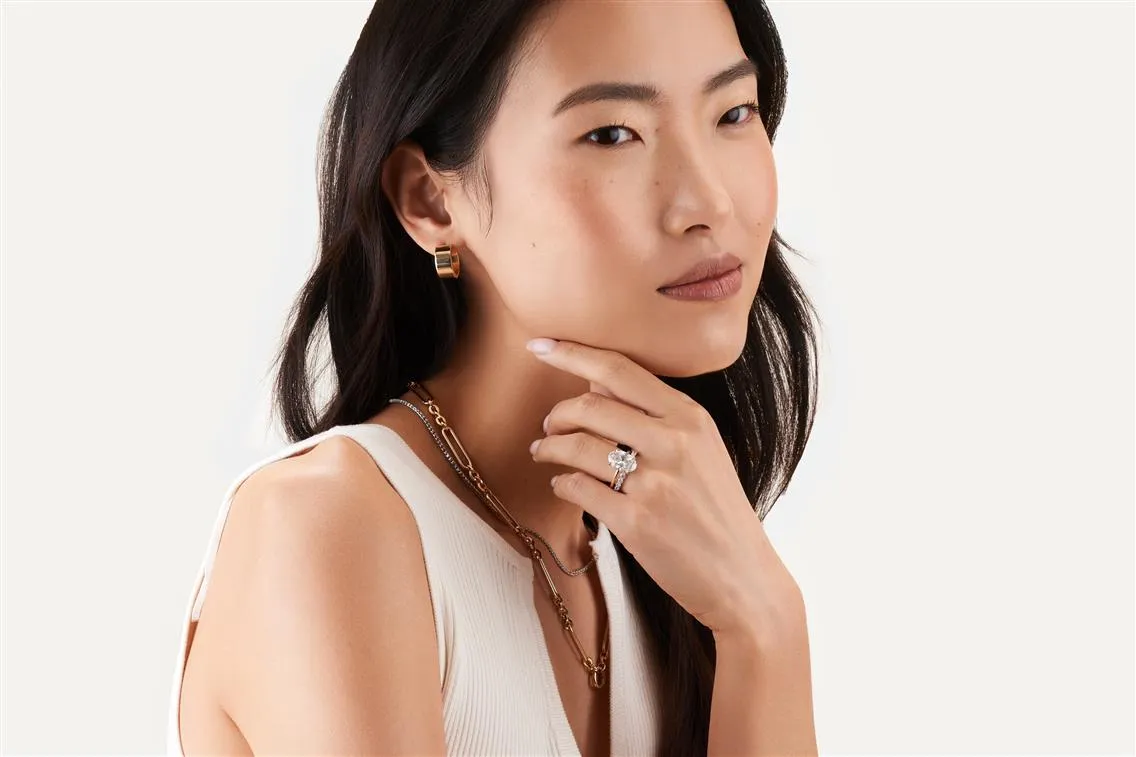
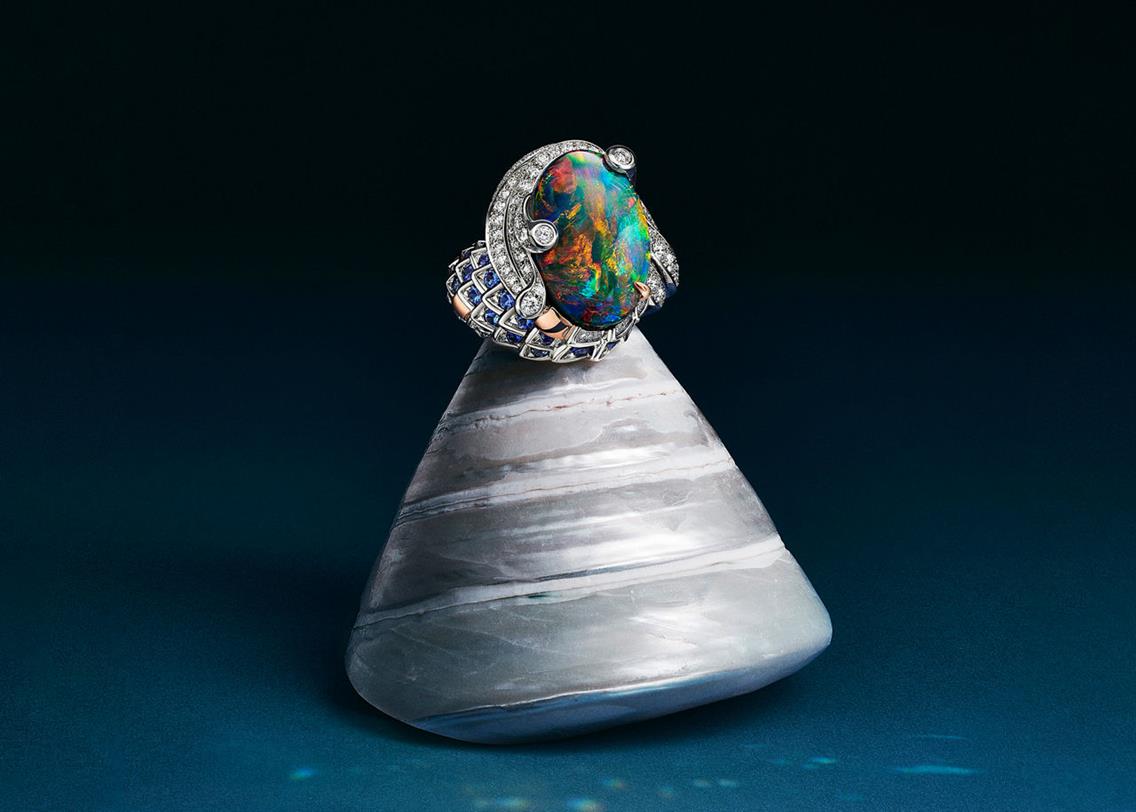
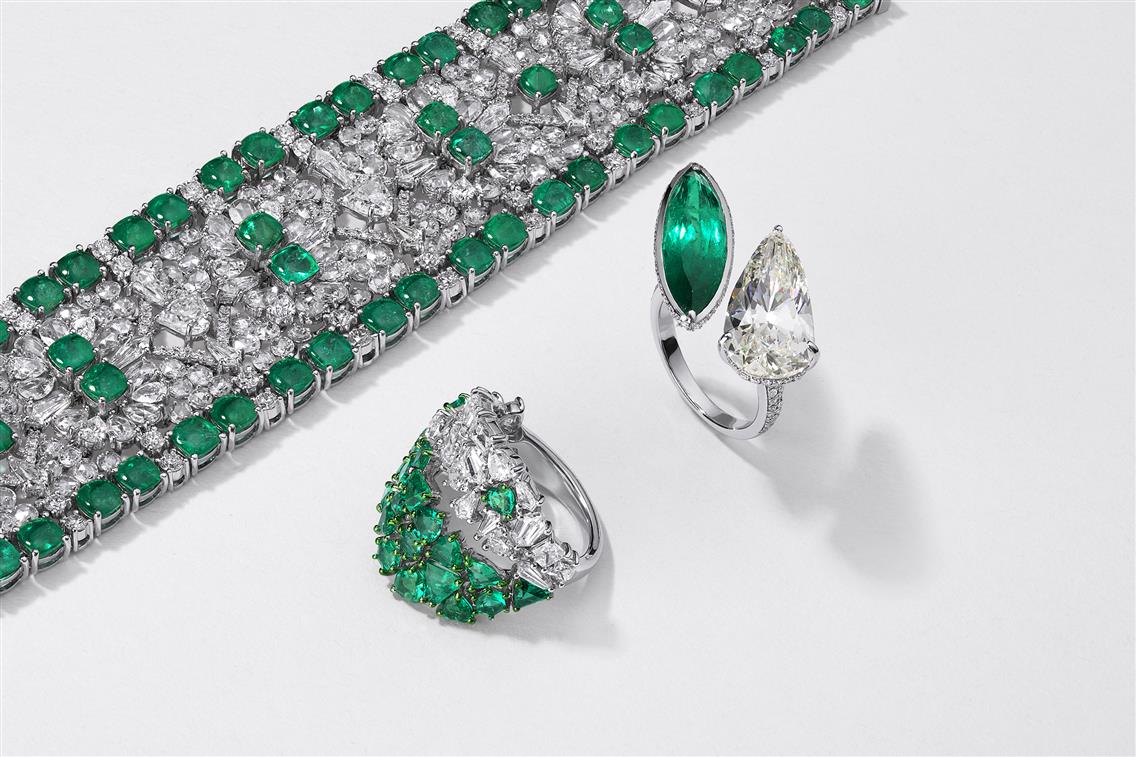
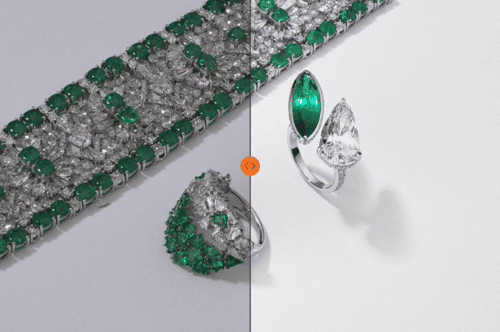
Jewelry, apparel, and beauty each require different technical approaches. Ghost mannequin post-production for apparel has nothing in common with highlight control for gemstones. Ask to see a complete batch in your product category — 50 similar products shot in one order — not a curated portfolio selection. Consistency across a full batch tells you whether the studio actually specializes or just occasionally shoots your category.
LenFlash has photographed jewelry, apparel, beauty, footwear, and electronics for brands supplying Nordstrom, Macy's, Signet, Kohl's, and Amazon since 2004.
2. Knowledge of retailer specifications
Amazon, Nordstrom, Macy's, Kohl's, and Signet each publish image specifications covering backgrounds, pixel dimensions, angle counts, and file formats. An image that fails a spec requirement is rejected regardless of how well it photographs the product. The reshoot costs more than getting it right the first time, and a delayed listing has its own revenue cost.
Ask which retailers the studio has submitted images to and what their first-submission approval rate is. A studio that genuinely knows Signet's angle requirements for rings will tell you exactly how many angles are required and why each is specified — not speak in general terms about retailer compliance.
3. Turnaround reliability
One late delivery that pushes a product listing past a seasonal window costs more than a higher per-image rate from a studio with a dependable process. Ask not just what the standard turnaround is but what happens when a delivery is running late.
LenFlash standard turnaround is 7 to 8 business days. Rush is next business day.
4. Confirmed pricing before you ship anything
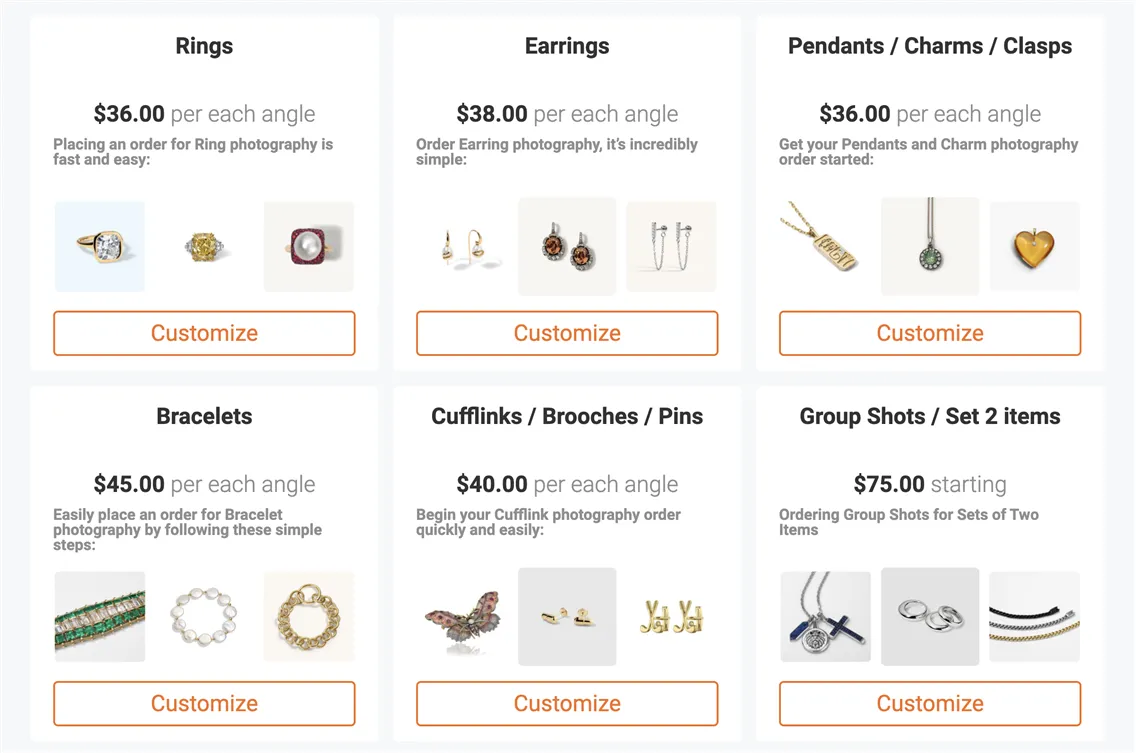
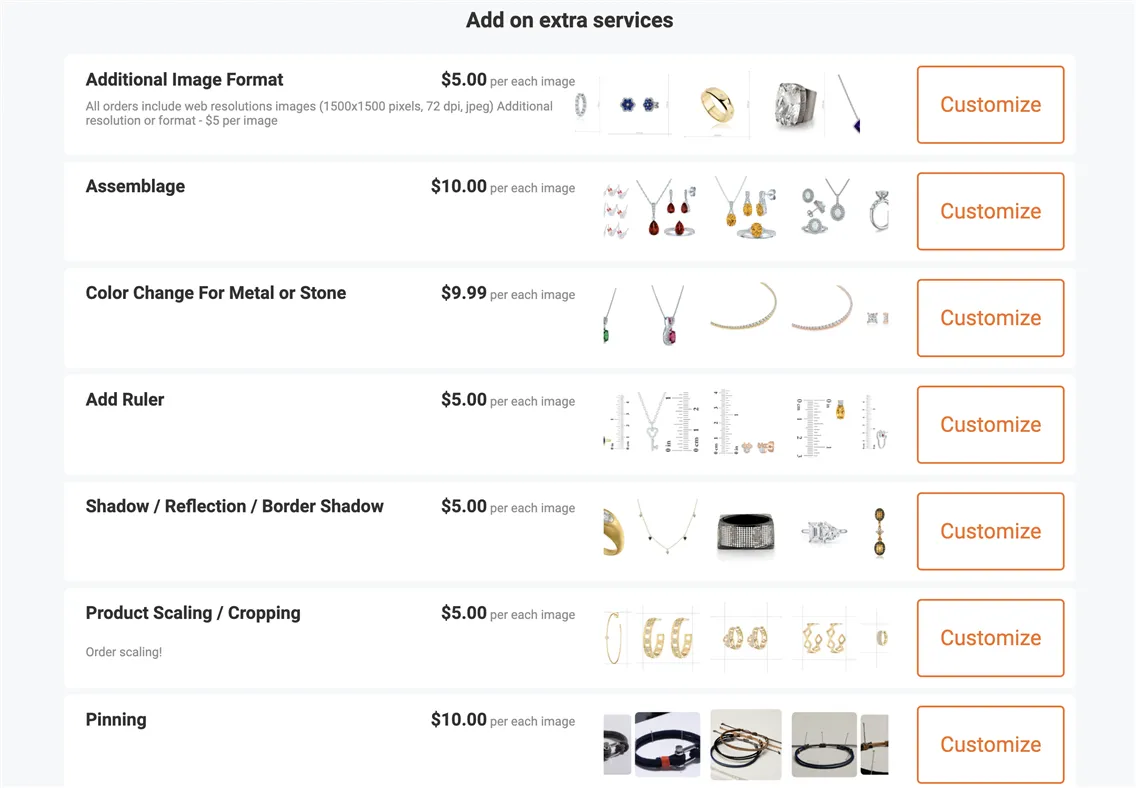
Setup fees, revision fees, and file format charges that appear on invoices without prior discussion are common. Ask whether you can receive a confirmed quote before shipping. If the answer involves an estimate that adjusts after the shoot, ask what the adjustment criteria are.
5. Ordering process for repeat use
For brands photographing new arrivals and seasonal drops regularly, the ordering process becomes a meaningful time cost across a year. Ask whether your previously approved angles and specifications are stored automatically for reorders.
6. Capacity for your volume
Quality variation across a large catalog is not always obvious in individual images. It becomes visible on a product grid where lighting differences make the catalog look assembled from multiple sources rather than produced by one studio. Ask to see images from a large order as a complete set, not a selection.
7. Retouching in-house or outsourced
A studio that outsources retouching introduces a second set of hands with different color calibration and quality benchmarks. Ask specifically who retouches the images and whether they are on staff. For jewelry ask how they handle gemstone facets. For apparel ask about ghost mannequin consistency across a full collection.
LenFlash retouching is performed in-house from $10.99 per image.
8. Revision process
Ask how many rounds are included, how revisions are submitted, and how quickly they turn around. A vague assurance that the studio will work until you are happy is not a process — it is a phrase that produces ambiguous expectations on both sides.
9. Visual alignment
Ask the studio to show you work for a brand with a similar visual positioning to yours, not just work in your product category. A studio that can point to specific prior work and explain concretely how it relates to your brief understands its own aesthetic well enough to apply it consistently.
Studio, Freelancer, or In-House: Which Model Fits Your Brand
A full-service studio handles photography, retouching, styling, and delivery under one roof. For brands with a growing catalog or retailer submission requirements, this removes the coordination overhead of managing multiple specialists separately and produces consistent output across every SKU from a single production process. Freelancers can be cost-effective at low volumes but introduce consistency risk and coordination complexity that increases with catalog size — particularly when separate photographers, retouchers, and stylists are managed per shoot. Freelance vs studio photography for eCommerce brands covers this comparison in more detail.
In-house teams work well for continuous, high-volume, and predictable shooting needs. The upfront investment in equipment, space, and specialized talent is significant, and the fixed cost runs whether the studio is shooting or not. For brands whose volume fluctuates or whose product mix is still evolving, outsourcing to a professional studio almost always produces a better cost-per-image than maintaining in-house capacity at that stage. What setting up an in-house photography studio actually involves
What Our Clients Ask Us Most Often
These questions come up repeatedly from brands at the point of evaluating studios for the first time. The answers tell you most of what you need to know before committing to a shoot.
Can I see a complete set from a large order in my product category, not just selected highlights? A studio confident in their consistency will show you everything from a 100-SKU jewelry order or a full apparel catalog batch. A studio that shows only curated selections may be managing the impression their volume work creates.
What happens if the first round does not meet our requirements? The answer should describe a specific process: how revisions are submitted, how quickly they are turned around, and whether there is a cost. "We will work with you until you are happy" is not a process. It is a phrase that produces ambiguous expectations on both sides.
What retailer submission requirements do you have experience with, and what is your first-submission approval rate? A studio that has not produced images for your specific retailers cannot give you a meaningful answer. A studio that has will be able to quote approval rates and describe the specific challenges they have navigated for each retailer.
How do you handle orders when volume increases suddenly, for example during a peak season or a large product launch? This question surfaces capacity planning. A studio that absorbs volume spikes by extending turnaround times or outsourcing retouching temporarily is a different production partner than one that maintains consistent output with a scalable in-house team.
Can I see your pricing before I ship anything, and are there fees not included in the per-image rate? The answer to the first part should be yes. The answer to the second part should list specific fee categories, not a general assurance that pricing is transparent.
What systems do you use to manage files, feedback, and approvals across a brand team? Brands with multiple internal stakeholders reviewing images need a platform where approvals are tracked, versions are controlled, and the approved file is clearly identified. Email-based review processes produce errors at scale.
How do you handle products that require specific preparation before the shoot, like steaming garments or cleaning jewelry? A studio experienced in your product category has seen what happens when products arrive unprepared and has a process for communicating preparation requirements in advance. A studio without that experience will absorb preparation time into your shoot time, which costs money and affects turnaround.
The visit or test shoot before committing
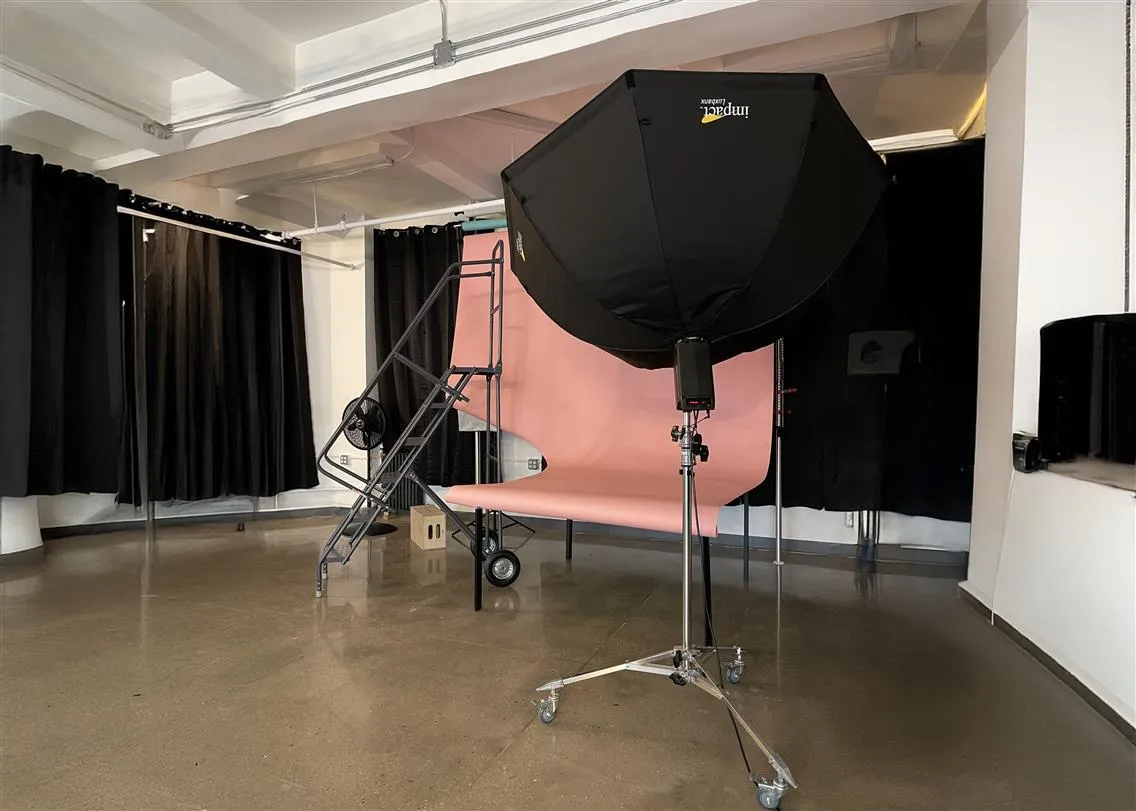
Before committing to a full production order, most studios will accommodate a test shoot on a small number of products. This is the most reliable way to evaluate whether the criteria above translate into actual output quality for your specific products.
A test shoot with five to ten products from your catalog tells you: how the studio handles your specific materials under their lighting setup, what the images look like as a complete set rather than individually, how the ordering and delivery process works in practice, and whether the revision process functions as described.
For brands that cannot visit a New York studio in person, remote ordering followed by a small test batch achieves the same purpose. You brief the studio, ship a small number of products, receive the images, and evaluate the full set before committing to volume production.
LenFlash accepts test orders through the standard online ordering system. There is no minimum order requirement. Ship five products or 500 — the process and the quality standard are the same.
Place a test order at LenFlash — real-time pricing, no minimum quantity