
How Bridal Brands Use Photography to Turn Browsing Into Buying
A bride scrolls through hundreds of wedding dresses online, spending mere fractions of a second on each image before deciding to click or scroll past. In that moment, the photograph's only job is to capture her dreams and make her pause.
Bridal fashion photography has moved well past simple product documentation. It has become one of the most powerful brand storytelling tools in the wedding industry, because today's brides are not just buying a dress. They are investing in the feeling a brand creates around their most important day.
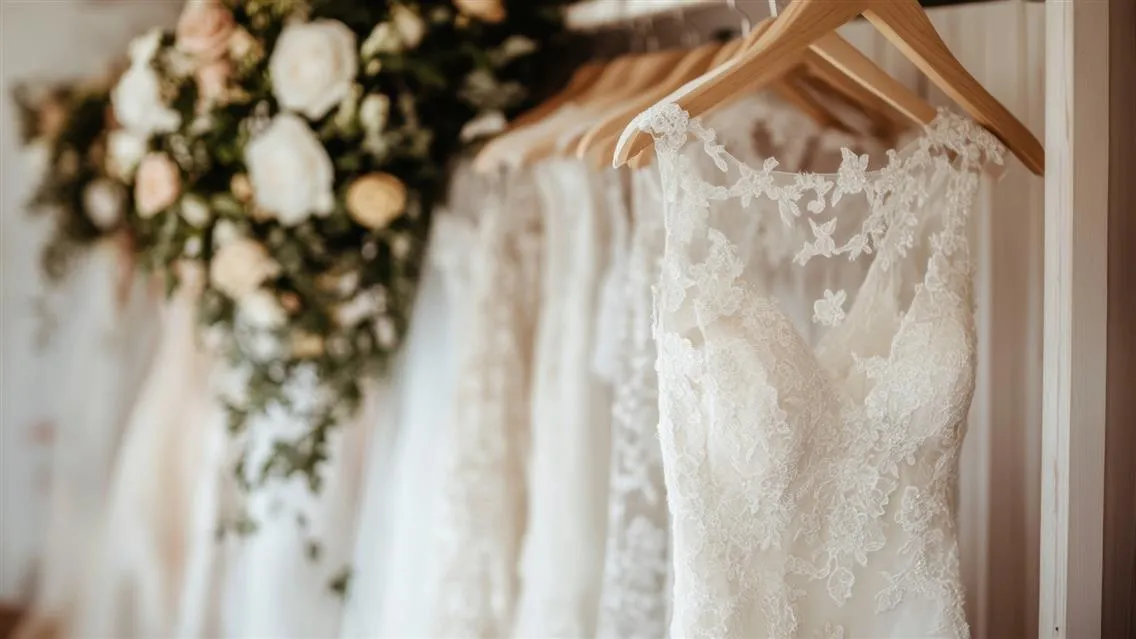
Photography is the bridge between a bride's vision and her reality, which makes it the cornerstone of conversion-driven marketing for bridal brands. The most successful brands in this space share one common trait: mastery of visual storytelling through strategic, emotionally resonant photography that sells a feeling first and a dress second.
Part of our complete guide: Product Photography for Clothing and Accessories Brands
The Role of Bridal Fashion Photography in Brand Success
Professional bridal product shoots create a measurable impact across key business metrics. Quality imagery drives longer website browsing sessions, higher social media engagement, and stronger conversion from visitors to buyers. When a bride can visualize herself in a dress through compelling imagery, the emotional connection translates directly into the purchase decision.
BHLDN revolutionized American bridal retail by maintaining a signature whimsical, vintage-inspired photography style across every touchpoint. Soft lighting, organic textures, and carefully curated styling transform each dress into part of a larger lifestyle narrative that extends far beyond the wedding day itself.
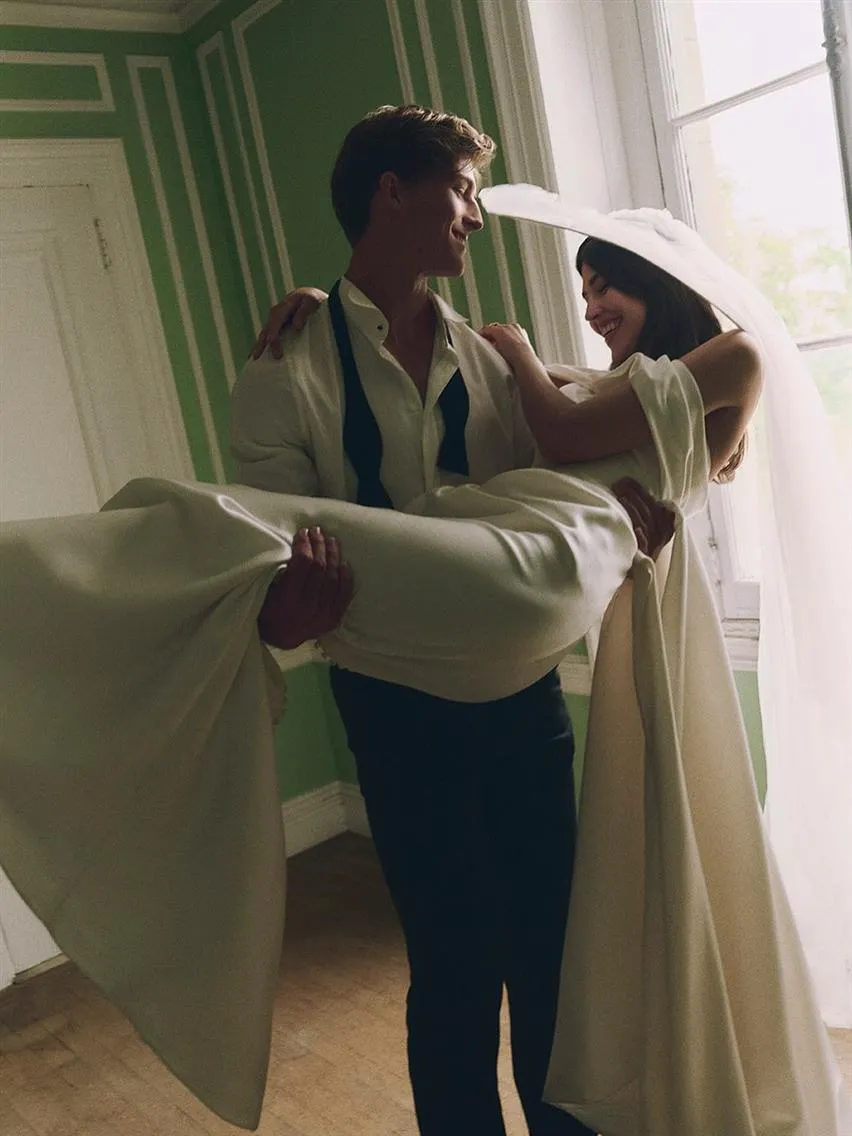
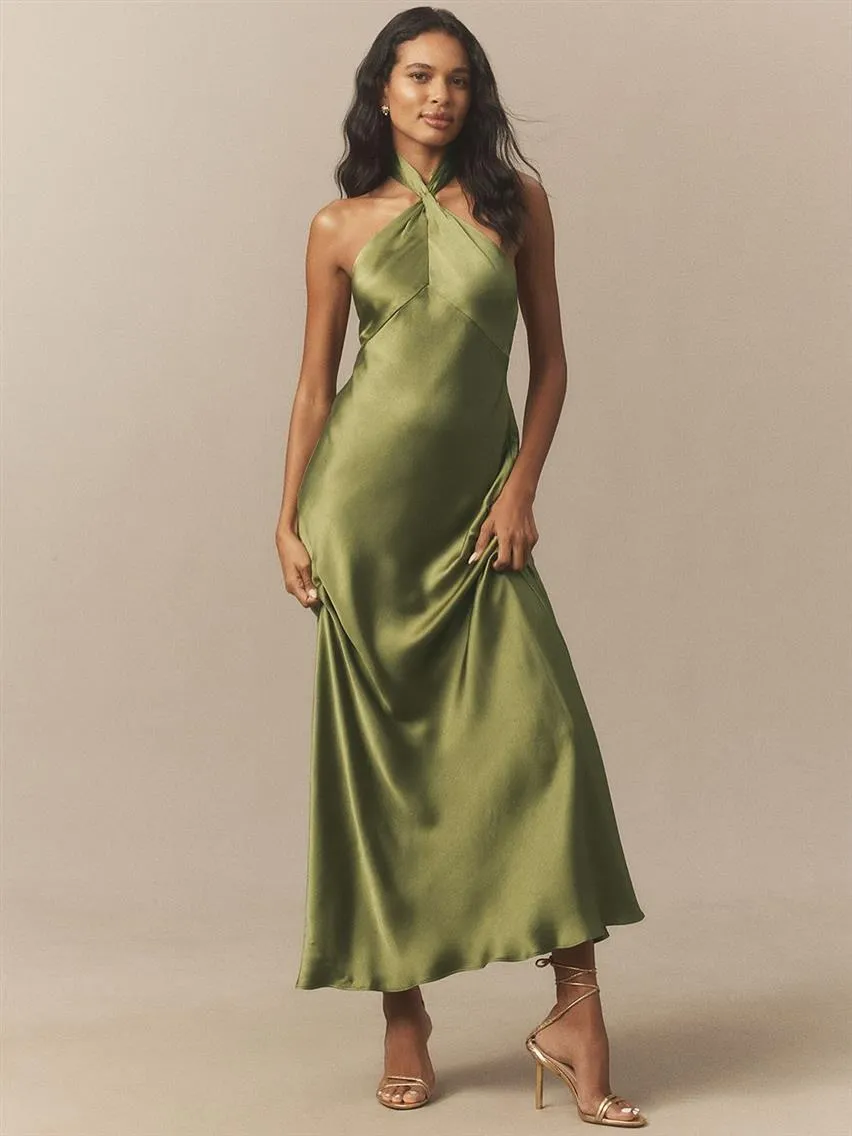
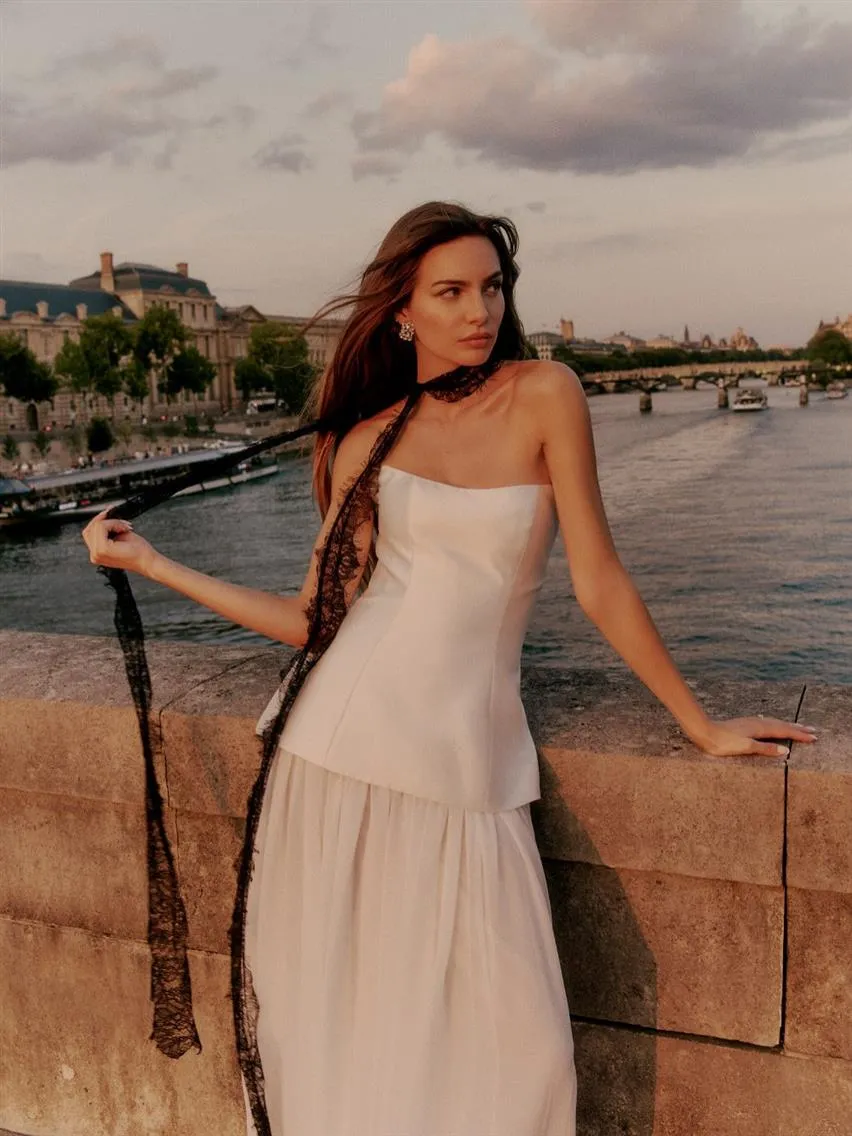
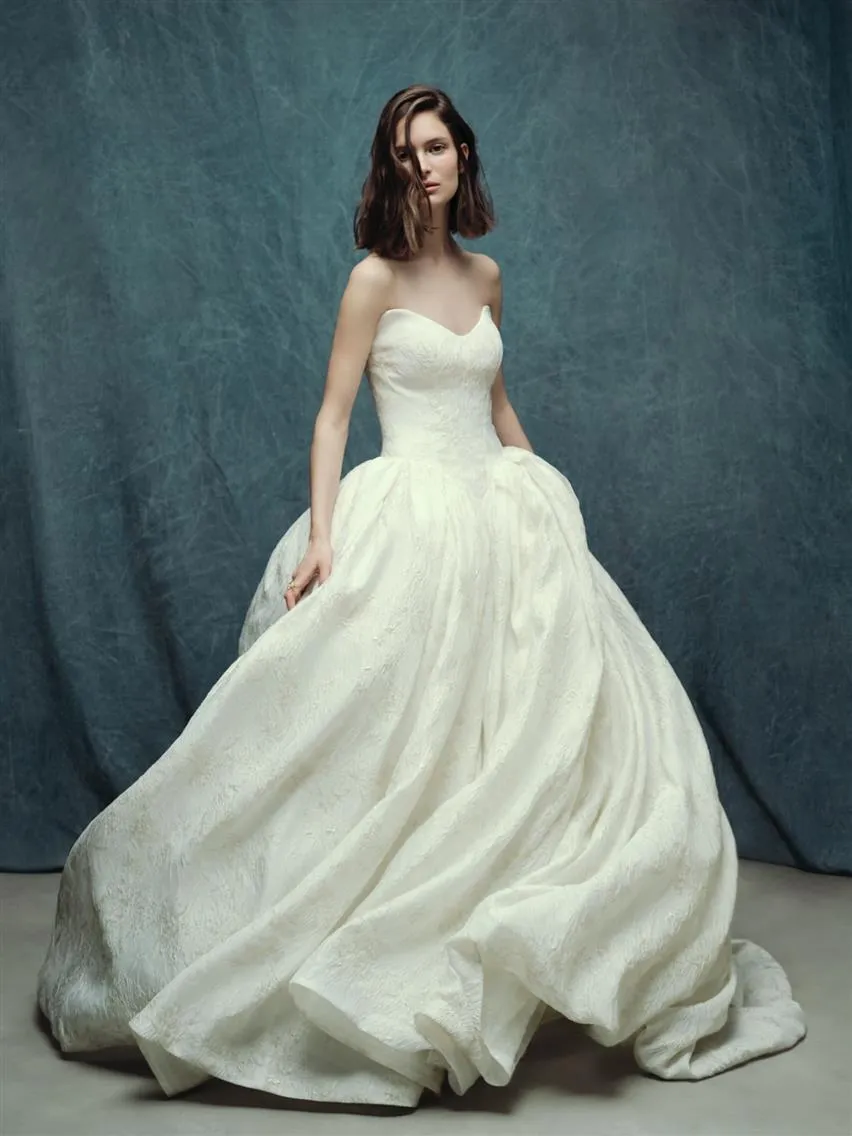
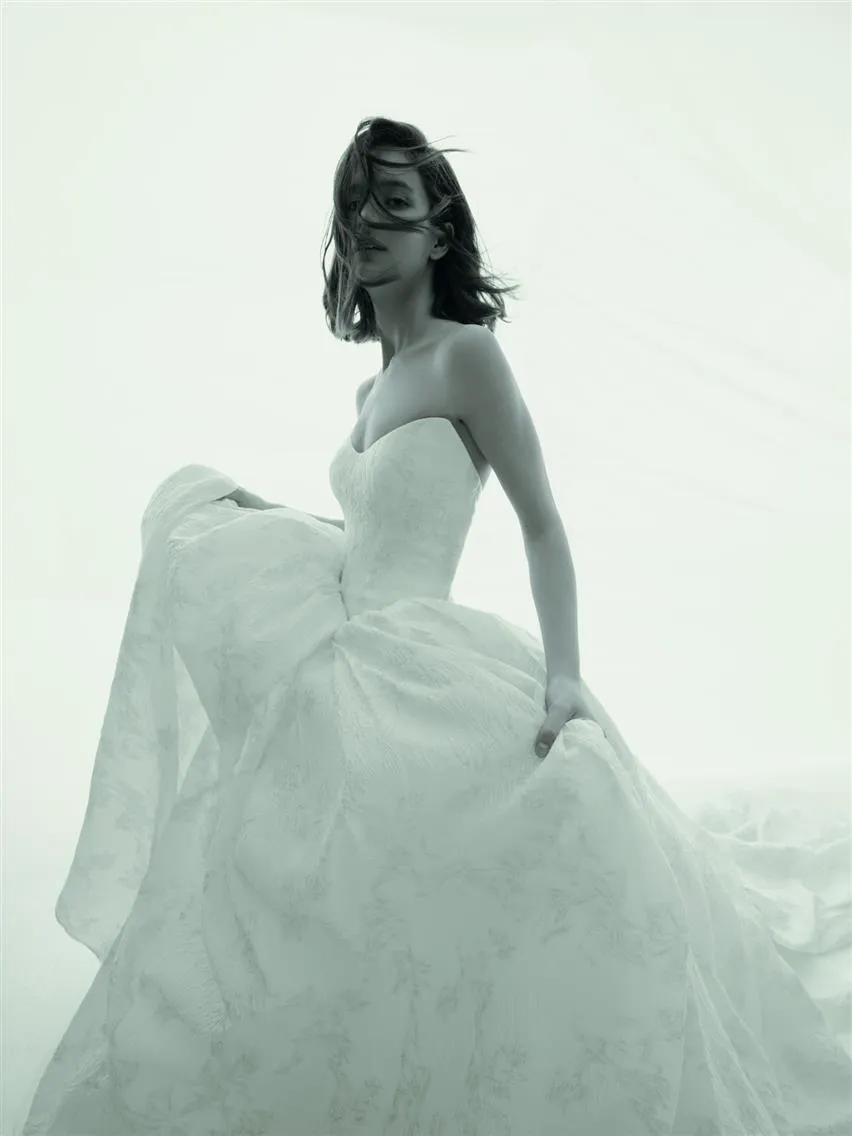
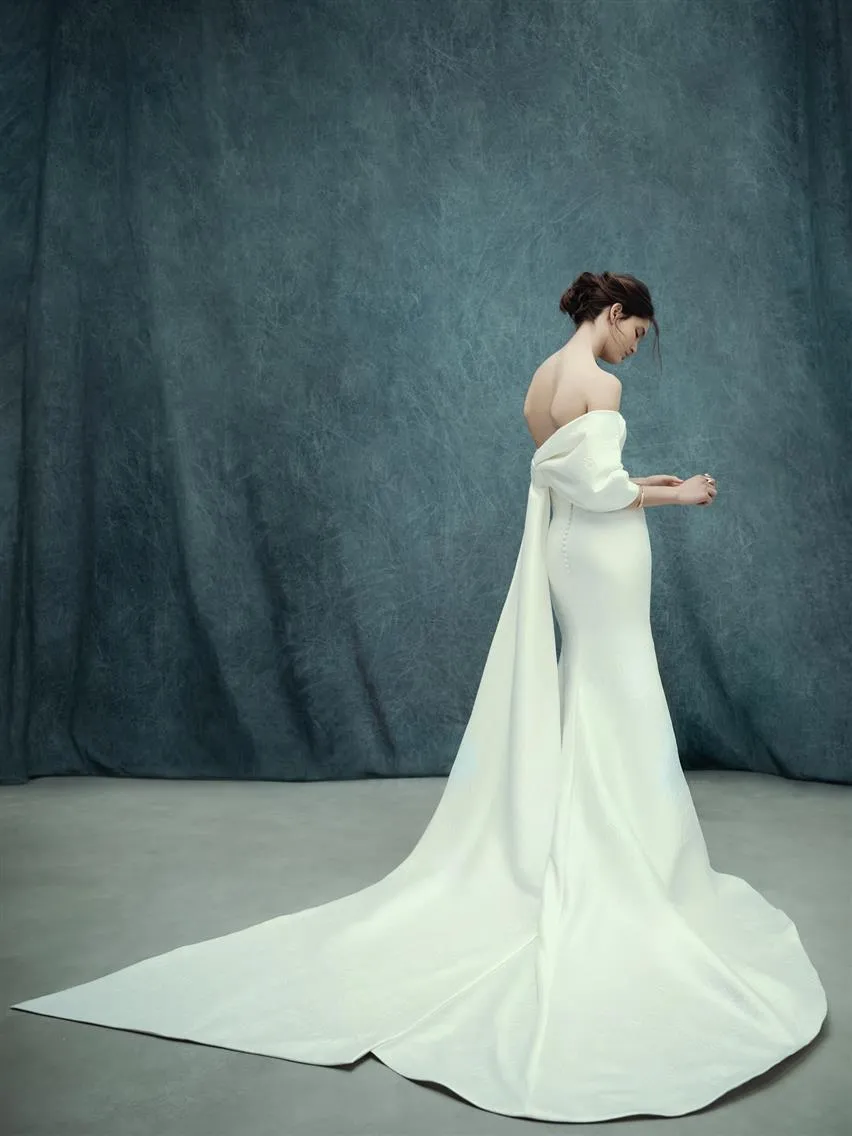
Pronovias, the Spanish bridal giant, built a global empire through equally masterful wedding dress photography. Consistent use of romantic, ethereal imagery across every platform, from Barcelona showrooms to Instagram feeds, creates an instantly recognizable aesthetic. Whether a bride discovers the brand through a magazine editorial or a paid social ad, she encounters the same luxurious, dreamlike visual story.
Types of Bridal Fashion Photography Every Brand Needs
Bridal Product Photography for eCommerce and Catalogs
Your foundation starts with clean, conversion-focused product imagery that removes barriers between your customers and their purchase decisions.
The foundation of any bridal brand's visual library is clean, conversion-focused product imagery that removes barriers between a browsing bride and her purchase decision.
Ghost mannequin photography showcases a gown's silhouette and architectural structure without visual distraction. This technique highlights intricate corsetry, dramatic trains, and the back details that brides scrutinize most carefully before buying. Ghost mannequin shots perform well on product detail pages, wholesale catalogs, and any zoom-in feature where technical precision matters most.
Flat lay photography is the right format for delicate accessories: veils, gloves, garters, tiaras, and ceremonial decor. It allows creative styling while maintaining crystal-clear product presentation, and the resulting images work seamlessly across web platforms, social media, and printed lookbooks.
Product photography for bridal jewelry and shoes displays the fine detail and craftsmanship that justify premium pricing on accessory categories. Essential for eCommerce platforms and marketplaces, these shots can be enhanced with styled still life compositions that build emotional connection alongside technical clarity.
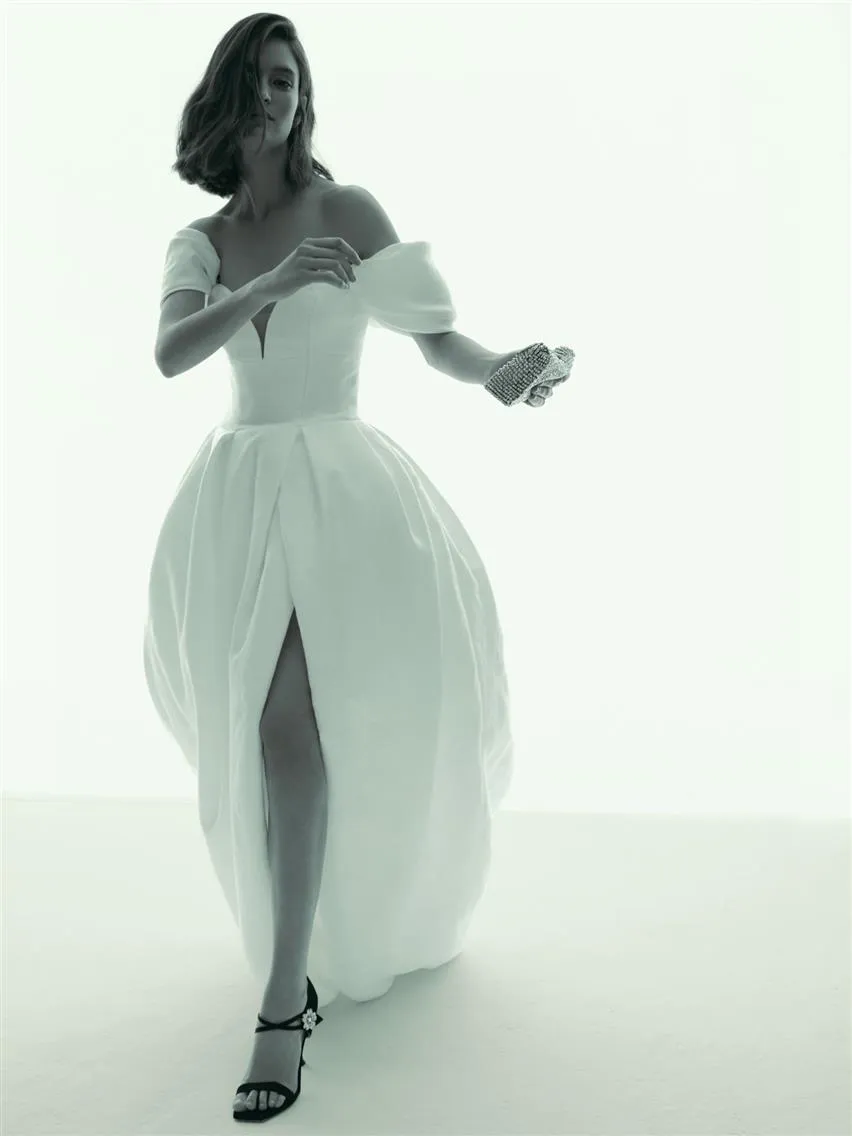
On-model catalog photography does something none of the other formats can. It shows how a gown transforms a real woman into a bride. On-model photography builds emotional resonance, accelerates conversion, and raises perceived value by letting a bride imagine her own transformation. These images become essential for bridal catalogs, homepage hero visuals, and advertising campaigns.
Related read: Flat Lay vs Ghost Mannequin vs On-Model Photography: Which is Better for Your Apparel Brand?
Bridal Lookbook and Editorial Photography for PR & Campaigns
Moving beyond the product catalog into mood-rich editorial work is where a brand's unique voice gets to breathe. Strategic use of pose, location, and styling creates emotional narratives that resonate with a brand's specific target bride.
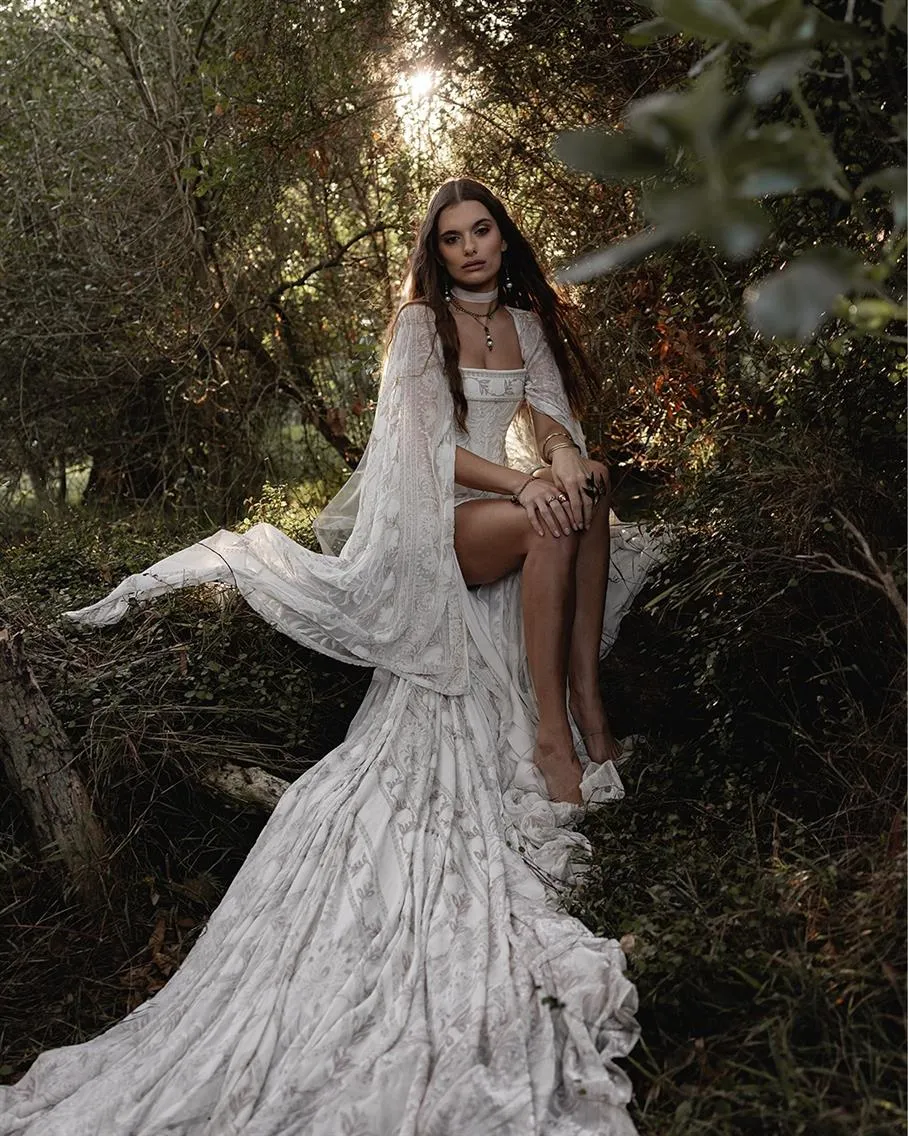
Rue de Seine demonstrates this beautifully, using natural outdoor settings for boho bridal styling that perfectly captures the brand's free-spirited identity..
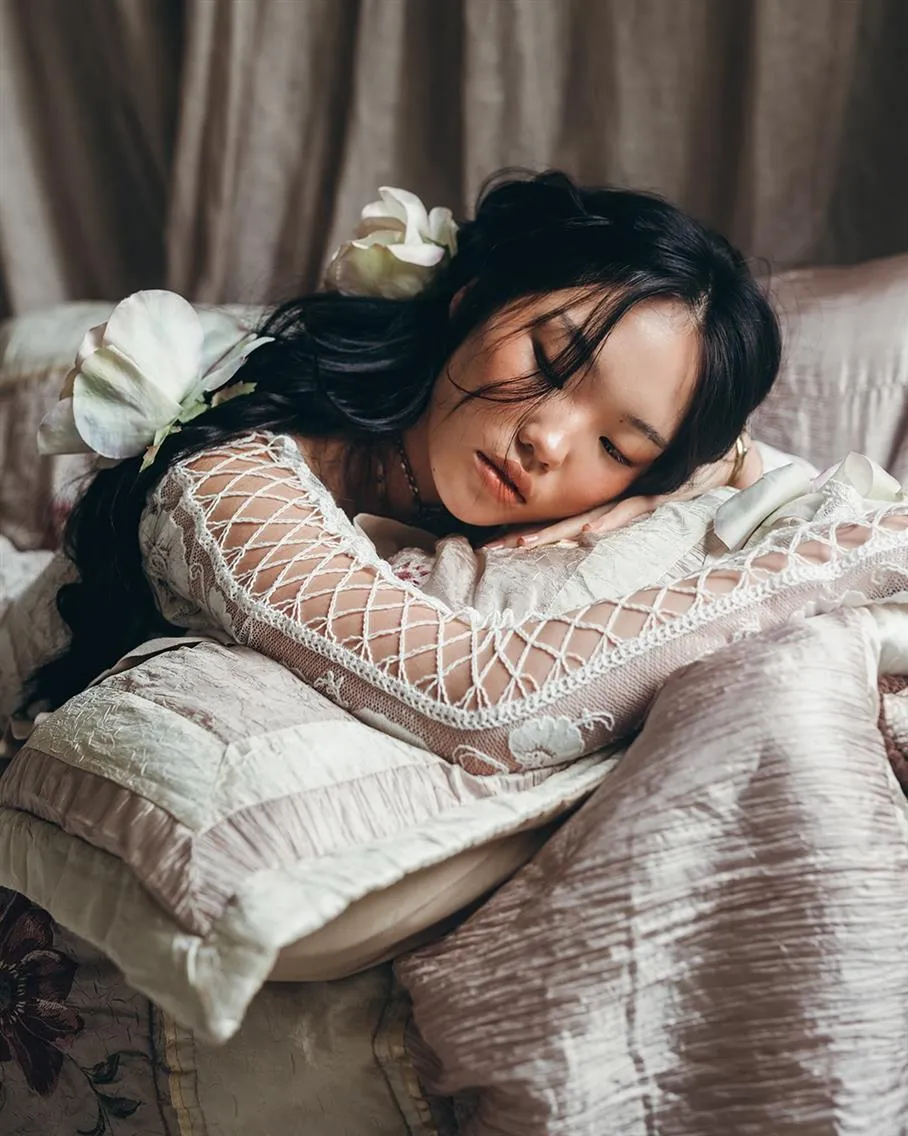
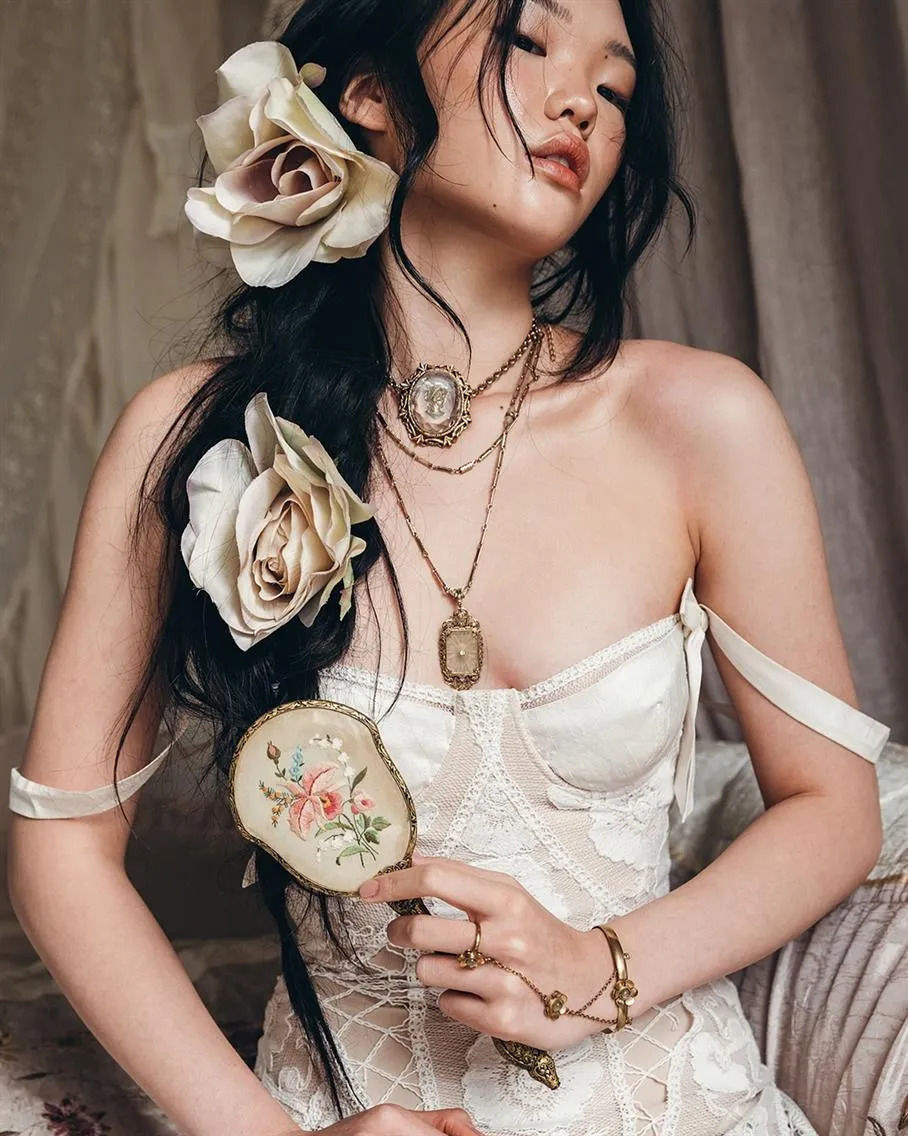
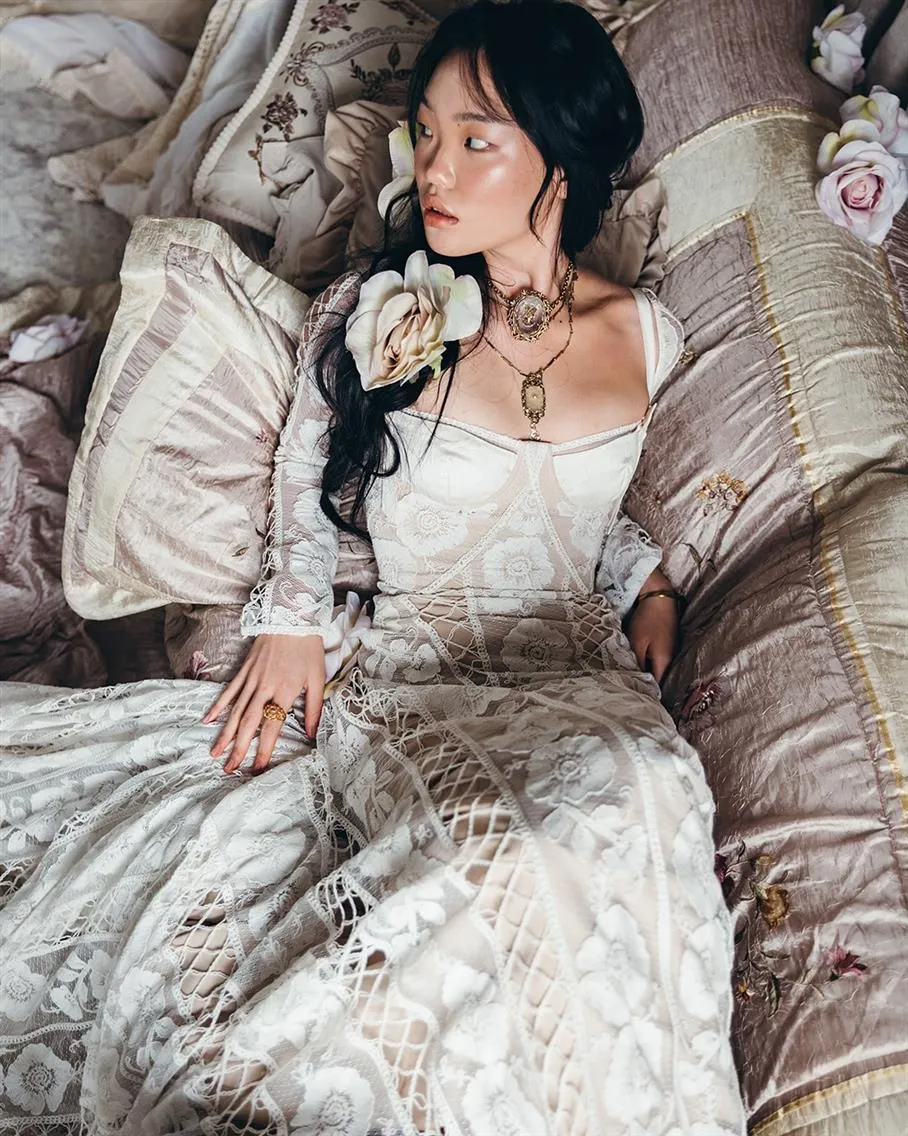
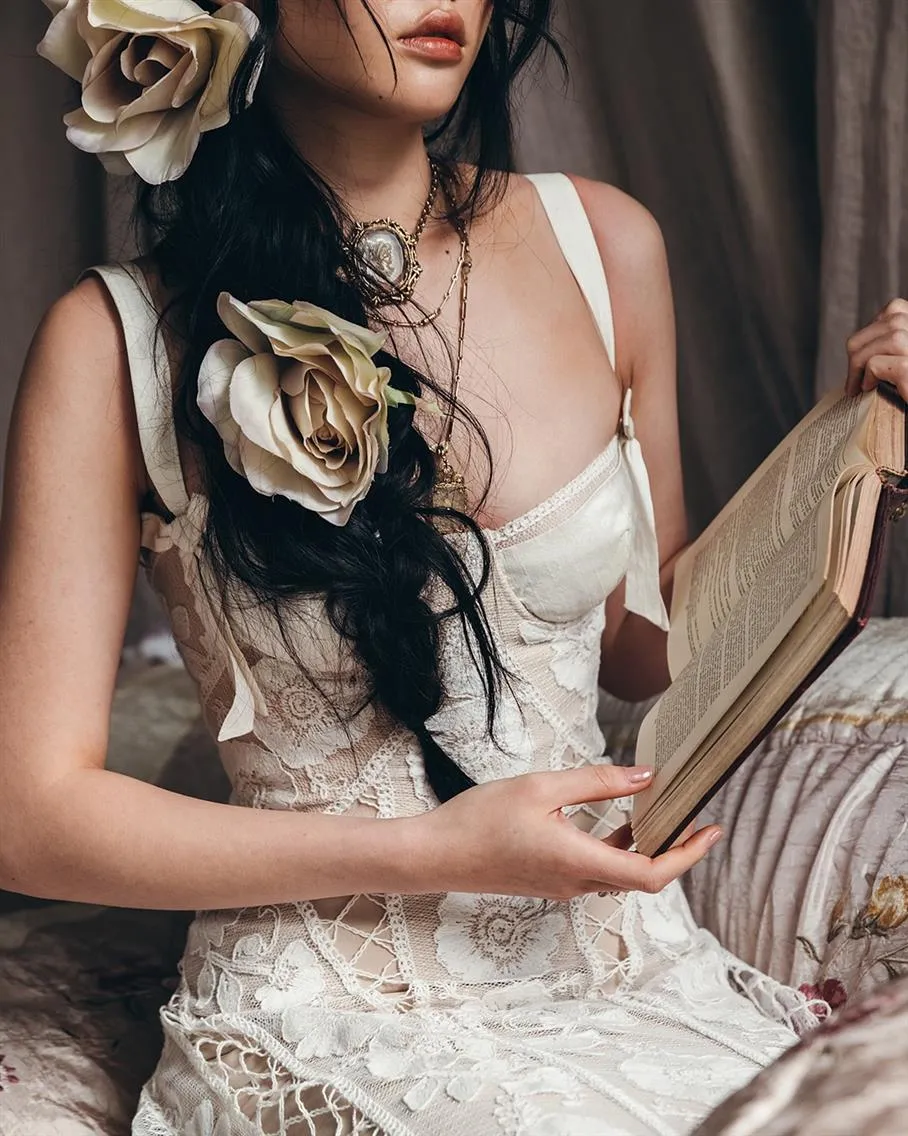
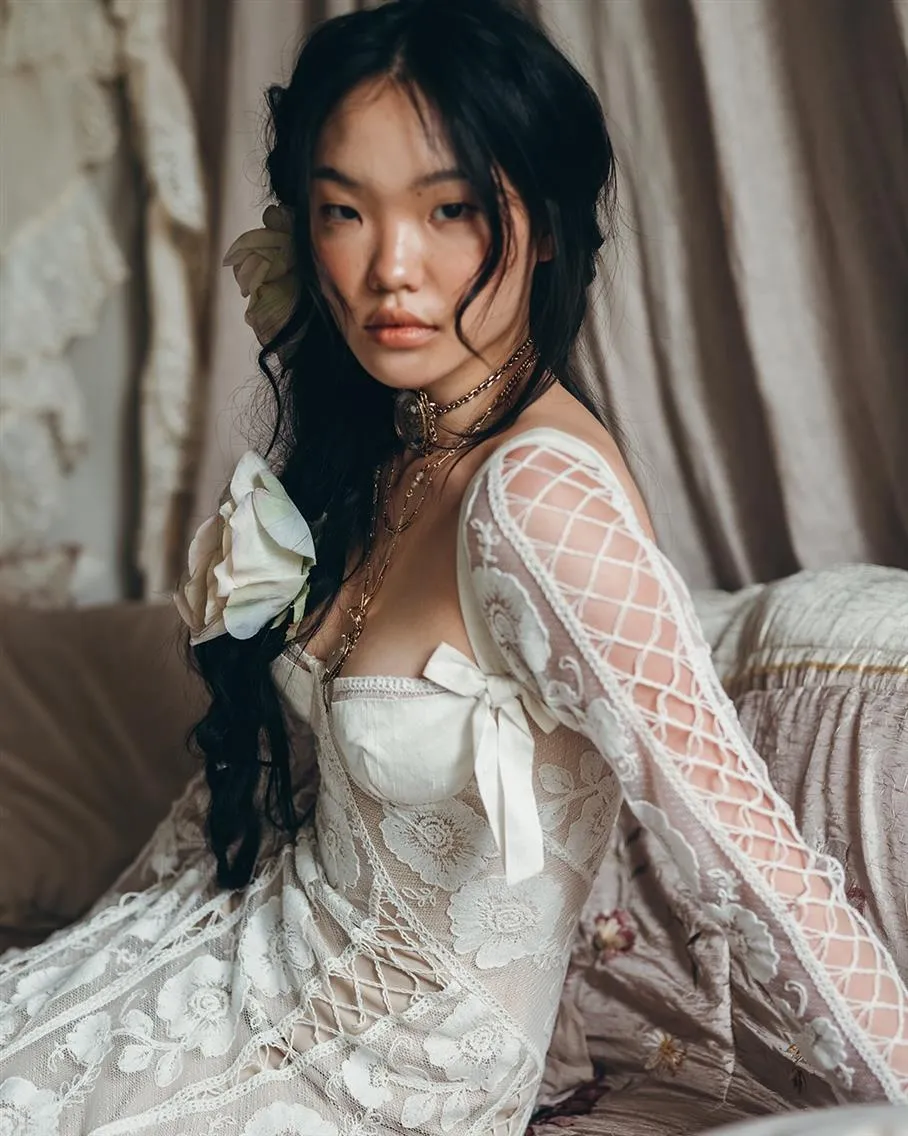
High-concept editorial work also delivers strategic value through prestigious placements in publications like Vogue Weddings and Martha Stewart Weddings. Success here requires aligning art direction with the brand's marketing goals, so each image serves creative vision and business objectives simultaneously rather than one at the expense of the other.
For how to plan a lookbook production: How to Shoot a Lookbook for Your Fashion Brand
Creative Styling Tips for a Stunning Bridal Fashion Photoshoot
Bridal Fashion Photo Styling That Reflects Brand DNA
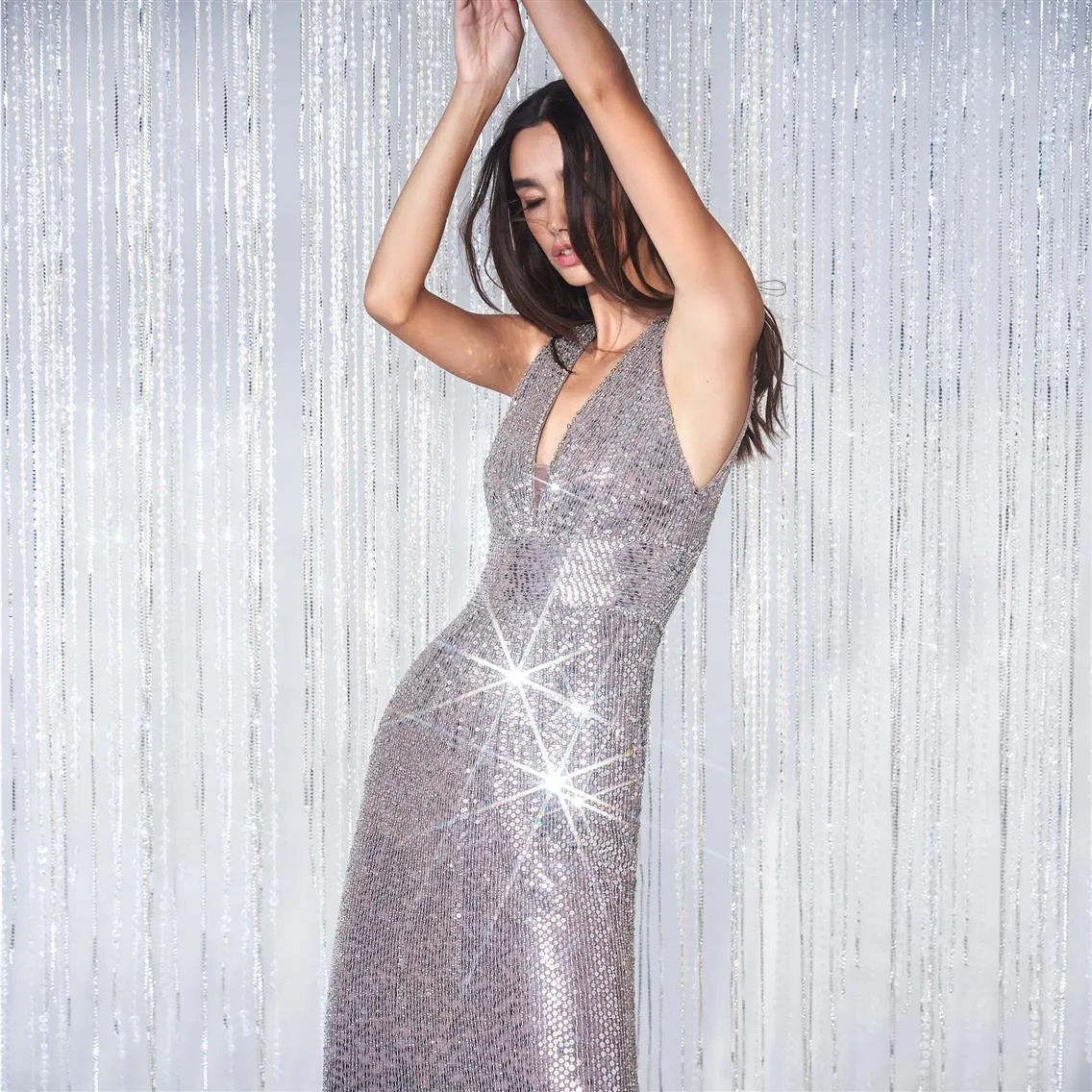
Photoshoot styling translates a brand's essence into a visual language that speaks directly to its target bride. Working with experienced stylists and art directors helps crystallize whether the brand's aesthetic is vintage, modern, boho, or fine art. This foundational decision cascades through every creative choice that follows, from venue selection and prop choices to hair direction and color palette, ensuring authentic brand representation that builds recognition over time.
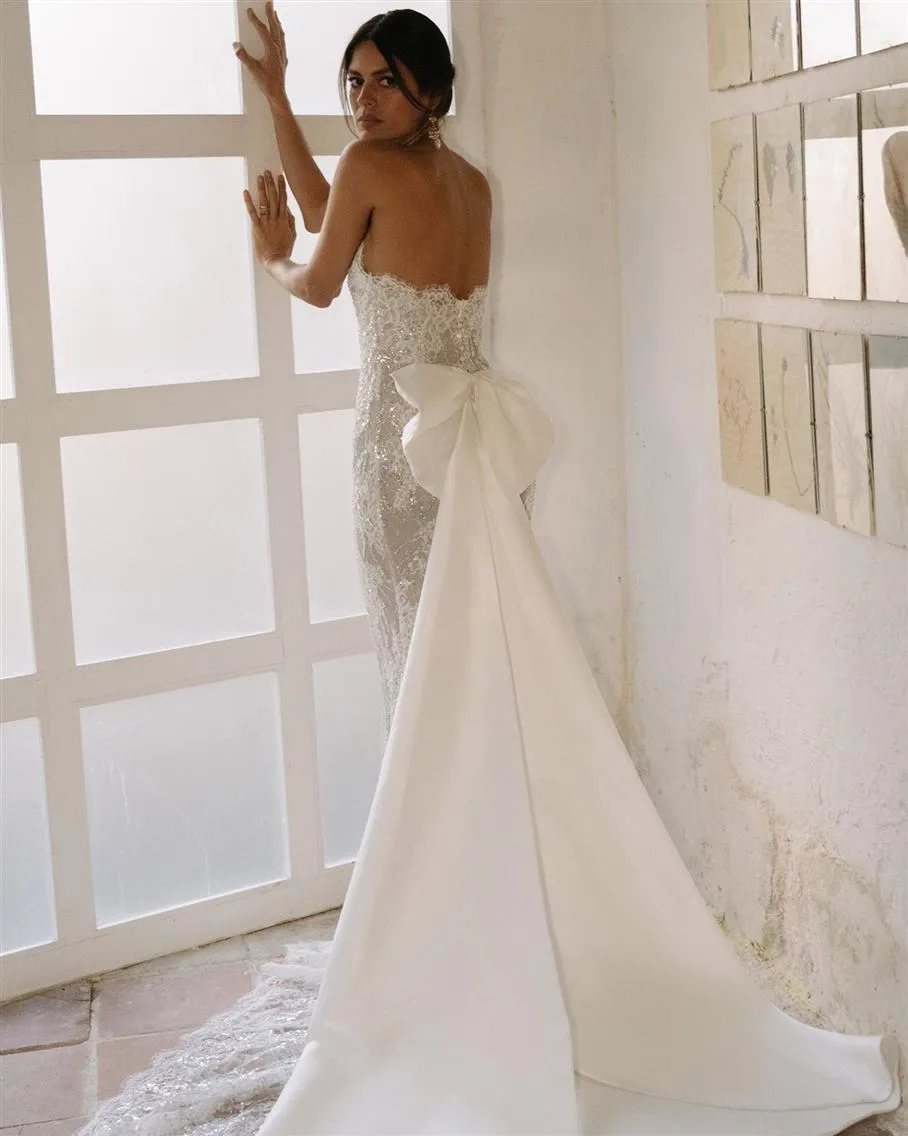
Jenny Packham consistently employs art deco elements, vintage beading, and 1920s-inspired styling across every campaign, immediately signaling glamorous old-Hollywood luxury. Grace Loves Lace, by contrast, maintains its bohemian identity through natural textures, flowing fabrics, and relaxed styling that speaks to free-spirited brides. Both approaches build instant brand recognition precisely because they are applied with discipline across every single shoot.
For how a fashion stylist shapes a bridal shoot's creative direction: Why Your eCommerce Shoot Needs a Fashion Stylist
Popular Creative Directions
Fine art bridal photography creates museum-worthy imagery through soft, filmic qualities and painterly tones that evoke timeless romance. This direction leans on natural window lighting, organic textures like aged stone or weathered wood, and muted palettes dominated by cream, blush, and sage green. Jose Villa's film work for Monique Lhuillier exemplifies this style, with a grain and depth that digital alone cannot replicate, paired with antique furniture, flowing fabrics, and classical elements. Locations tend toward European chateaux, California vineyards, or anywhere that already feels like a painting.
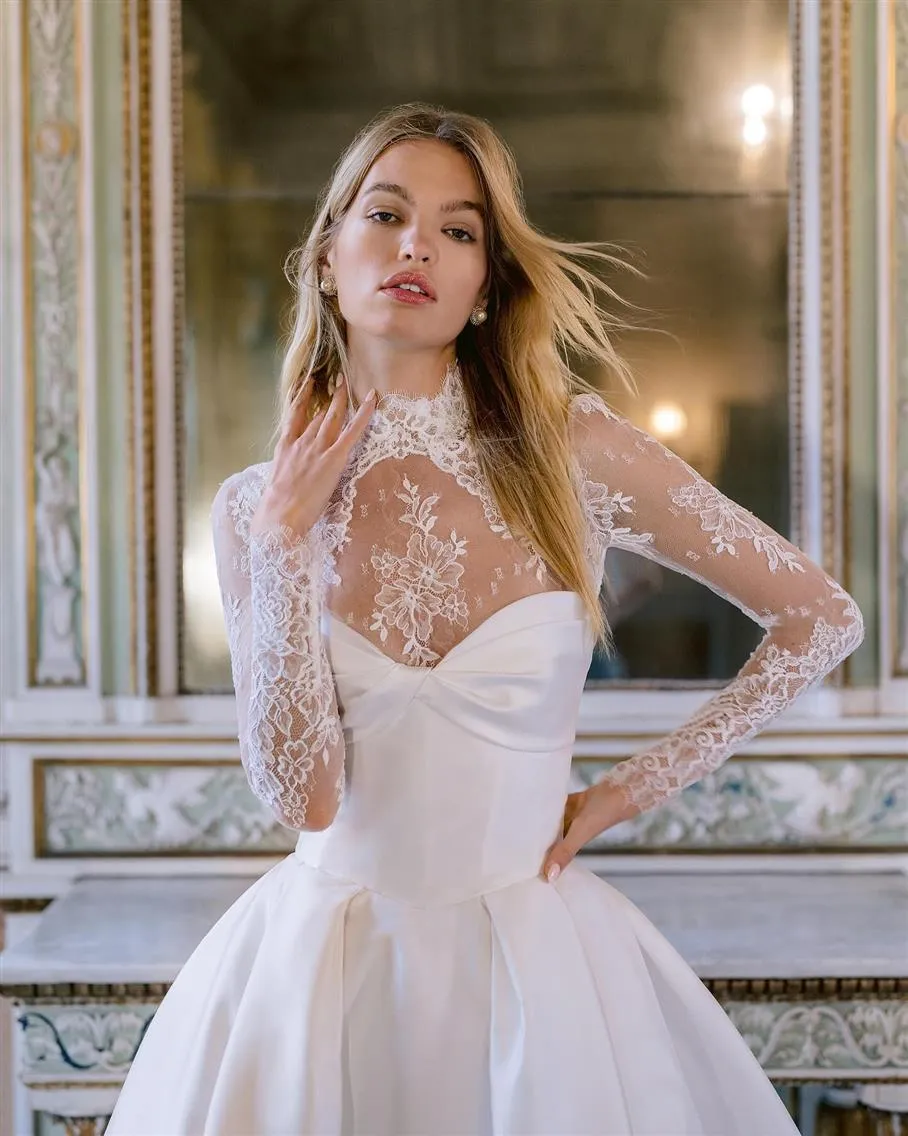
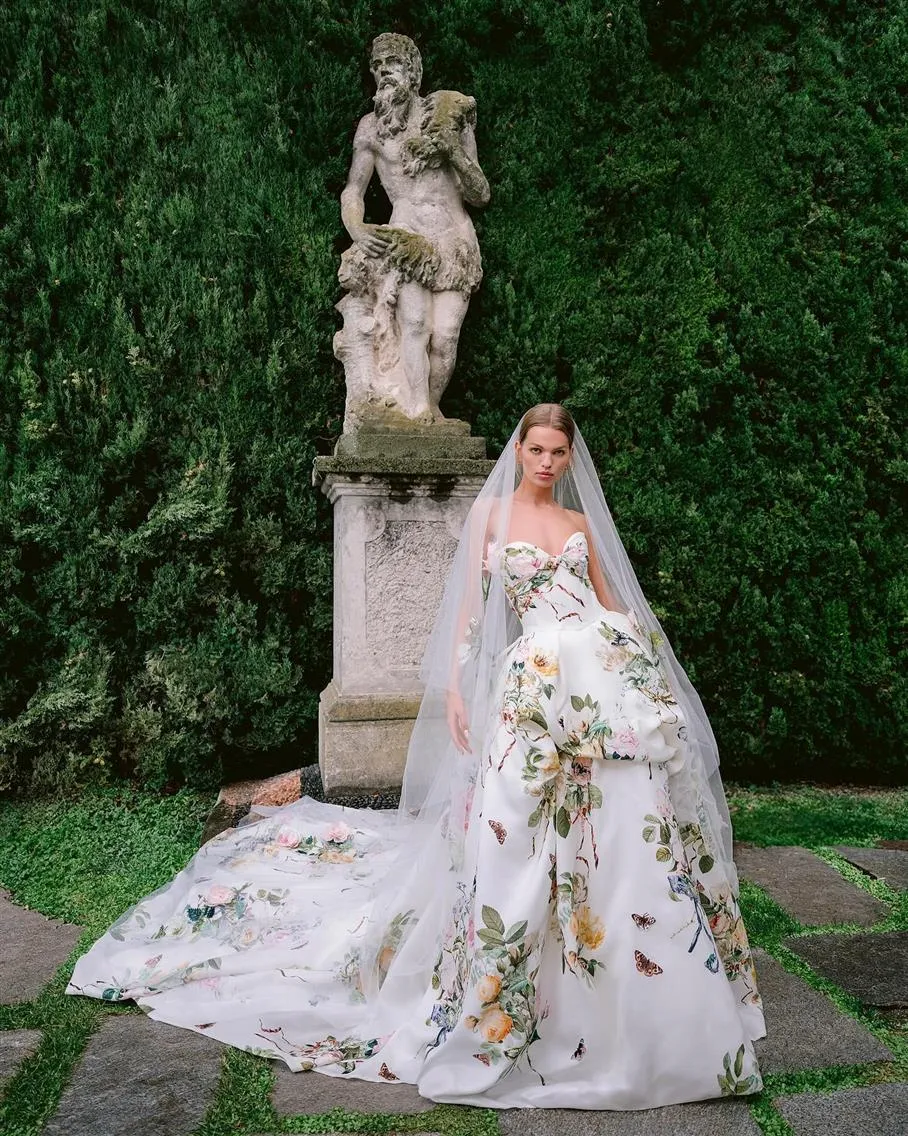
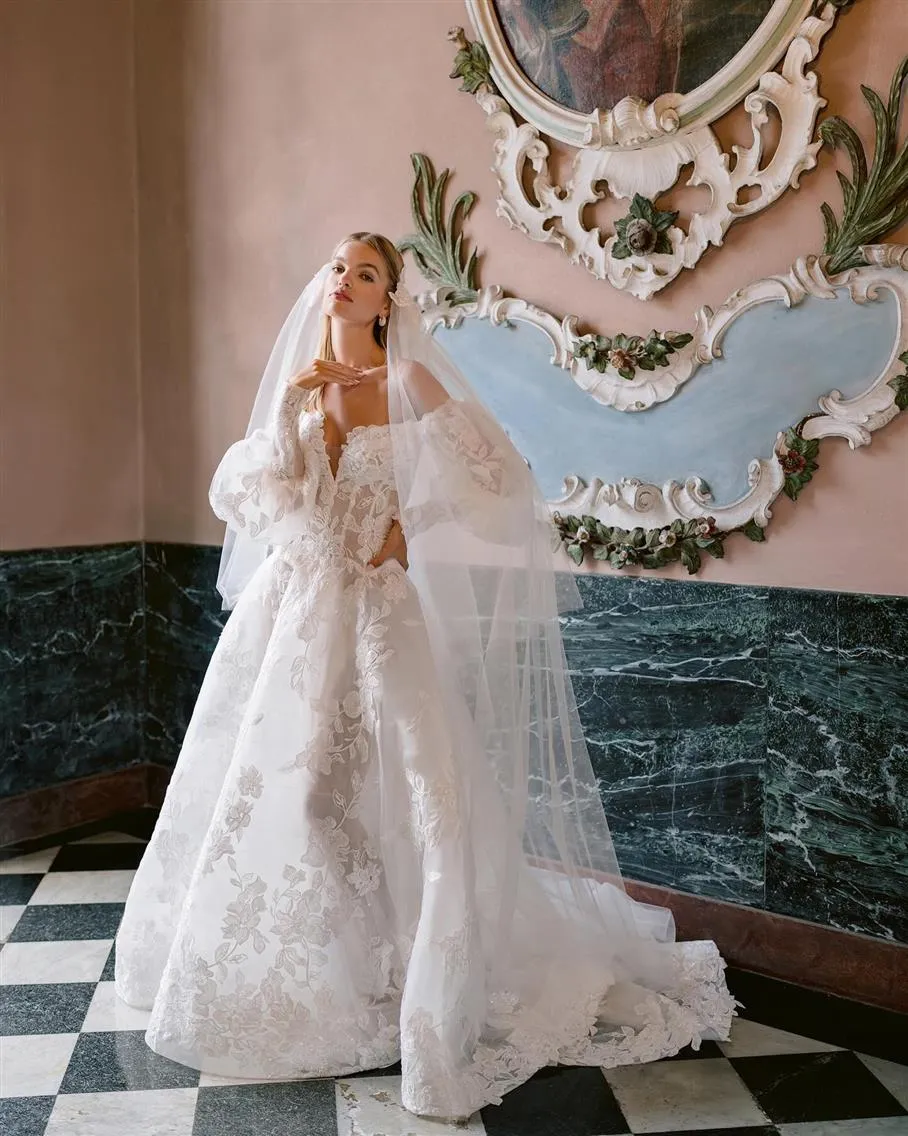
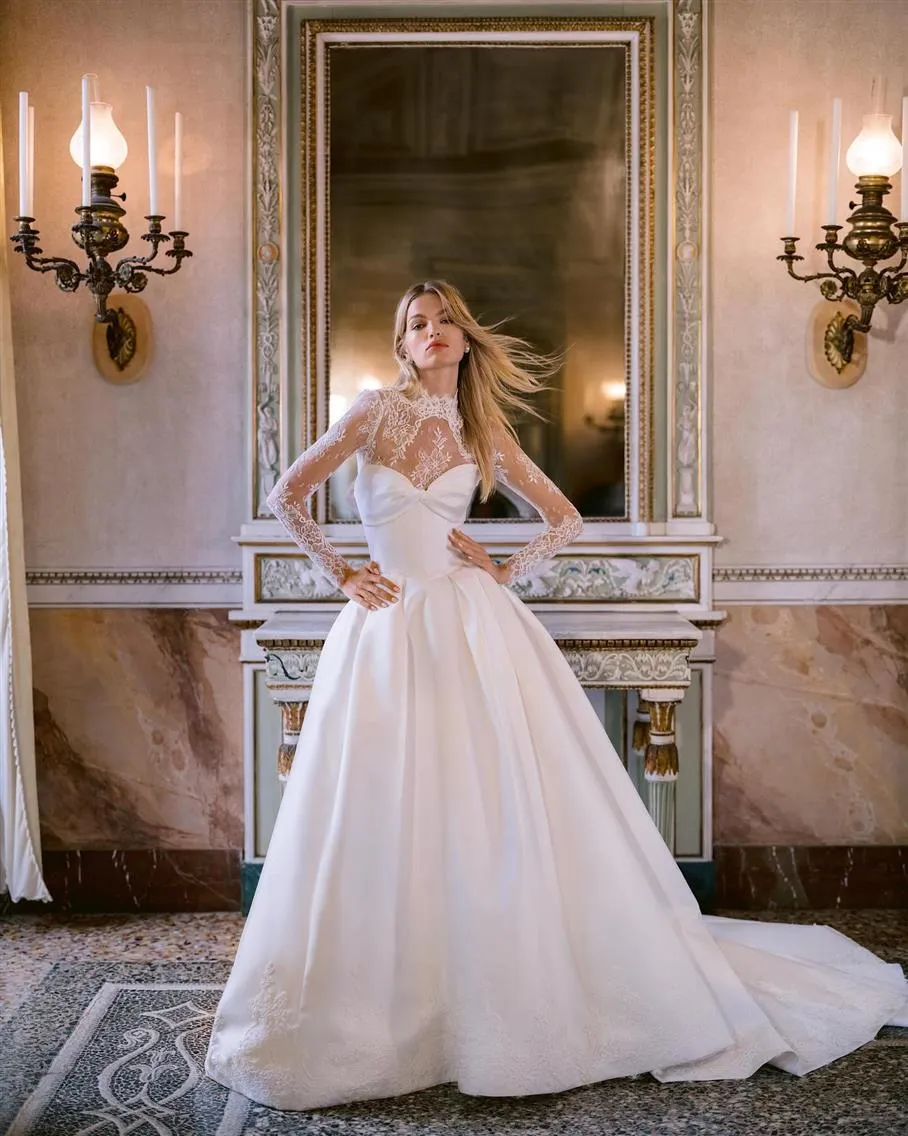
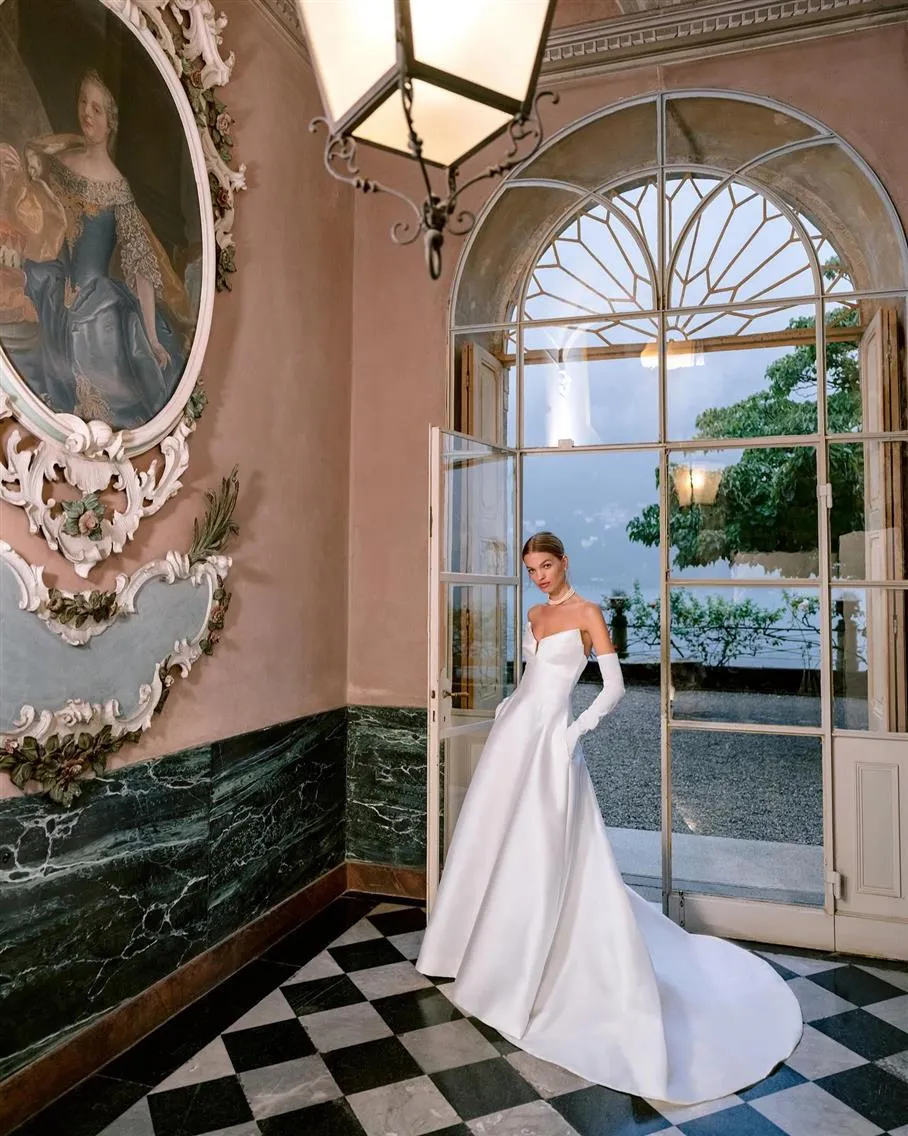
Vintage bridal photography channels a specific historical era through carefully researched styling and period-appropriate props. Authenticity is the entire game here. The elements pulled from the chosen era need to feel genuine rather than costume-like. BHLDN masters this with consistent sepia undertones, antique lace overlays, and deliberately grainy textures, styled with vintage teacups, old books, dried flowers, and heritage venues. Rue de Seine takes a different vintage route entirely, leaning into 1970s bohemian styling with macrame, pampas grass, and desert landscapes that capture a free-love era romanticism.
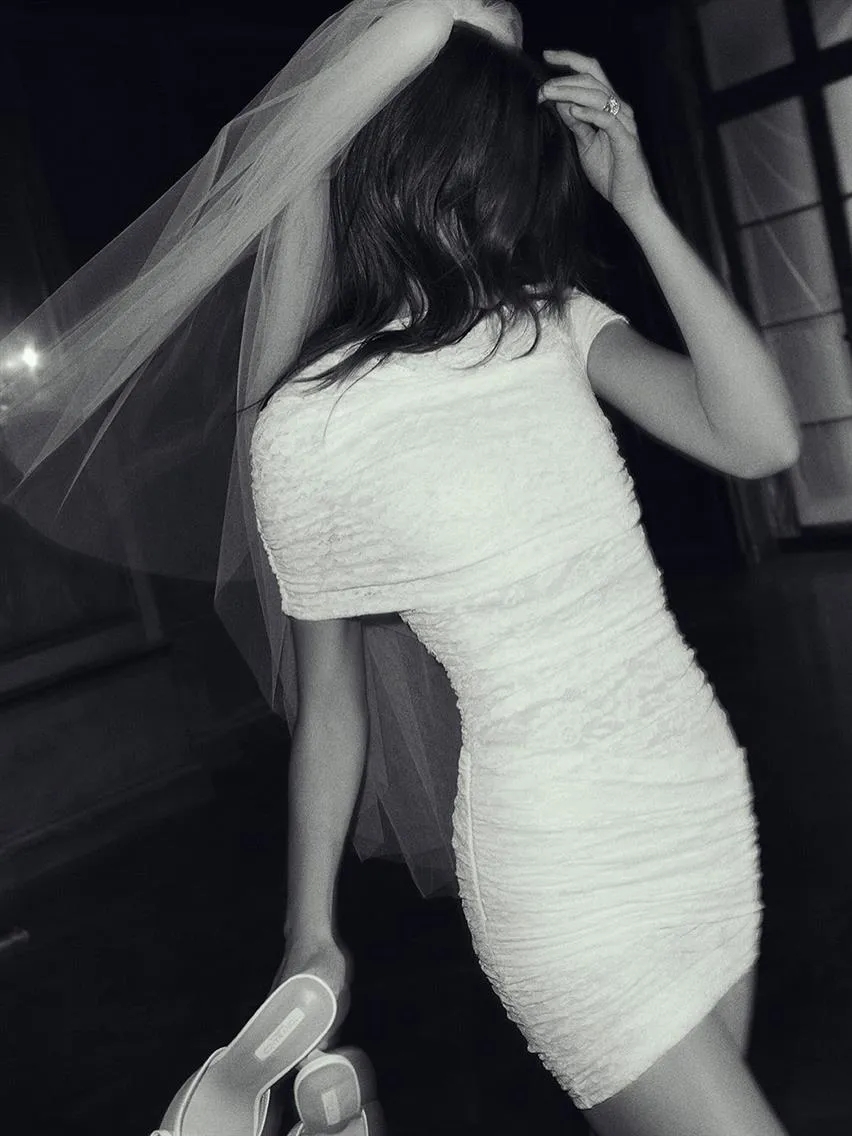
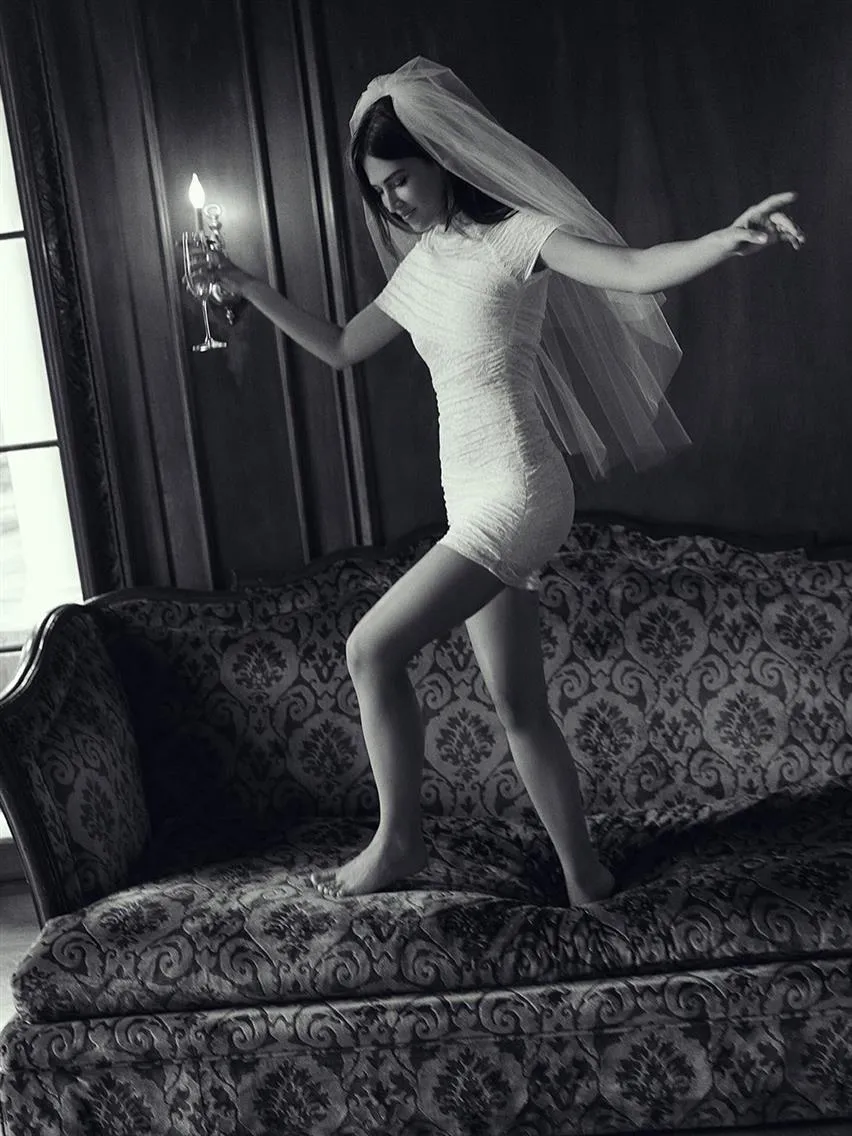
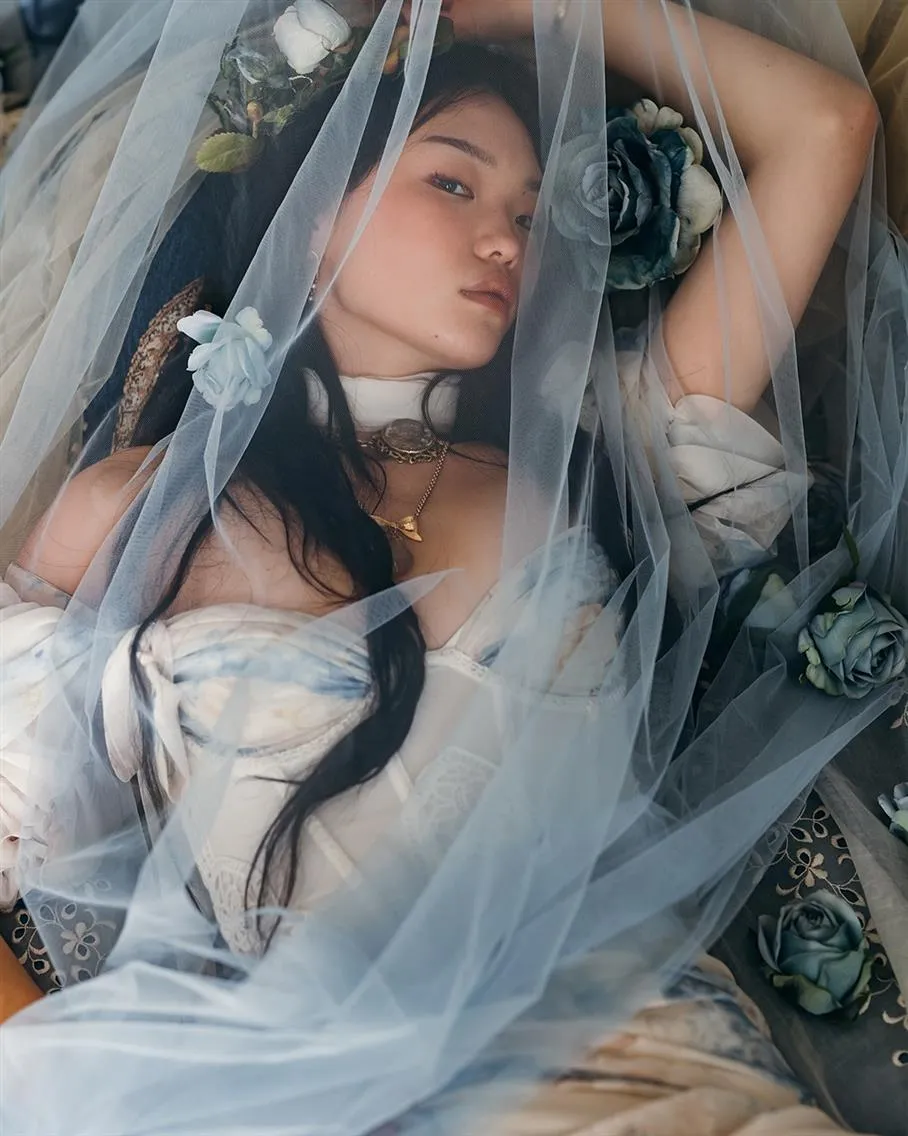
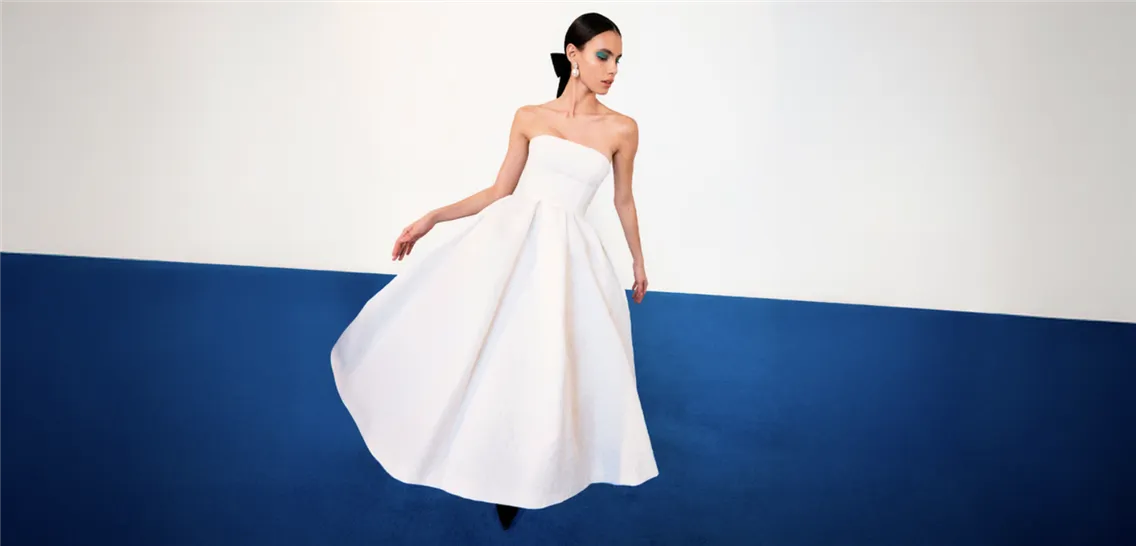
Clean aesthetic bridal photography employs minimalist composition with stark lighting that emphasizes architectural dress detail. This direction often uses artificial lighting to create dramatic shadows and highlights on geometric elements. Carolina Herrera's modern campaigns feature geometric backdrops, sleek hair, minimal jewelry, and urban settings like rooftop terraces or glass-walled spaces. The palette stays strictly neutral, letting the dress construction become the hero rather than competing with the environment.
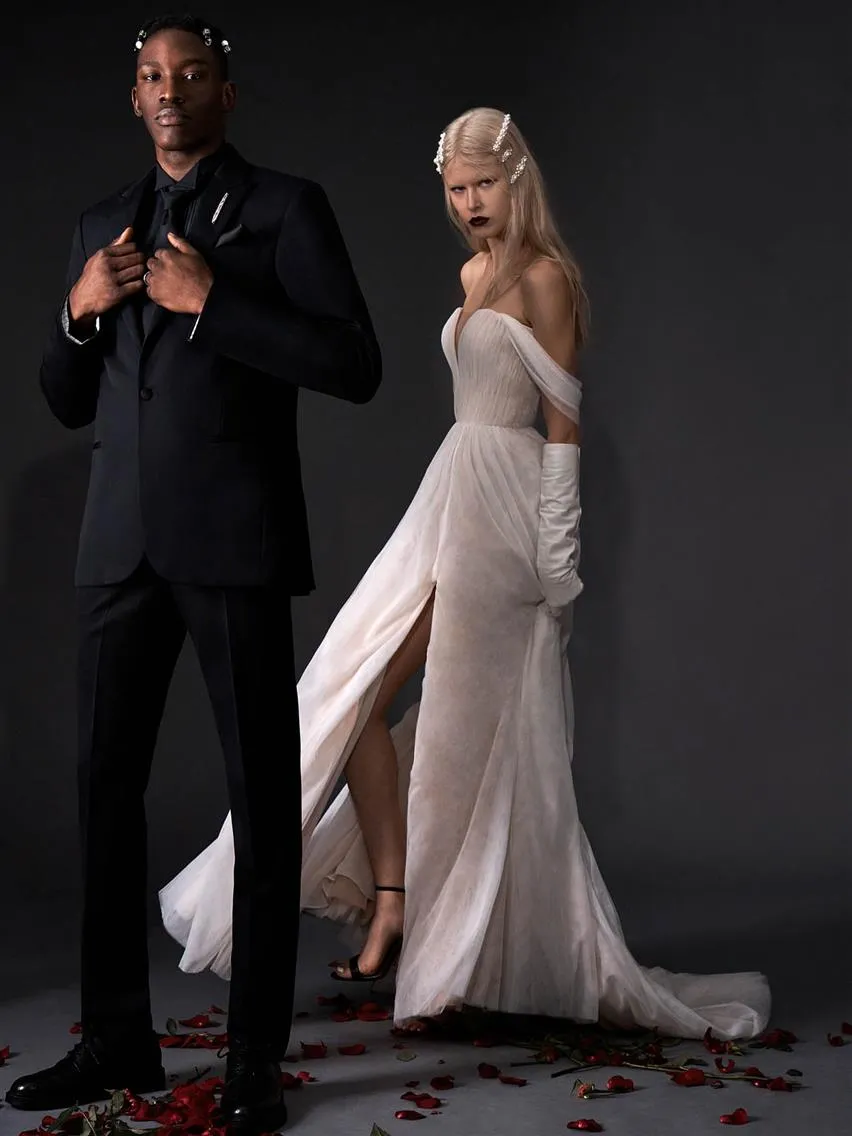
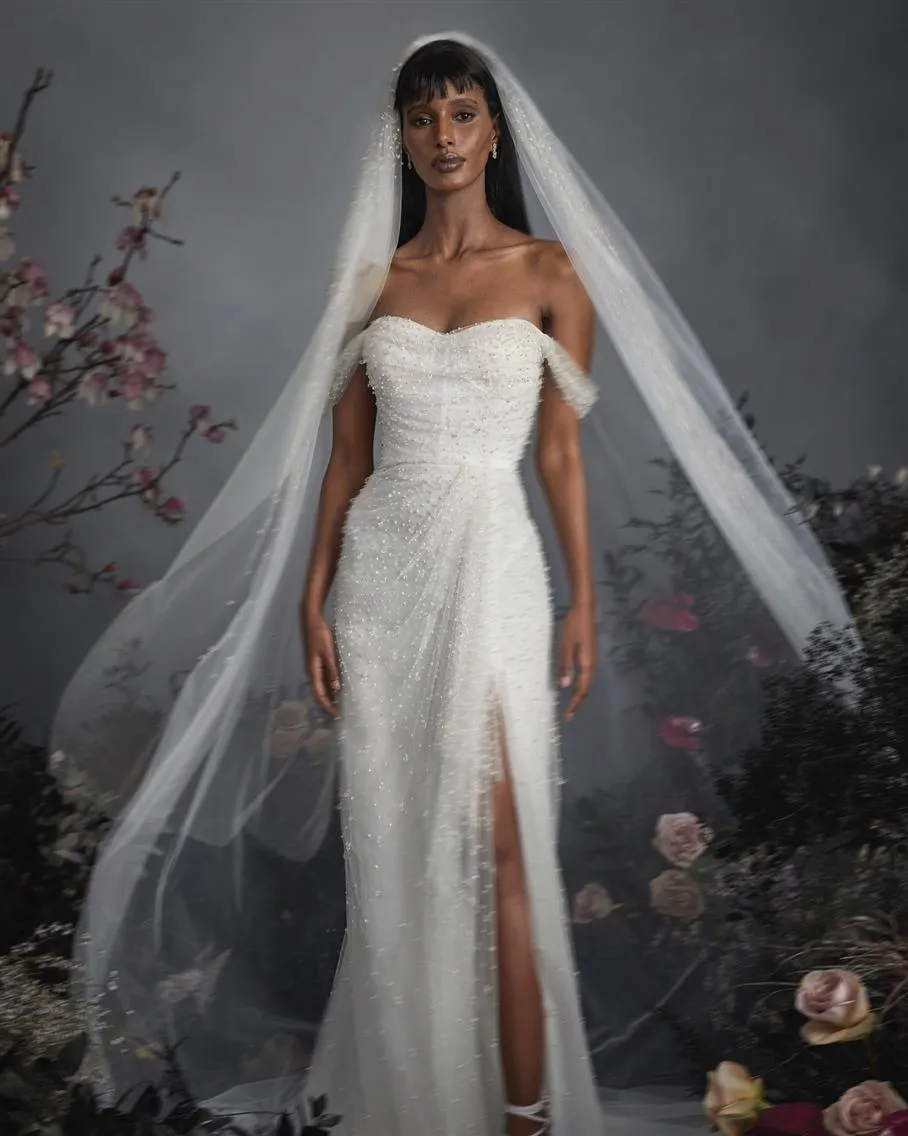
Moody bridal photography builds emotional intensity through dramatic chiaroscuro lighting borrowed from classical painting, where deep shadows contrast sharply with illuminated focal points. Rich, saturated palettes like burgundy, forest green, navy, and gold build a mysterious, romantic narrative. Vera Wang's darker collections employ gothic cathedrals, candlelit wine cellars, or dramatic clifftop settings with single-source lighting that creates strong shadow. Marchesa uses this direction for statement pieces, incorporating elaborate headpieces and rich textures like velvet or brocade, often shooting during golden hour or with artificial lighting that mimics firelight for maximum romantic effect.
 |  |
The Technical Challenge Unique to Bridal: Photographing White and Ivory Fabric
Every other apparel category deals with color accuracy. Bridal deals with something harder: capturing texture and detail in fabric that is almost entirely one tone.
White and ivory gowns are notoriously difficult to photograph because the camera's exposure has very little room to work with. Overexpose slightly and lace detail, beading, and fabric texture blow out into a flat, featureless white. Underexpose to protect that detail and the dress can read as dull or grey rather than bright and bridal.
The standard solution is exposing carefully for the highlights and relying on a histogram rather than the eye alone, since white fabric tricks the eye into thinking an image looks correctly exposed when detail has already been lost. Side or three-quarter lighting rather than flat frontal light helps separate layers of tulle, lace, and beading that would otherwise merge into a single white mass. Many bridal specialists also slightly underexpose in camera and recover detail and brightness in post-production, since recovering blown-out highlights after the fact is far harder than recovering shadow detail.
This single technical skill, getting white fabric to read as rich and detailed rather than flat, is one of the clearest signals of a photographer's bridal-specific experience versus general apparel experience.
Operational Planning for Bridal Fashion Product Shoots
What Goes into a Professional Bridal Product Photography Session
Success begins weeks before shooting with meticulous pre-production planning. After establishing creative direction and budget, model casting focuses on finding faces that embody the brand's aesthetic and target demographic. Rue de Seine consistently casts models with natural, bohemian beauty that matches its free-spirited brand, while Vera Wang selects more editorial, high-fashion faces suited to its sophisticated aesthetic.
For how to find and choose models for a brand photoshoot: The Smart Way to Find and Choose Models for Your Brand Photoshoot
Dress preparation requires professional steaming, pressing, and inspection for any flaw the camera will magnify well beyond what the eye notices in person. Bringing multiple sizes of each gown to set ensures a proper fit across different model measurements, preventing the awkward pinning or gaping that would otherwise require extensive retouching to fix.
Logistics coordination covers location permits, equipment transport, detailed shot lists, and catering for what is often a 12-hour shoot day. Team comfort across that stretch is essential for maintaining creativity and energy through the final hour as much as the first. Location shoots at vintage venues like historic estates add their own layer of permits, insurance, and coordination with venue staff.
The supporting team elevates the final result significantly. Wardrobe stylists understand how fabric drapes and how accessories complement each look while building a cohesive brand narrative. Makeup artists deliver camera-ready looks that enhance rather than compete with the dress. Hair artists create styles that showcase dress detail intentionally, an updo for an intricate beaded back like Monique Lhuillier's designs, or flowing waves for bohemian styles where the hair needs to move with the dress rather than against it. Nail artists complete the polished look for close-up hand shots, keeping consistency across every detail image in the set.
For a complete breakdown of every role in a commercial production: Understanding the eCommerce Photography Creation Process and Team Involved
Set Design and Lighting for Bridal Photography
Building a cohesive set across a full collection requires establishing consistent color palettes, textures, and mood elements that unify individual pieces into one compelling brand story. Hayley Paige maintains a playful, romantic aesthetic across collections by using consistent floral installations, vintage furniture, and soft pastels that tie disparate dress styles together into a single narrative.
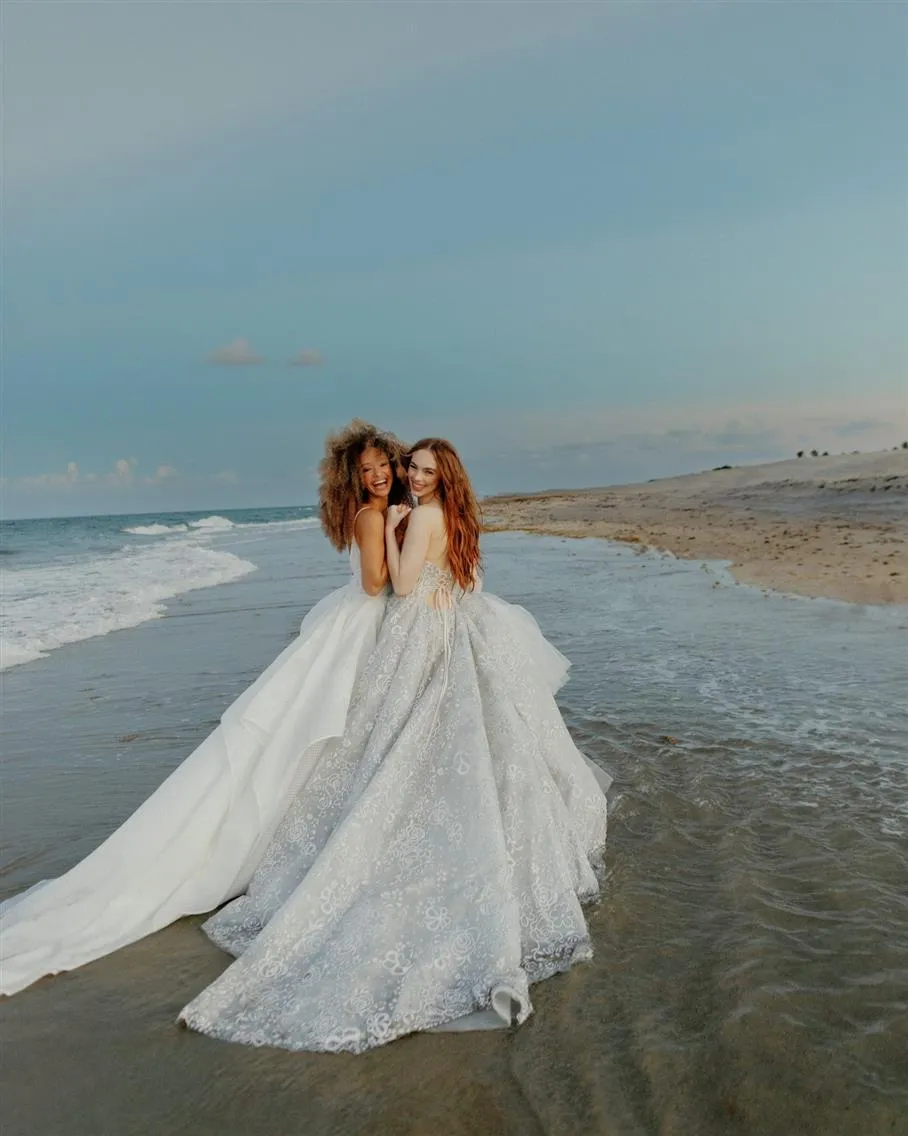
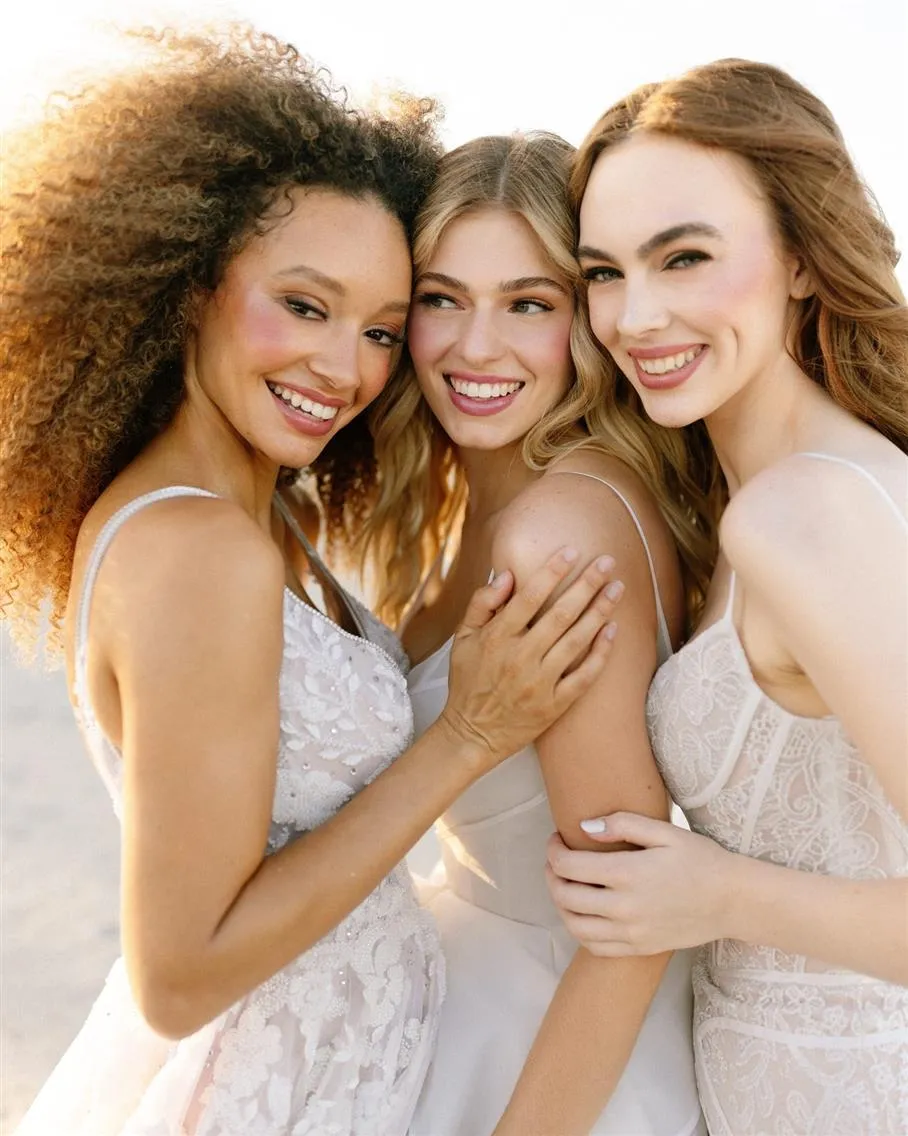
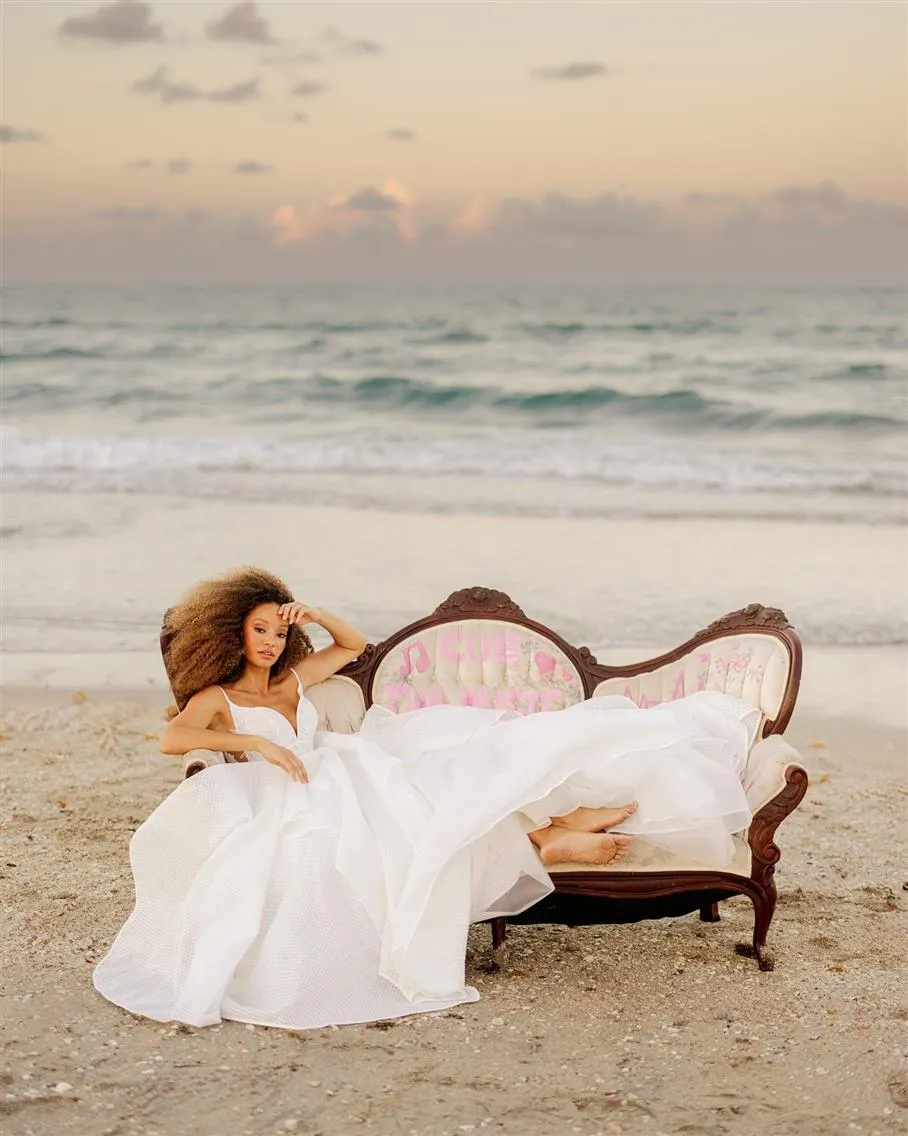
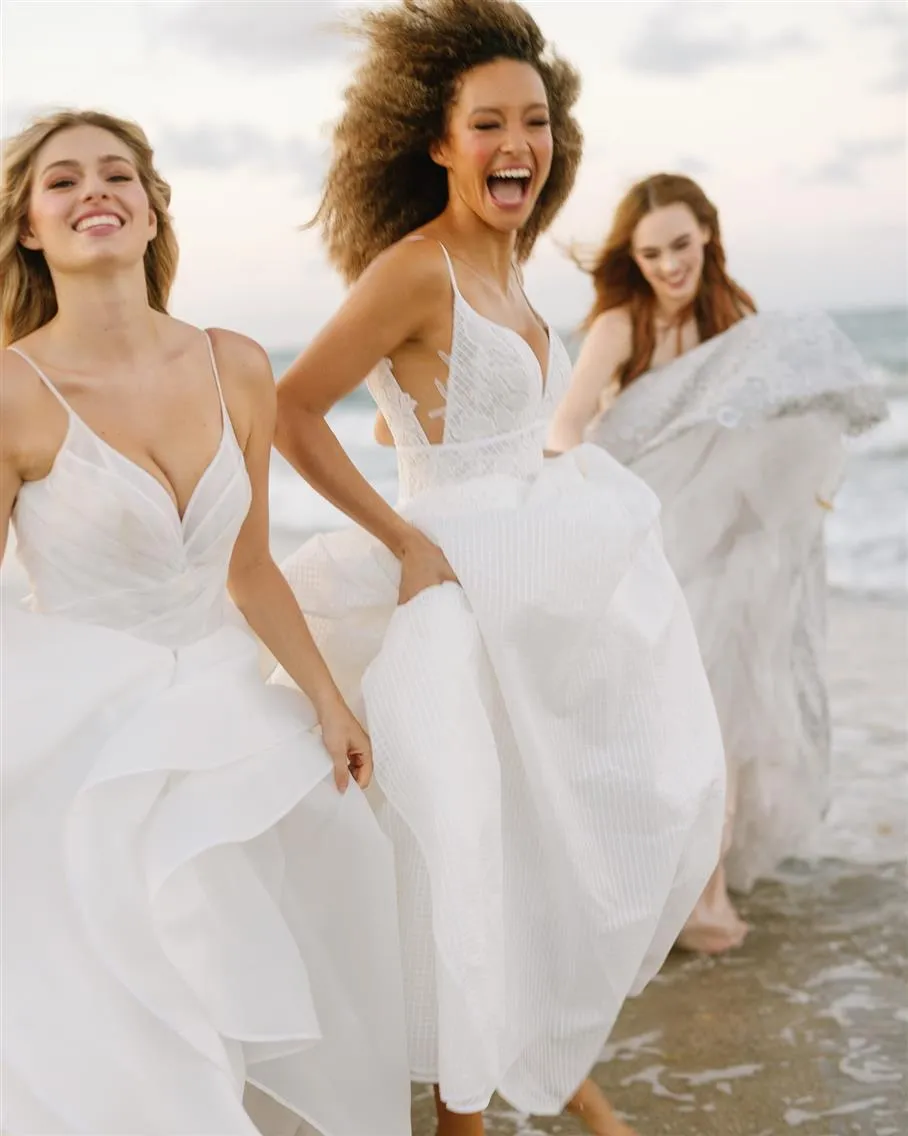
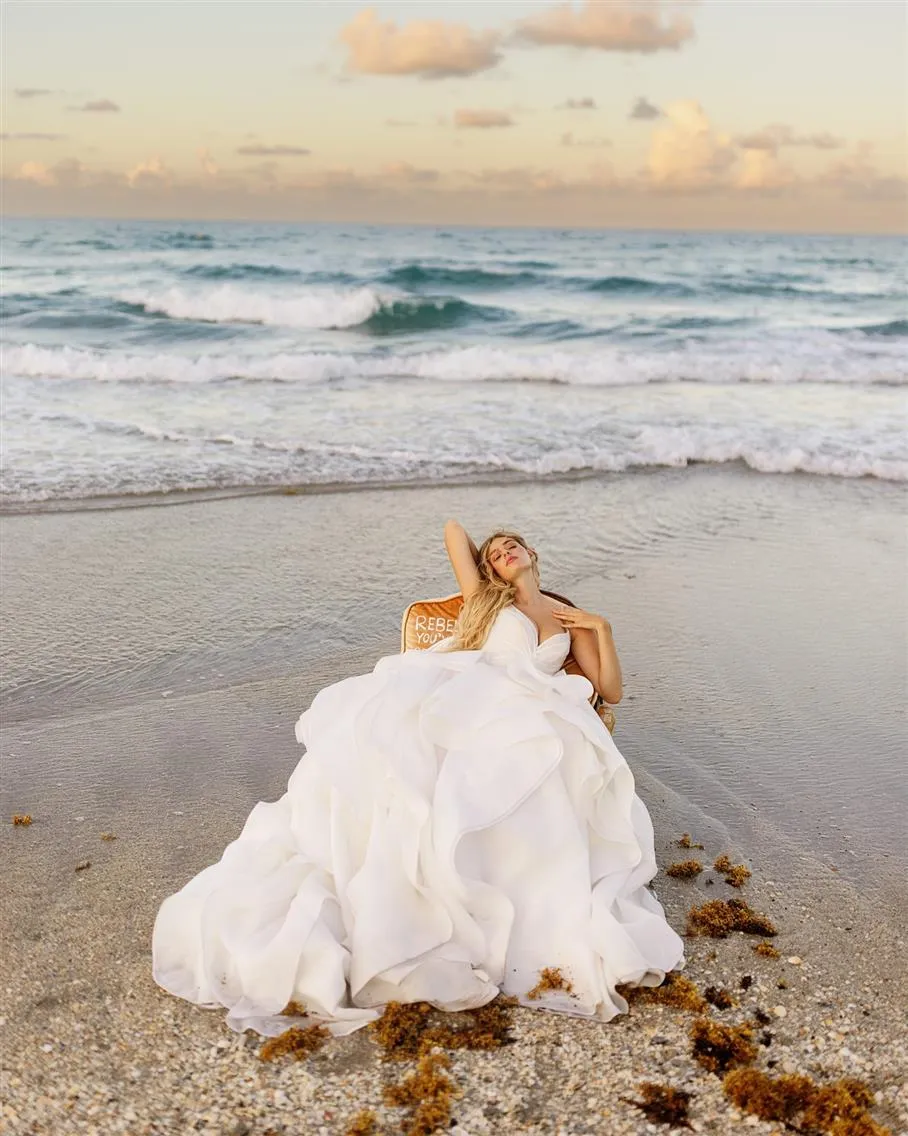
Professional set designers use modular elements like furniture, fabric draping, and architectural features that can reconfigure throughout the day for variety while keeping the overall visual language consistent.
Indoor controlled studio shoots offer maximum precision, with consistent lighting, climate control, and unlimited power on demand. Studios excel for eCommerce shots, detail photography, and anywhere technical precision matters most, since even illumination and controlled conditions simplify post-production significantly. Carolina Herrera's clean, modern product photography is a strong example of studio work done right: pristine white backgrounds that showcase architectural dress detail without distraction.
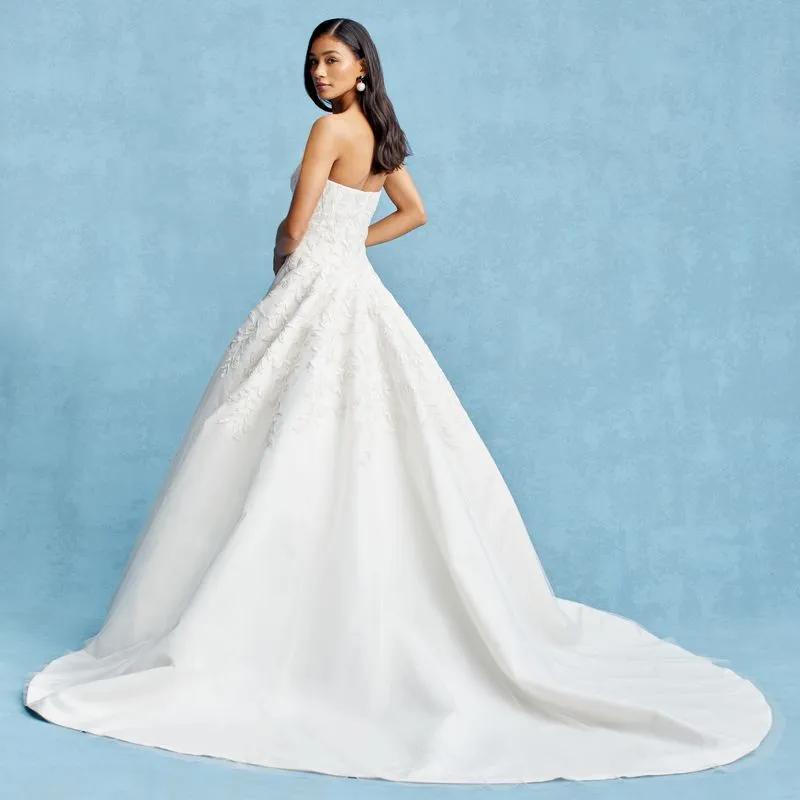
Outdoor bridal editorial settings create authentic texture, dynamic light, and environmental storytelling that no studio can replicate. Golden hour brings romantic warmth. Overcast conditions offer even illumination well suited to detailed work. Grace Loves Lace consistently uses natural outdoor settings, Australian beaches, desert landscapes, meadow locations, to reinforce its bohemian identity while creating aspirational lifestyle imagery.
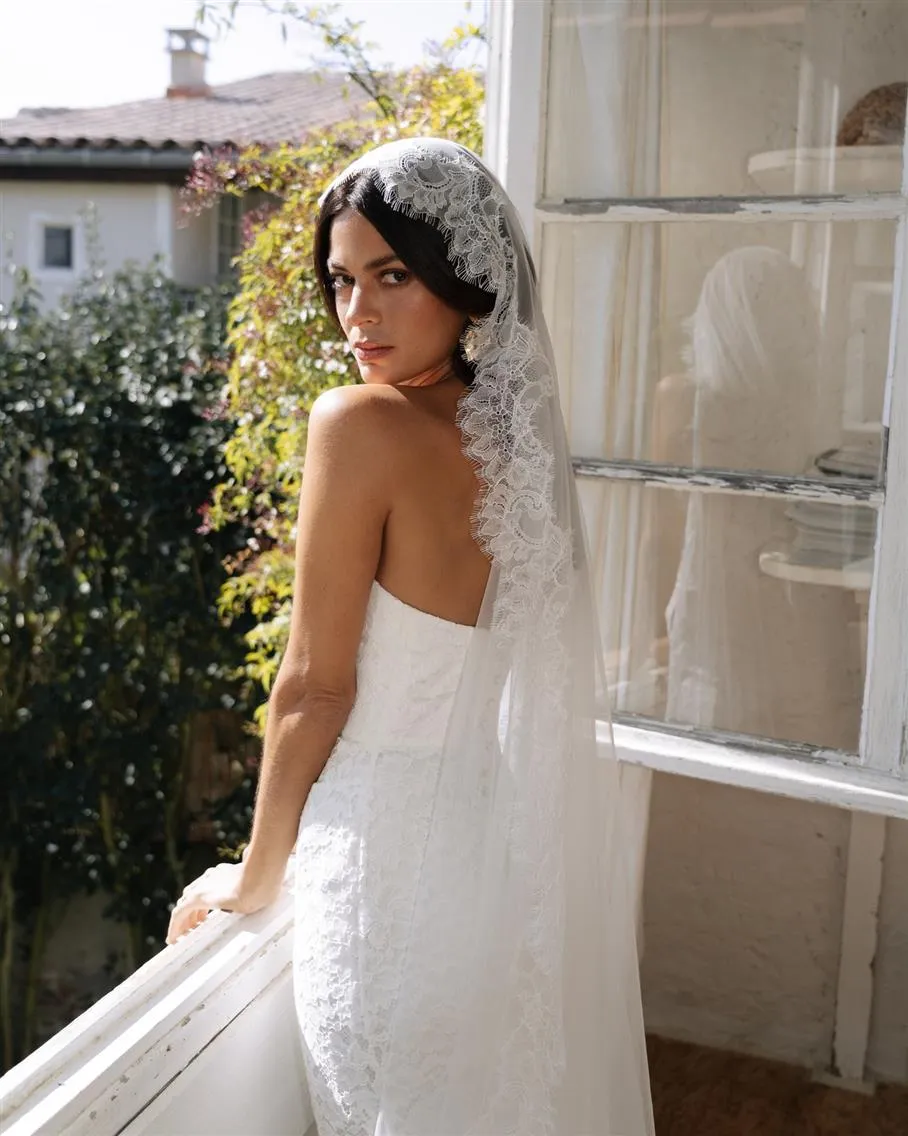
The right setting depends on the goal: studio for technical precision and product focus, outdoor location for editorial impact and emotional storytelling.
Where Brides Actually Look for Inspiration
Pinterest carries outsized weight in bridal specifically, more than almost any other apparel category. Brides build wedding boards months or years in advance, saving and revisiting images repeatedly before a single dress is tried on. Photography planned with Pinterest's vertical format in mind, and styled to feel save-worthy rather than purely transactional, captures a discovery channel that most other apparel categories cannot rely on nearly as heavily.
Common Bridal Photographer Pitfalls and How to Avoid Them
Misaligned vision between brand and photographer creates costly disasters. Before committing, discussing brand aesthetic, target customer, and specific usage requirements in real detail prevents most of these problems before they start. Requesting mood boards, shot lists, and creative direction concepts that demonstrate genuine understanding of the brand's positioning separates photographers who are true creative partners from those who are simply service providers.
Overreliance on overly stylized work that does not convert happens when a photographer prioritizes artistic expression over commercial effectiveness. Beautiful imagery builds prestige, but the primary goal remains driving sales and engagement. Confirming upfront that a photographer understands the balance between creative vision and commercial requirement prevents a beautiful but commercially unusable delivery.
Poor editing quality ruins an otherwise strong shoot through over-retouched skin, inconsistent color tones, and an artificial product appearance. Reviewing unedited samples alongside final deliverables before committing shows the studio's actual post-production approach rather than just their best-case portfolio piece. Establishing clear guidelines about retouching levels, delivery formats, and revision rounds before shooting begins prevents the most common source of post-delivery disputes.
What to Look for in a Bridal Fashion Photographer
Look at the portfolio before the price list. Consistency, lighting control, and the ability to hold both intimate detail and sweeping editorial moments in one body of work say more than any rate card.
Pricing is a signal but not a guarantee. Unusually low rates often mean hidden costs that surface later, so a full estimate covering retouching, usage rights, and delivery timeline upfront is worth asking for before committing.
The rarest and most valuable trait to look for is range: a photographer equally comfortable with dreamy editorial work and clean, technically precise product shots, often from the same production. Bridal rewards this combination specifically, since a gown needs to read as a feeling and as flawless construction at once.
A dress is never really the product. The day is. LenFlash photographs both sides of that equally well.