
How Perfume Photography Turns Invisible Scents into Brand Stories
Perfume is one of the hardest products to sell visually because what defines it most — the scent — is invisible. You cannot photograph aroma, emotion, or memory. Yet the moment someone lands on your website or scrolls past an ad, they instantly decide what your fragrance feels like based purely on imagery.
Great perfume photography evokes a world around the bottle. The image should make the viewer feel something before they think. Is it sensual or refreshing, luxurious or minimalistic, mysterious or bright? That emotional response is what drives a purchase.
For perfume brands, the right photography increases perceived value, communicates the fragrance's story, and builds recognition across campaigns and retail channels.
Part of our complete guide: The Ultimate Guide to eCommerce Product Photography
What Makes Perfume Photography Different from Regular Product Photography
Perfume photography operates on a completely different emotional logic than, say, clothing. A fashion image sells form and fit. Perfume visuals, however, sell an experience.
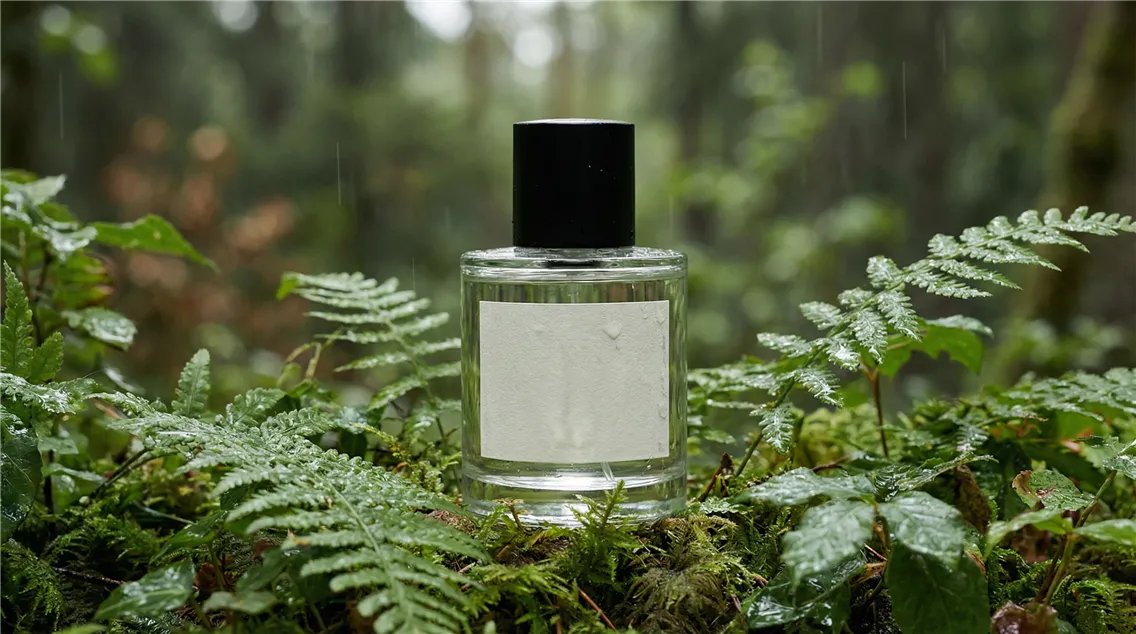
Fragrance marketing relies on emotion, memory, and aspiration. When people look at a perfume campaign, they are subconsciously deciding whether this scent represents them or who they want to be. Every color choice, lighting mood, and texture carries psychological weight. A citrus perfume feels different from a woody one, and that difference has to be visible before it is smelled. Cool daylight, water textures, and minimal styling convey freshness. Deep shadows, warm tones, and reflective glass signal sophistication or mystery. These are not random creative decisions. A fragrance photoshoot is a deliberate translation of scent into visual language.
Impactful perfume photography balances two goals: it represents the product accurately and expresses emotion instantly. For eCommerce, that means clarity and color precision. For brand campaigns, it means the right mood and the subtle cues that make your perfume feel expensive, authentic, or distinctive.
The Story Behind the Fragrance Bottle
Every perfume bottle already does part of the work. Its shape, materials, and weight hint at the audience it is made for. Photography's role is to reveal and amplify that story, ensuring every image reflects what the design communicates about the fragrance itself.
A sleek minimal glass design speaks to modern sophistication. A faceted crystal bottle leans into craftsmanship and opulence. Even the color of the liquid or the transparency of the glass shifts perception: soft amber evokes warmth and sensuality, while a pale tint suggests freshness and purity.
In perfume marketing, the bottle is only one part of the visual identity. Packaging plays an equally important role in defining perceived value. A beautifully shot unboxing scene or the detail of a foil-stamped logo on matte paper communicates luxury before the viewer has registered your name. These details tell customers they are buying a crafted experience, not just a product.
When visuals align with both bottle design and packaging aesthetics, they strengthen brand identity and emotional coherence. When they do not, they create confusion — a minimalist fragrance shown in a maximalist, overly decorated setup disrupts the brand's visual logic.
Art direction is what holds all of this together. It curates how the world perceives your brand, from the lighting direction to the crop, from set design to the styling of the model holding the bottle. Consistent art direction ensures audiences recognize your visual DNA before they see your logo. For guidance on building an art direction brief for fragrance and beauty photography: Art Direction Guidelines for Your Jewelry or Fashion Brand
Types of Perfume Photography and When to Use Each
A fragrance brand's visual library typically requires three categories of photography, each serving a different function in the customer's journey from discovery to purchase.
Clean Product Photography for eCommerce and Retailer Submissions
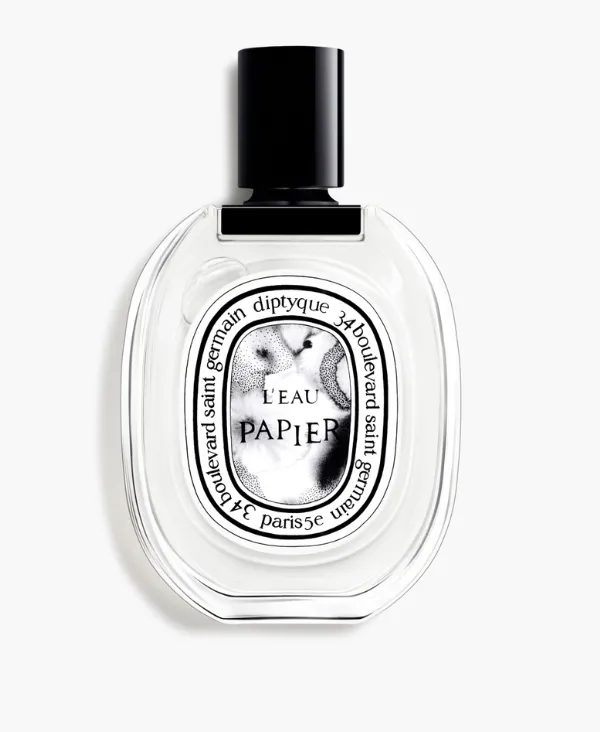
Clean product photography is the visual baseline every fragrance brand needs. It ensures your perfume looks accurate and consistent across all channels — your own website, retailer platforms like Sephora, Nordstrom, or Amazon, and any environment where customers compare products side by side.
For perfume, this category has two non-negotiable requirements.
Accuracy: the liquid color, cap finish, and label design must be captured exactly as they are. A misaligned color tone or incorrect shade breaks trust instantly when customers compare your image with others on a marketplace.
Consistency: the lighting, angle, and reflections must be uniform across your entire collection. If your Eau de Parfum and Eau de Toilette appear in different color temperatures or against different background tones, the inconsistency weakens perceived brand discipline even if neither image is technically wrong.
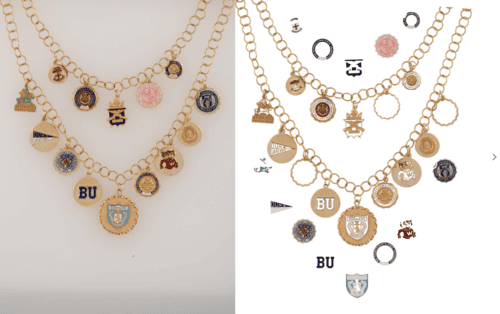
Technically correct perfume photography requires managing complex reflections from glass, the transparency of the liquid, and glare on metallic caps. It also requires drawing precise shadows with the lighting setup. A generalist product photographer will struggle here. It takes specialists who understand how to keep the glass crisp, the logo legible, and the lighting refined without flattening or overexposing the material.
Packaging should be included in the same shoot —to ensure visual harmony between product and package across every application.
Use clean product photography for: eCommerce product pages, retailer listing submissions, press materials, dynamic social and search ads, and any context where customers evaluate products side by side.
Lifestyle and Editorial Perfume Photography with a Model
Product photography tells customers what they are buying. Lifestyle imagery tells them why.
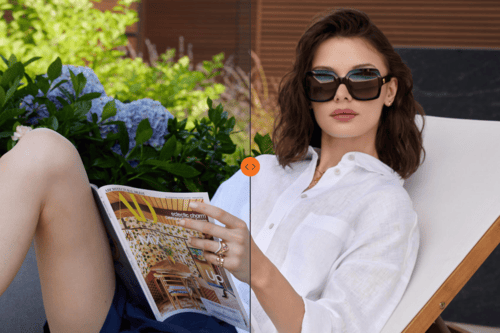
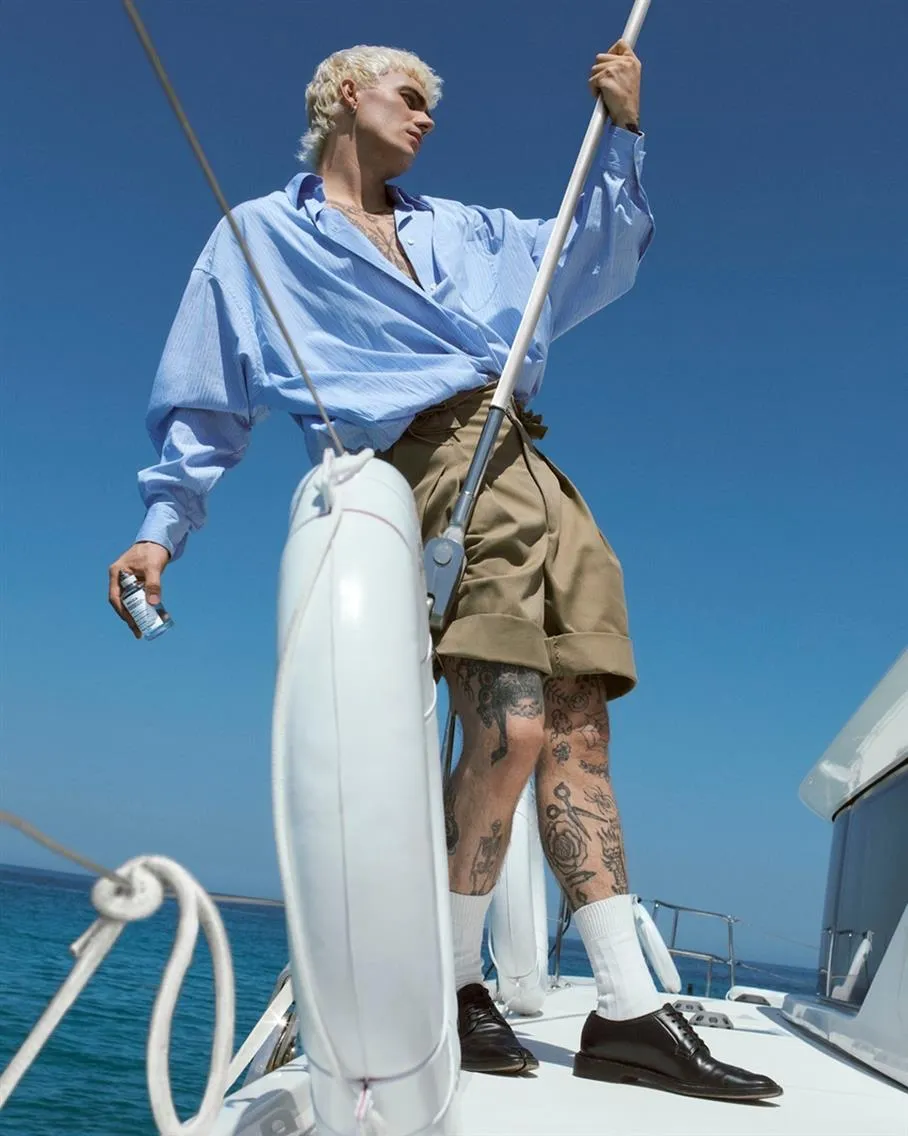
When a model appears in perfume photography, she becomes the emotional vehicle for the scent. Her expression, skin tone, wardrobe, and the lighting temperature together convey the fragrance's personality more directly than any copy.
From a strategic standpoint, lifestyle perfume visuals serve 3 purposes.
Positioning: the visual tone must mirror your price segment and brand story. A niche perfume house benefits from close, artistic portraits with soft textures and natural imperfections — visuals that feel intimate and authentic. A mass-market fragrance needs brighter tones, structured compositions, and clear aspirational cues. A luxury brand requires cinematic setups, controlled lighting, and a timeless aesthetic that justifies higher pricing.
Emotional translation: photography should visually echo the scent profile. Citrus and aquatic perfumes work best in daylight, with clean backgrounds and a sense of movement and breath. Amber, oud, and musk fragrances call for contrast and depth, low light, warmth, reflections, and tactile props like leather or silk. Floral and powdery notes suit diffused light, fabrics, and natural gestures.
Campaign versatility: a single lifestyle shoot can yield dozens of usable variations — tight crops for ads, mid-shots for banners, wide compositions for lookbooks — all connected by the same emotional logic.
Use lifestyle photography for brand campaigns and launch visuals, social media storytelling, PR and magazine features, homepage and landing page banners, and product pages where emotion supports conversion. For a broader guide to lifestyle photography strategy across product categories: Strategic Impact of Lifestyle Photography on eCommerce Business
Creative Still Life and Conceptual Photography
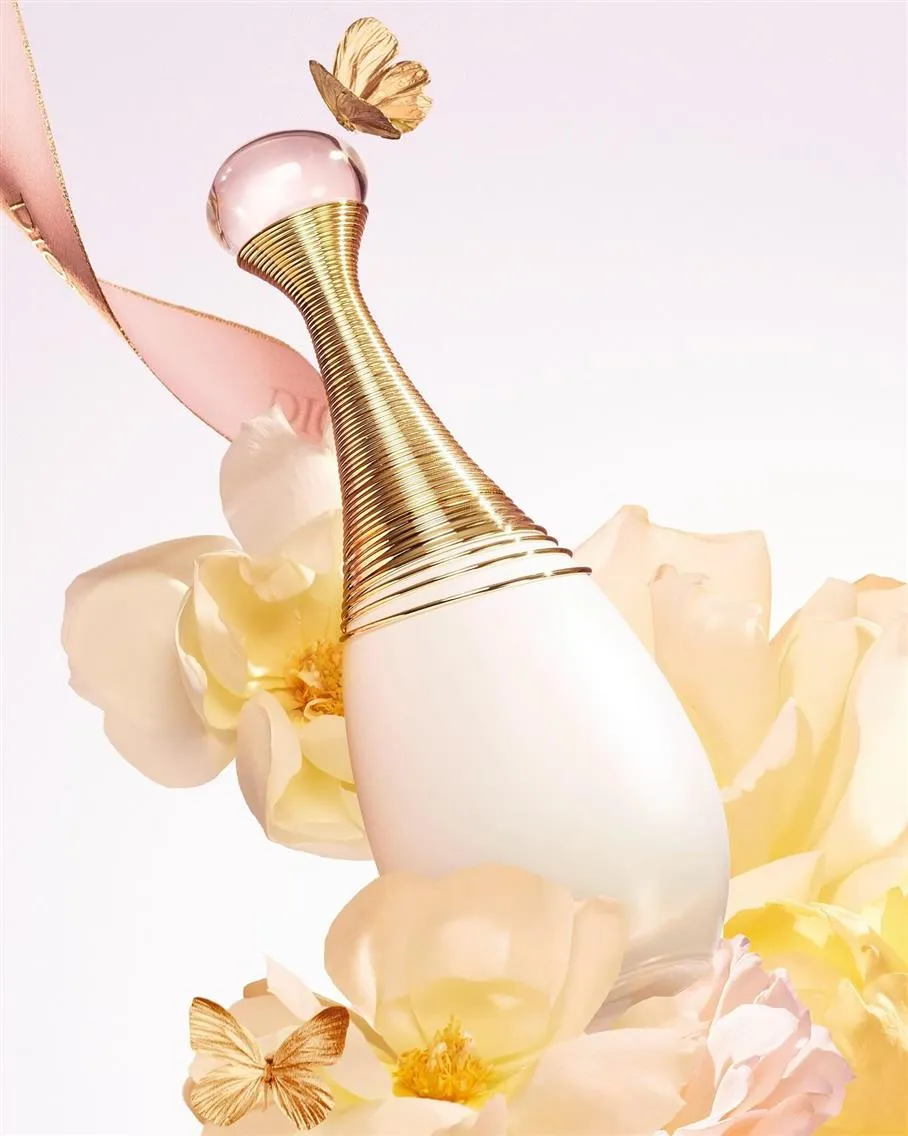
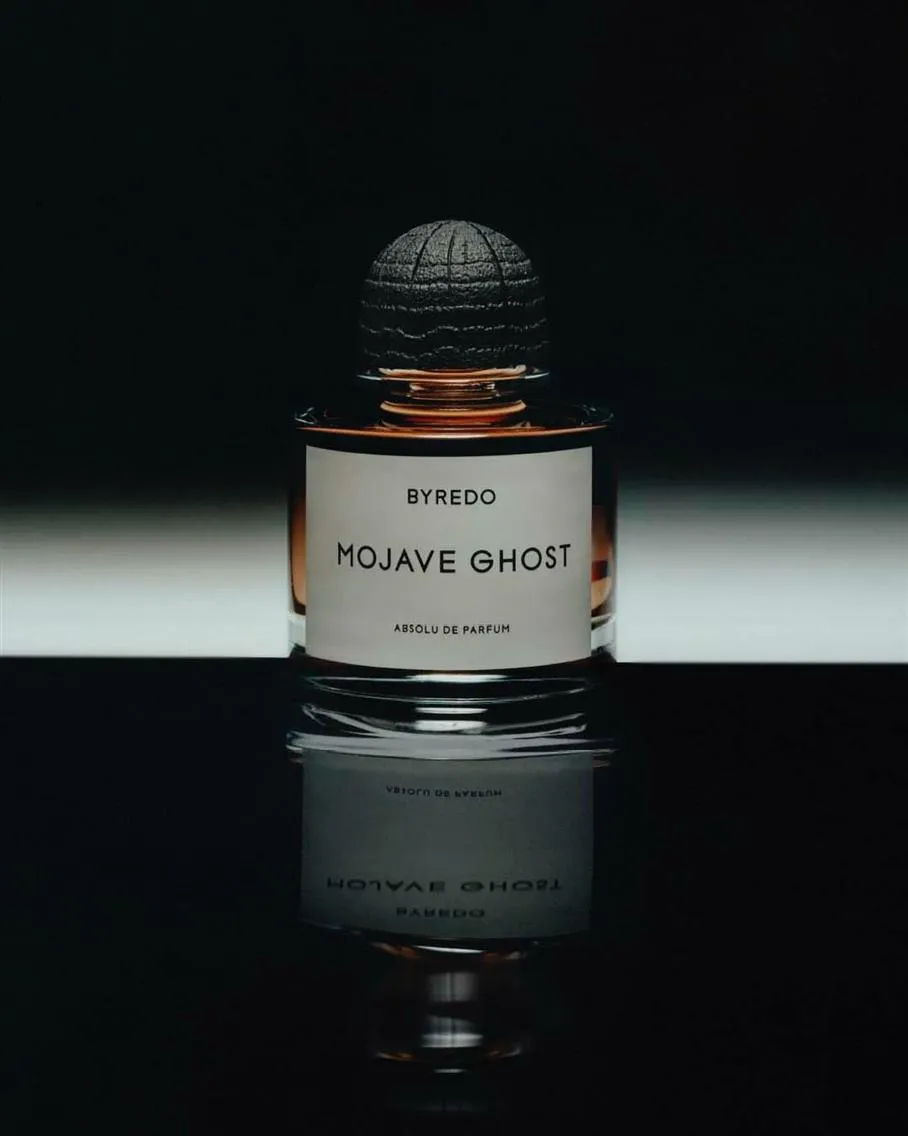
This category transforms the perfume into a piece of visual art, and it is where most brands differentiate themselves creatively. Conceptual perfume photography uses objects, textures, and controlled lighting to translate the essence of a fragrance into abstract imagery. It is less about showing the product clearly and more about expressing its world — the emotion, mood, and idea behind the scent.
These images are not decorative. They are genuine marketing triggers. They make the viewer pause, feel curiosity, and remember the brand. Common creative directions include smoke or mist to suggest diffusion and mystery, liquid splashes to convey freshness or intensity, flowers and fabrics that reflect top fragrance notes, mirrors and glass to add depth and elegance. A good conceptual image balances imagination with precision — every reflection, highlight, and prop must align with the brand's aesthetic. The composition might look spontaneous, but it is built carefully to emphasize balance and emotional resonance.
Use creative still life photography for campaign hero images and advertising, retail displays and visual merchandising, website headers, and any context where the brand needs to stand apart from competitors in the same category.
When these three formats work together you create a complete visual language that guides the customer from awareness to purchase.
How Perfume Brands Produce a Photoshoot Smoothly
A perfume shoot does not begin on set. It begins with structure, clarity, and a shared understanding of what the images need to do.
Define the Purpose Before Developing the Concept
Campaign photography, lifestyle visuals, and eCommerce packshots are three different visual languages. If the goal is product pages — the last step before purchase — images must be exact, color-accurate, and clean. If the goal is brand marketing and awareness, they must carry atmosphere, emotion, and tone. Purpose gives direction. Without it, the team is making aesthetic decisions in a vacuum, which is how expensive reshoots happen.
Build a Moodboard That Functions as a Brief
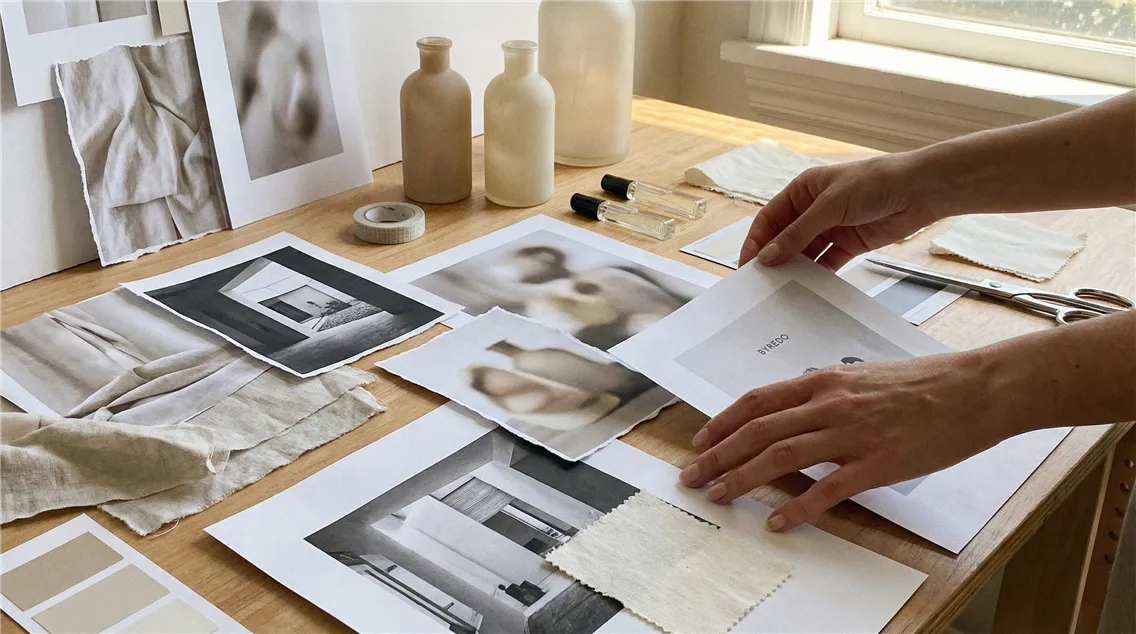
Moodboards are frequently misunderstood. They are not inspiration collections or mood references, they are a shared language between the brand and the studio. When both sides agree on the visual direction before production begins, the process moves faster and the outcome is more precise. The moodboard does not need to tell the fragrance's creative story. It needs to establish a clear emotional anchor: what the images should feel like, what references represent the right tone, and what the brand needs to move away from. When that anchor is established, every subsequent creative decision falls into place naturally.
Align Photography with Bottle Design and Packaging
A luxury fragrance presented in flat, generic light loses its exclusivity immediately. A youthful everyday perfume shot in a dark, cinematic tone feels distant from its audience. Maintaining consistency between product design, packaging, and photography is the difference between a brand that reads as coherent and one that reads as assembled from disconnected elements.
The texture of the glass, the hue of the box, and the way light touches both must feel like they belong to the same visual universe. Study how your packaging communicates price positioning and audience appeal, then mirror that message in the photography so the images feel like an extension of the brand rather than a separate creative layer.
What a Successful Shoot Delivers
A well-produced perfume shoot leaves the brand with a library of assets connected by tone and logic. Every file works naturally across channels — homepage banner, social media ad, retailer listing, press kit. When the process is built on preparation and clear direction, the files come out consistent and ready to use. You are not correcting problems afterward or scheduling additional production to fill gaps.
AI-Assisted Production for Fragrance Brands
The most practical application of AI in fragrance photography is extending what a single product shoot can deliver. From one set of clean product images, a brand can generate a full visual library without scheduling additional productions for every content need.
With a properly executed product shot as the source, AI production creates on-model lifestyle images showing the perfume held or worn in real environments, still life compositions with different surfaces and atmospheric contexts, video content showing the bottle in use, and campaign-ready visuals across multiple formats. When the source photography is high quality and the production is handled professionally, the results are indistinguishable from a traditional shoot. The model looks real. The environment looks real. The only difference is how it was made.
For a fragrance brand launching a new collection, this means covering the full content calendar from a single studio session rather than scheduling separate productions for each channel and use case. The prerequisite is a clean, well-lit, professionally retouched product shot. That image is the asset everything downstream is built from, and its quality determines the quality of every AI output that follows.
LenFlash offers AI-assisted visual production for fragrance and beauty brands alongside our traditional photography service. We start with a properly executed product shoot and extend it into a complete visual library. Photography and AI production run through the same studio, so color calibration, retouching standards, and brand consistency stay unified across every output.